
Table of Contents

Overnight Stay At Chai Lai Orchid Elephant Sanctuary in Thailand

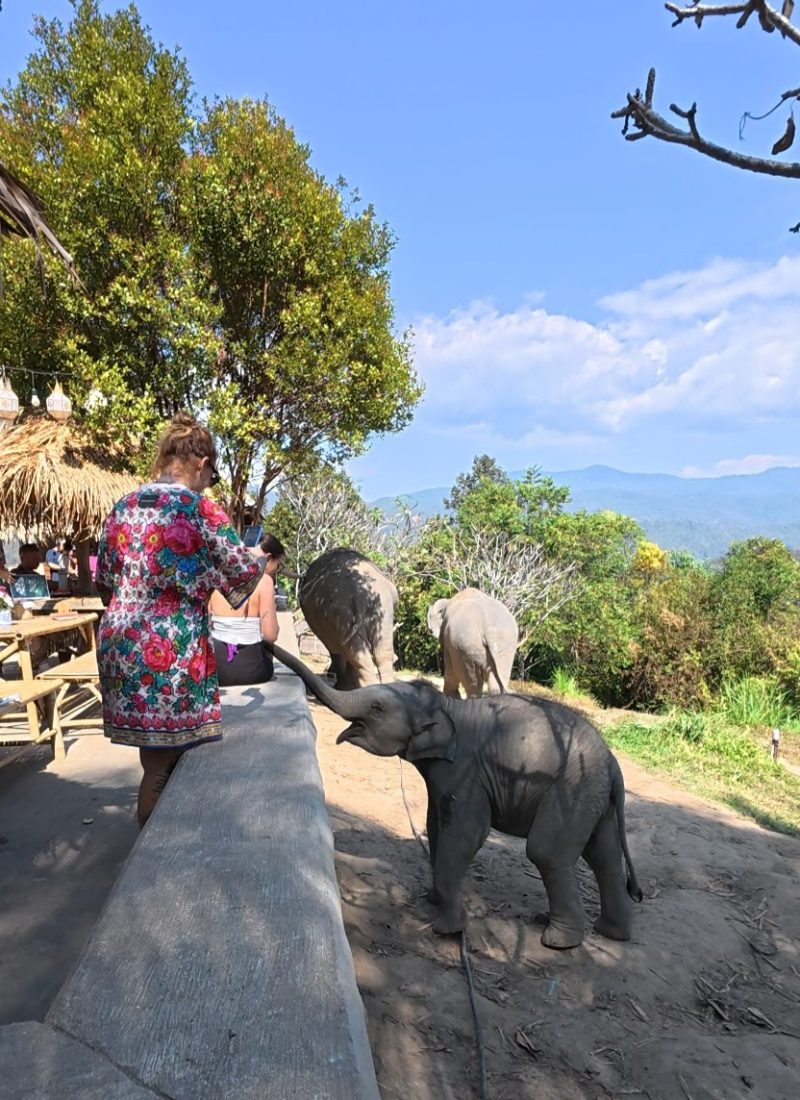
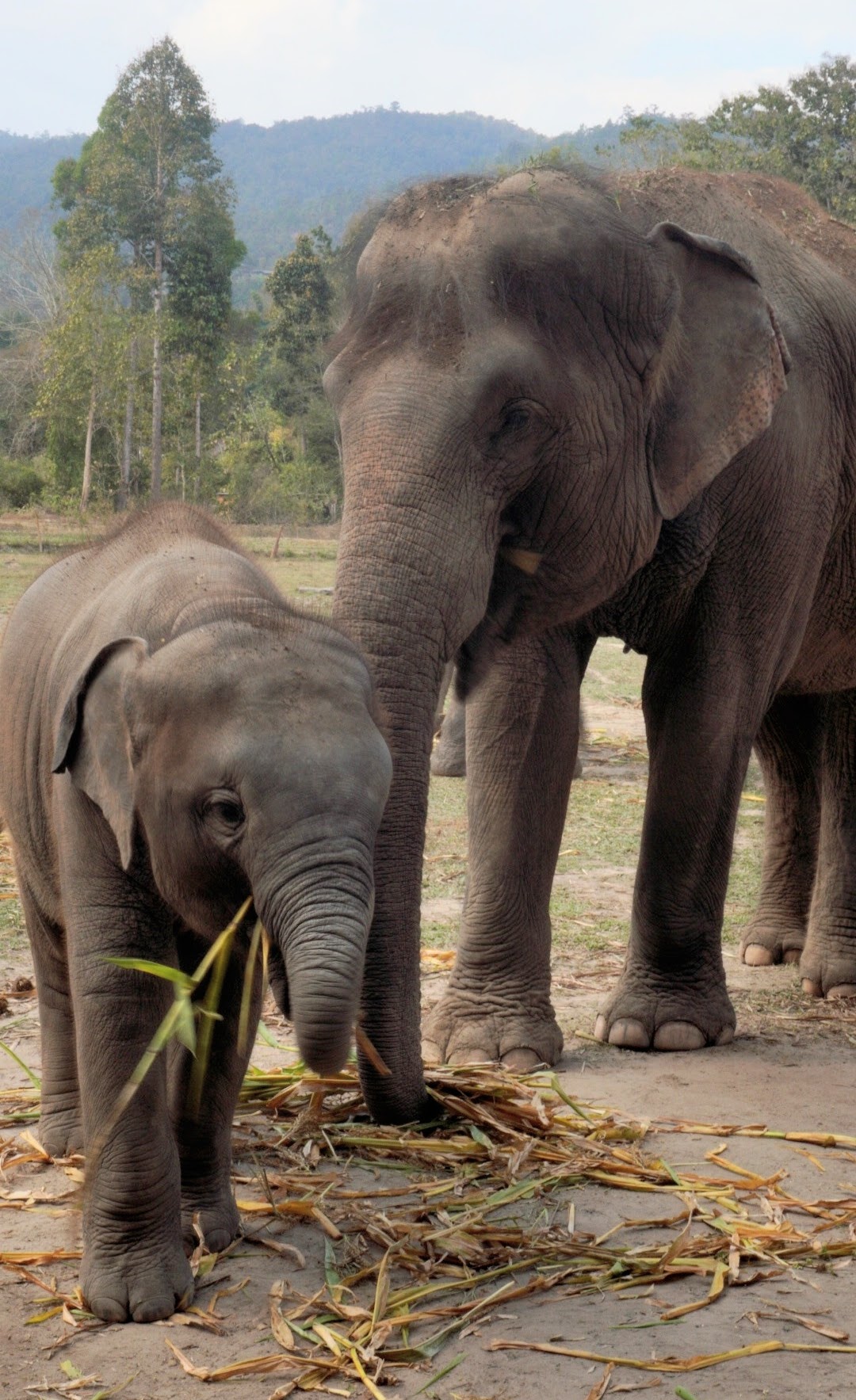
A baby elephant and its mother foraging in a natural setting, surrounded by greenery and mountains in the background.

A sign highlighting the positive impact of staying at an eco-friendly hotel, featuring elephants and community support initiatives.

What Is Chai Lai Orchid?

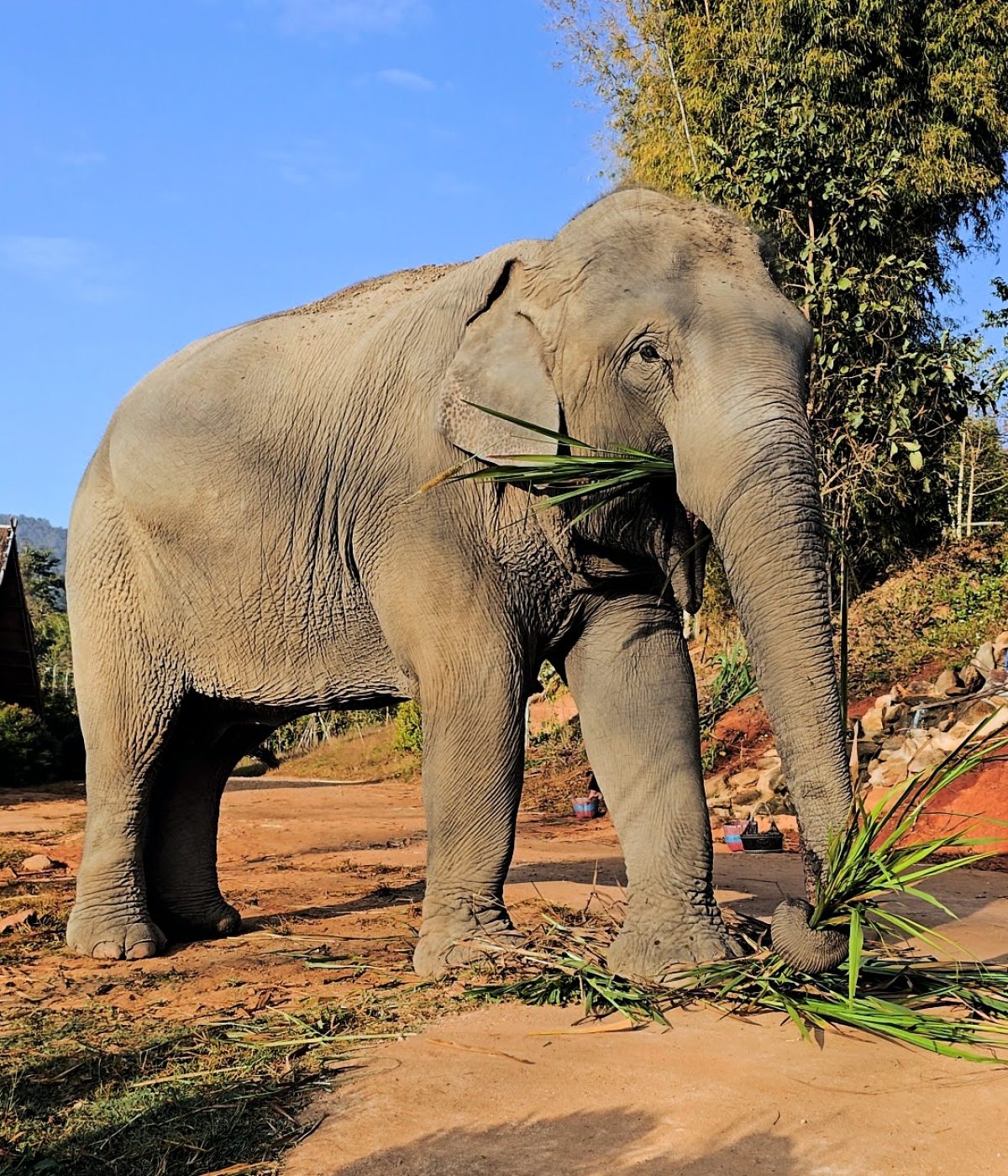
Chai Lai Orchid is an elephant sanctuary and eco lodge tucked into Mae Wang, about an hour south of Chiang Mai. The property cares for rescued Asian elephants and works closely with Karen hill tribe mahouts who have generations of experience working with these animals.

The lodge also partners with the nonprofit Daughters Rising, which provides education, safe housing, and job training for young Indigenous women in the region. According to the organization, around 40 young women are currently sponsored through university because of the program.

Is It Actually Ethical?

This was the first thing I looked into before booking, because the word sanctuary gets used loosely in Thailand and does not always mean what people assume it does.

What stood out about Chai Lai Orchid is that their approach is not built around what simply looks good to tourists. They reference published research and take the position that elephant welfare cannot be judged by a simple checklist. Instead, they emphasize looking at the full picture over time, including health, behavior, stress levels, veterinary care, and daily management.

They work directly with local Karen elephant owning families, providing steady income tied to welfare standards so elephants are less likely to be pushed into lower quality operations. Each elephant is paired with a dedicated mahout from the Karen community who works closely with that specific animal.

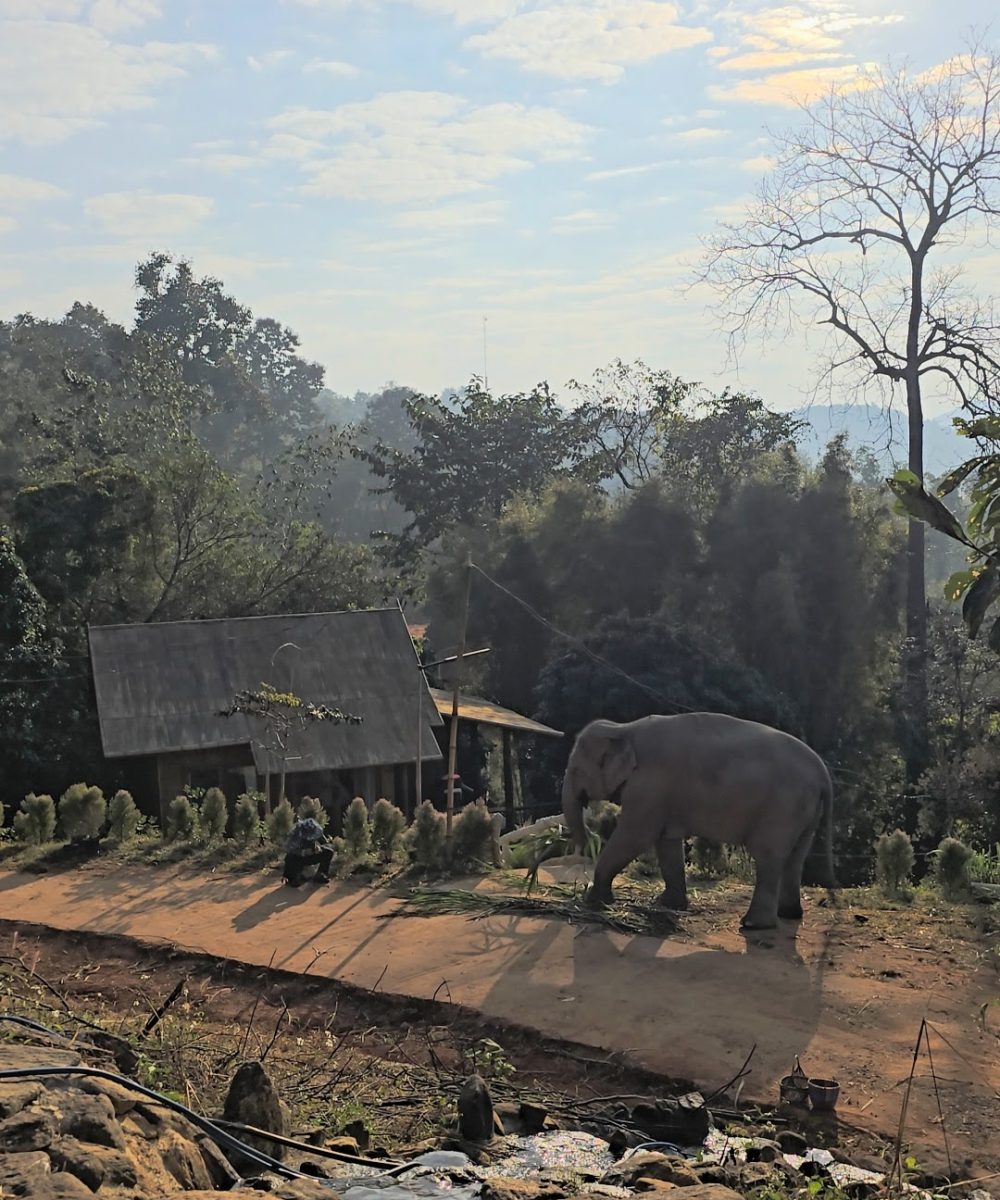
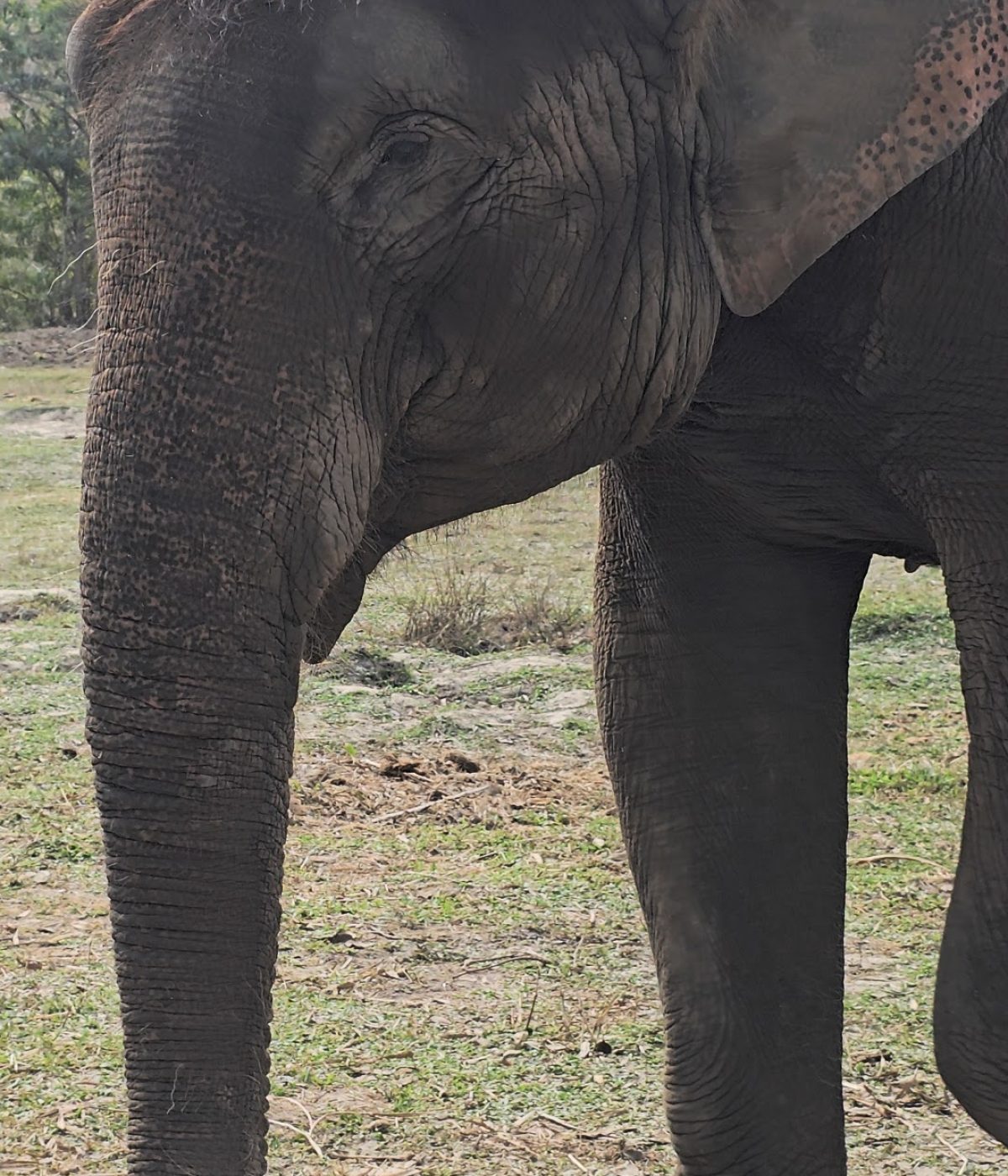
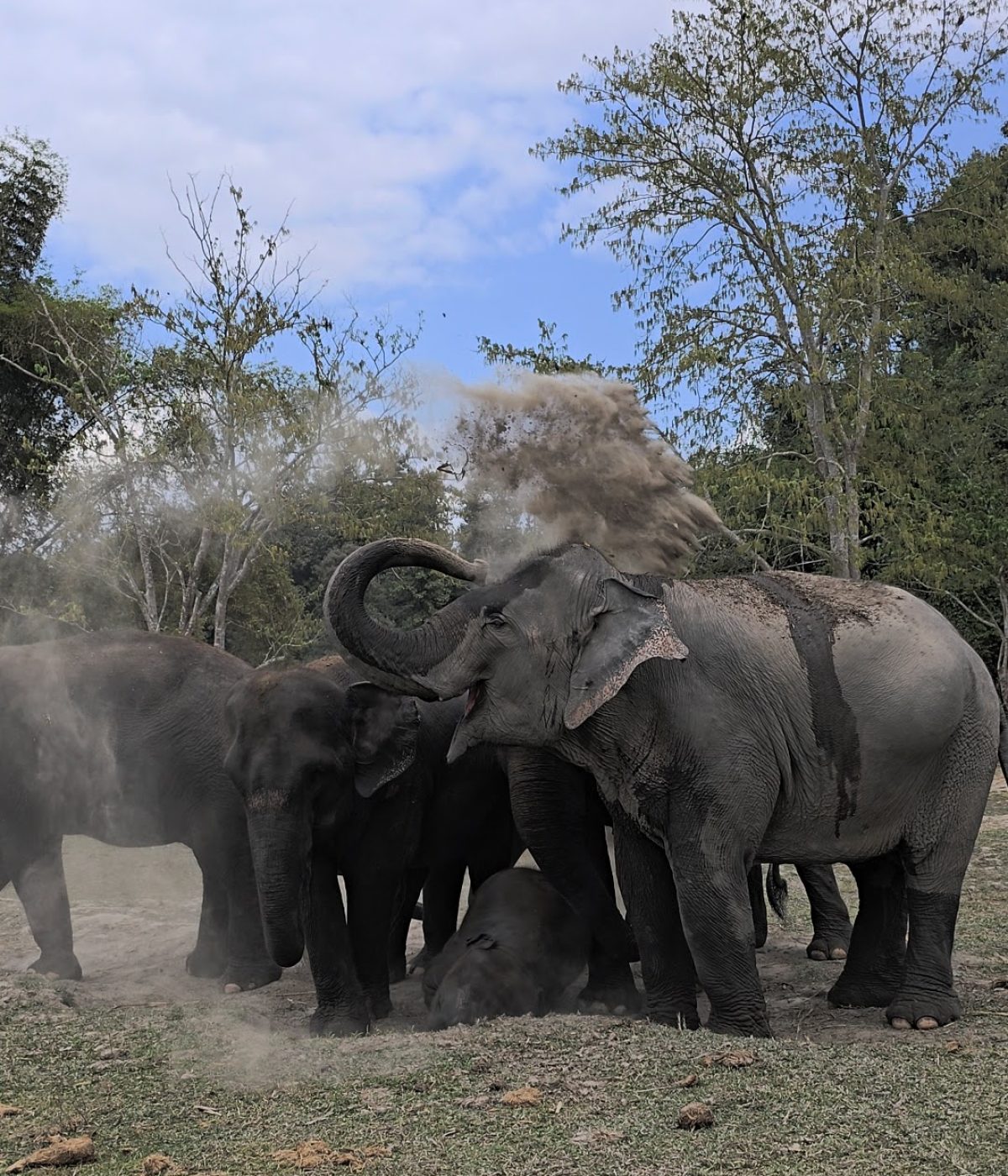
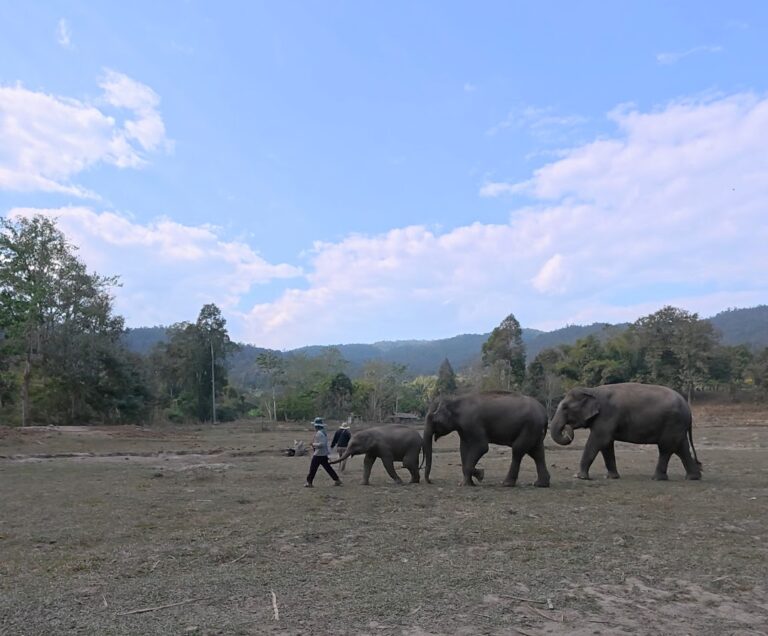
During my visit, the elephants appeared calm around their handlers and moved comfortably through their environment.

A person guides a group of elephants through a natural landscape under a blue sky with scattered clouds.

What Are The Accommodations Like?

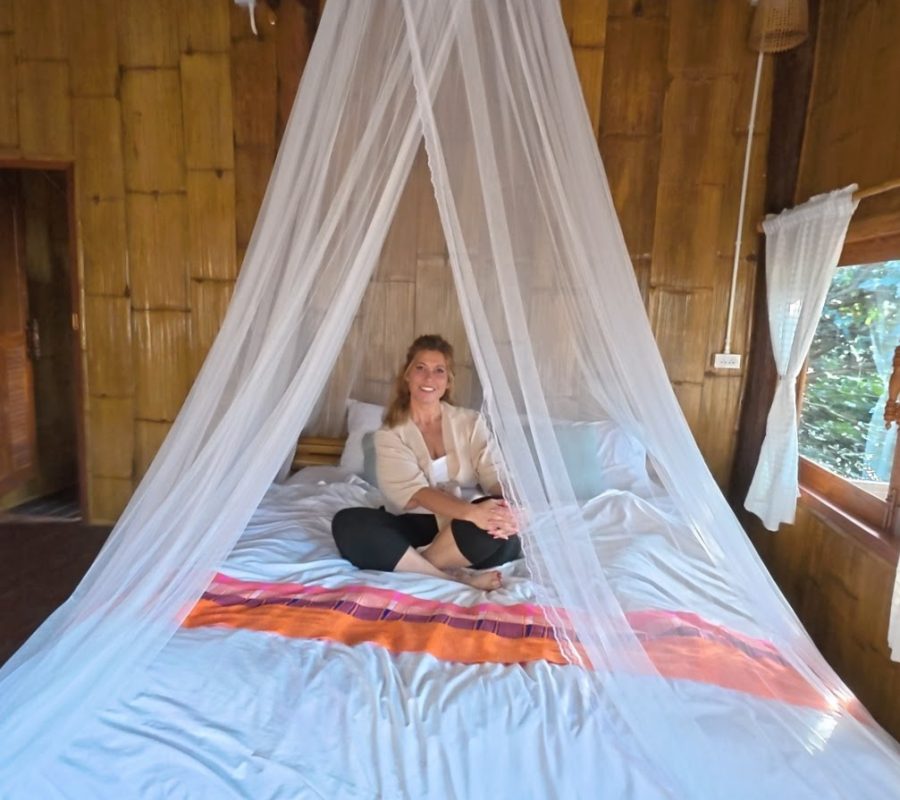
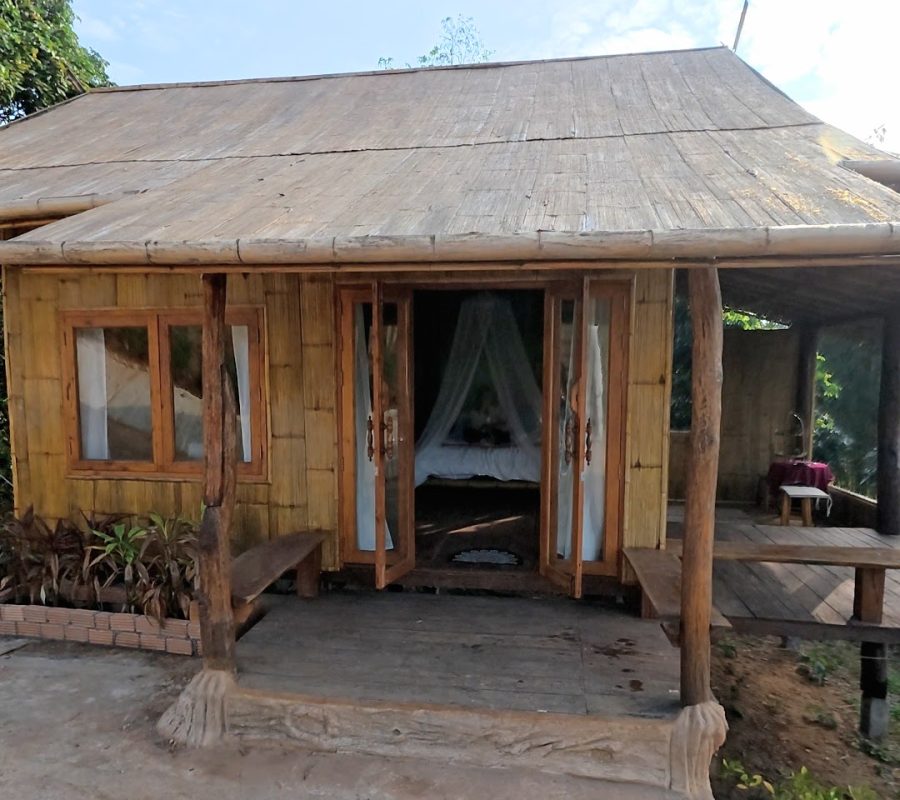
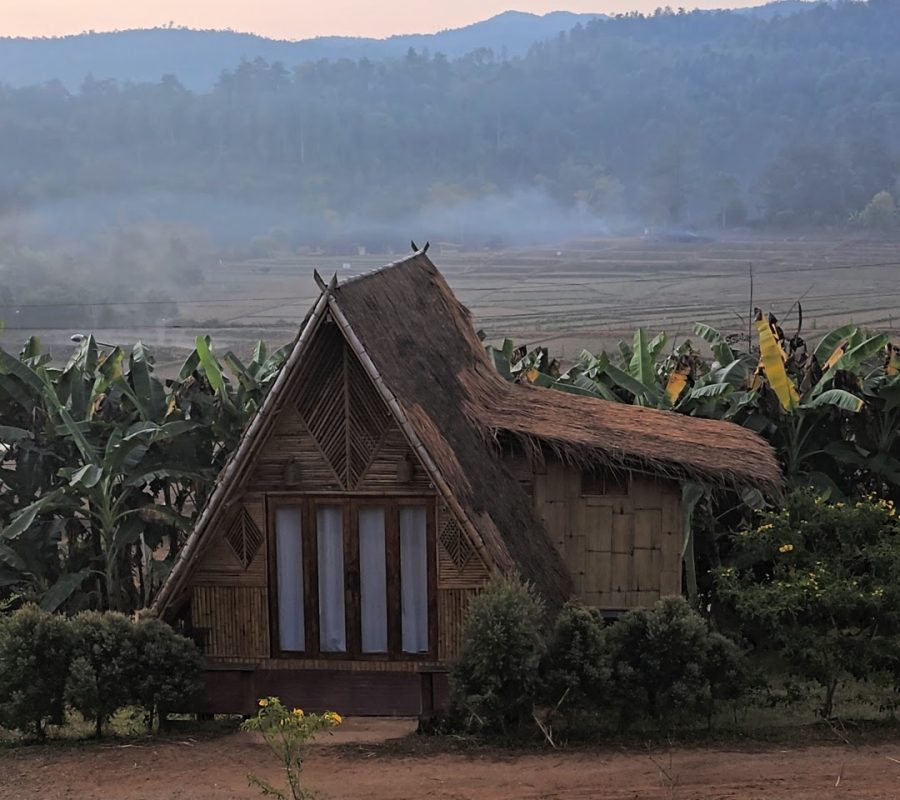
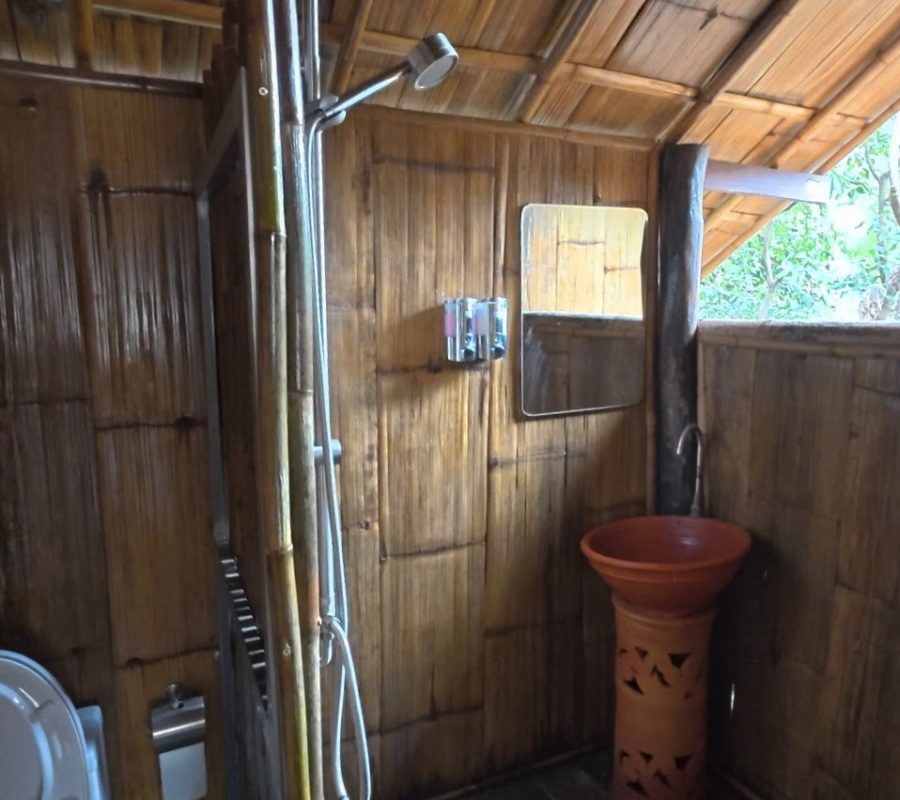
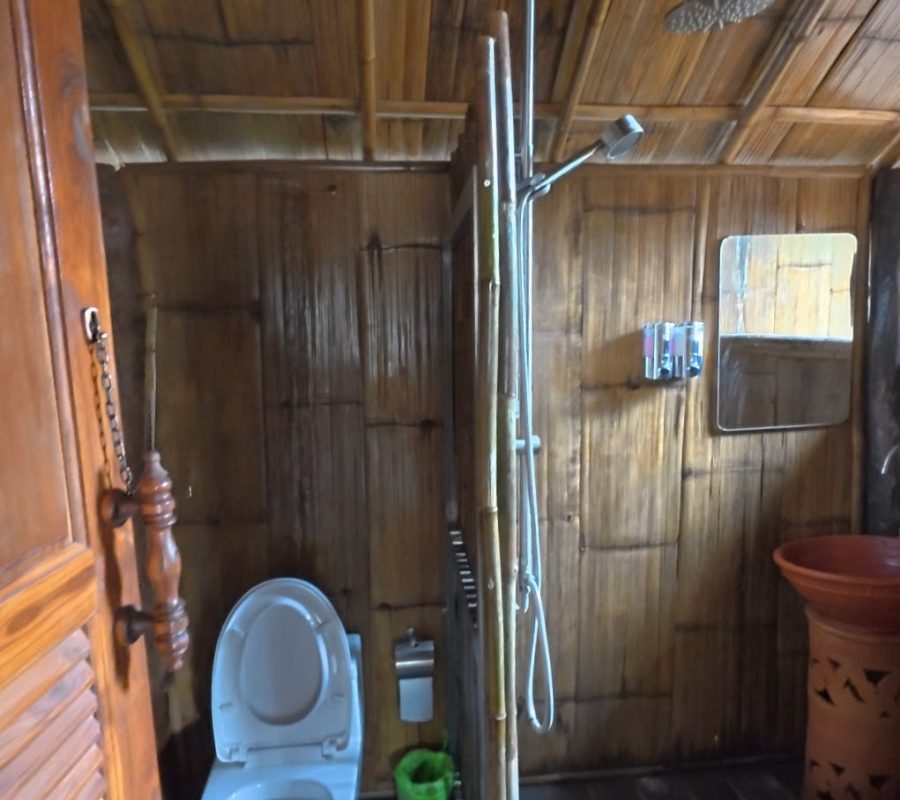
Do not come here expecting a luxury resort. The bungalows are rustic. Each one has a bed with mosquito netting hanging from the ceiling, an open air bathroom, and a fan.

And yes, you are in the jungle. If you spot a bug in your room, that is simply part of the experience.

There is no heat, and it did get cold at night in January. There is also no air conditioning, but there is running water and electricity. And we did lose power at some point in the middle of the night, which affected the whole property. I cannot say how often that happens, but since this is an eco style village, it would be smart to bring a small portable charger if you need to keep your phone powered.

It is simple, but comfortable enough if you arrive with the right expectations.

The Itinerary

Day One: Jungle Hike, Bamboo Cooking, And Meeting The Elephants

Jungle Waterfall Hike

The day started with an early morning pickup from our hotel near the Old City in Chiang Mai. From there, we drove about an hour through the jungle and up into the mountains on winding roads.

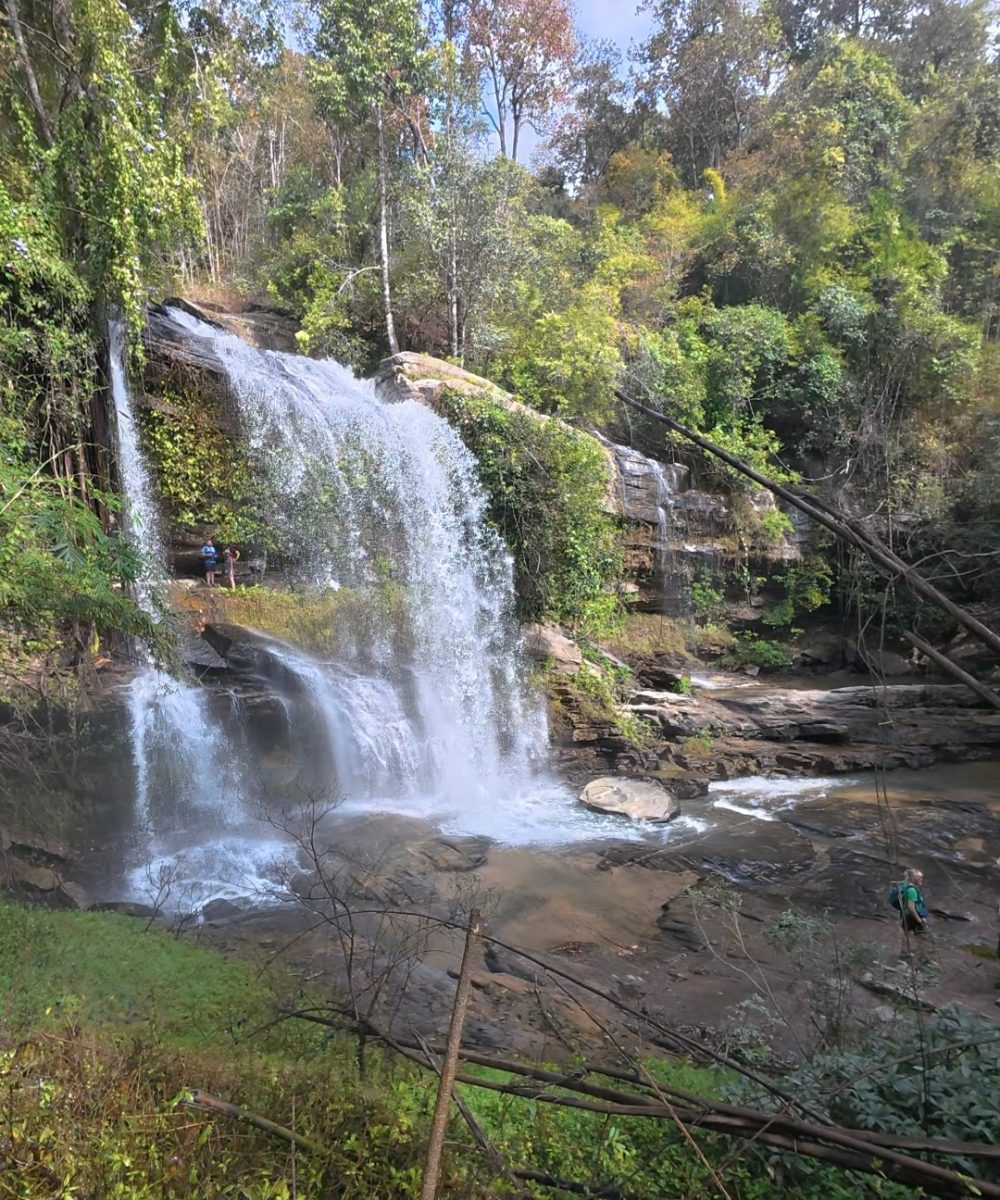
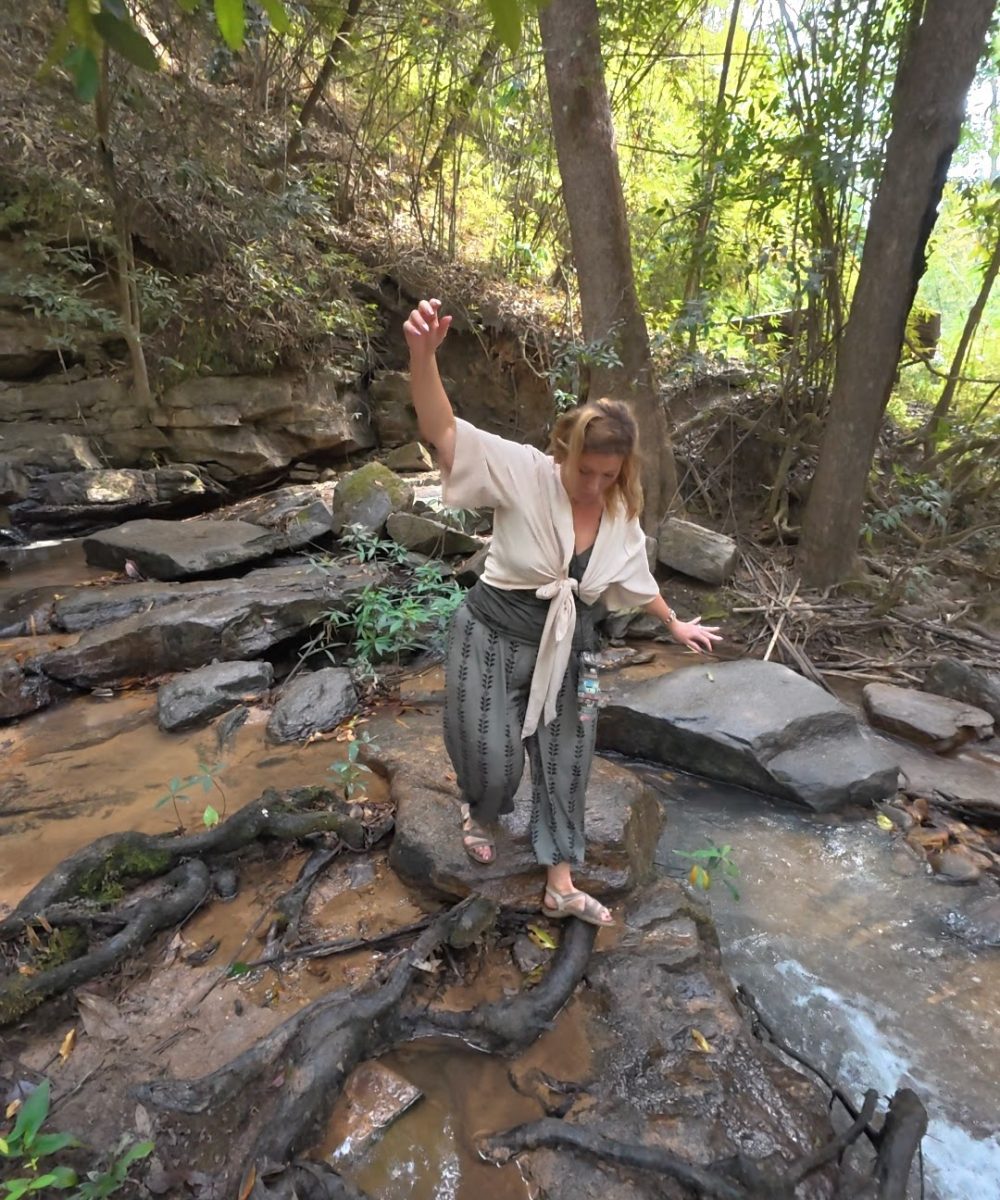
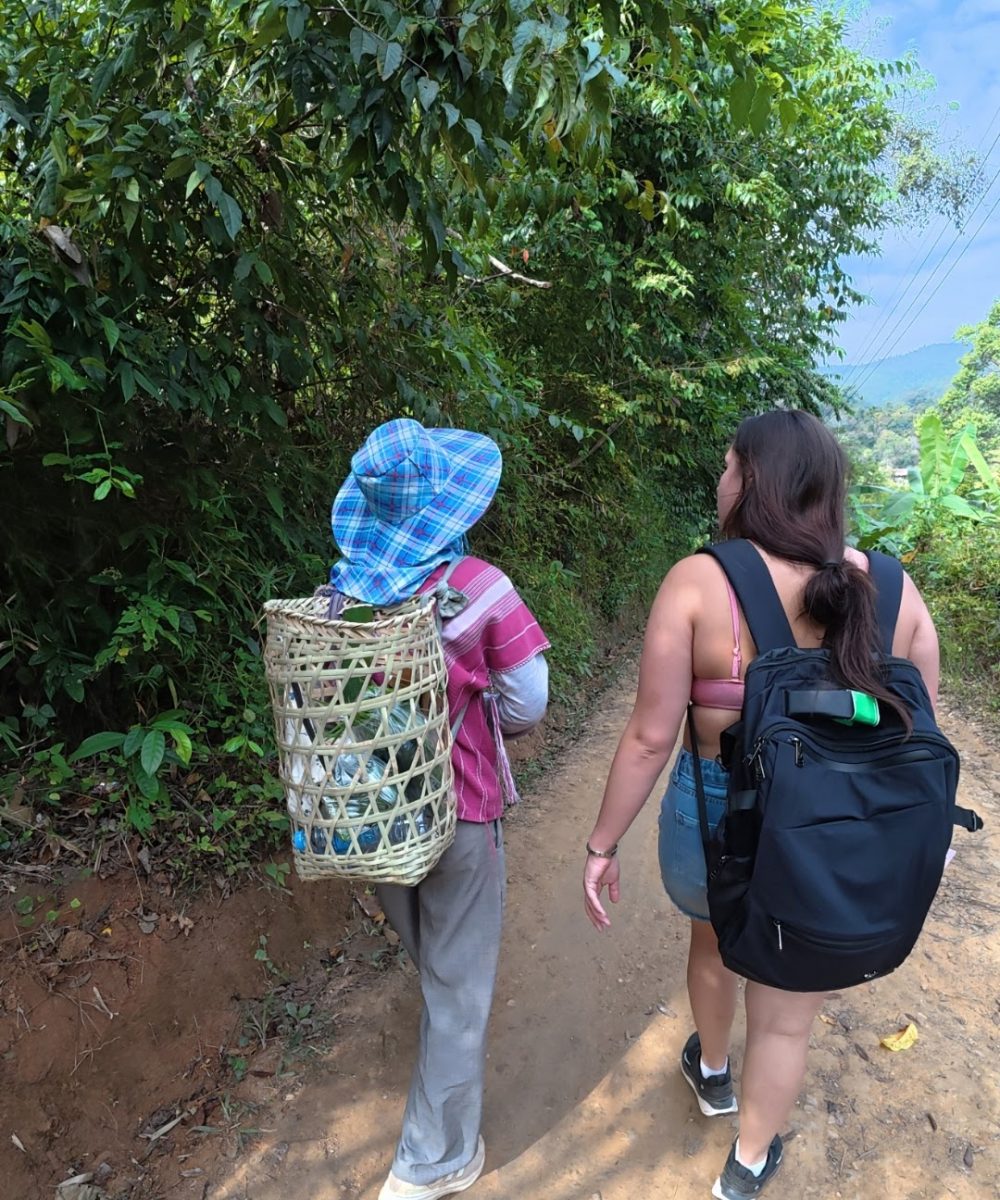
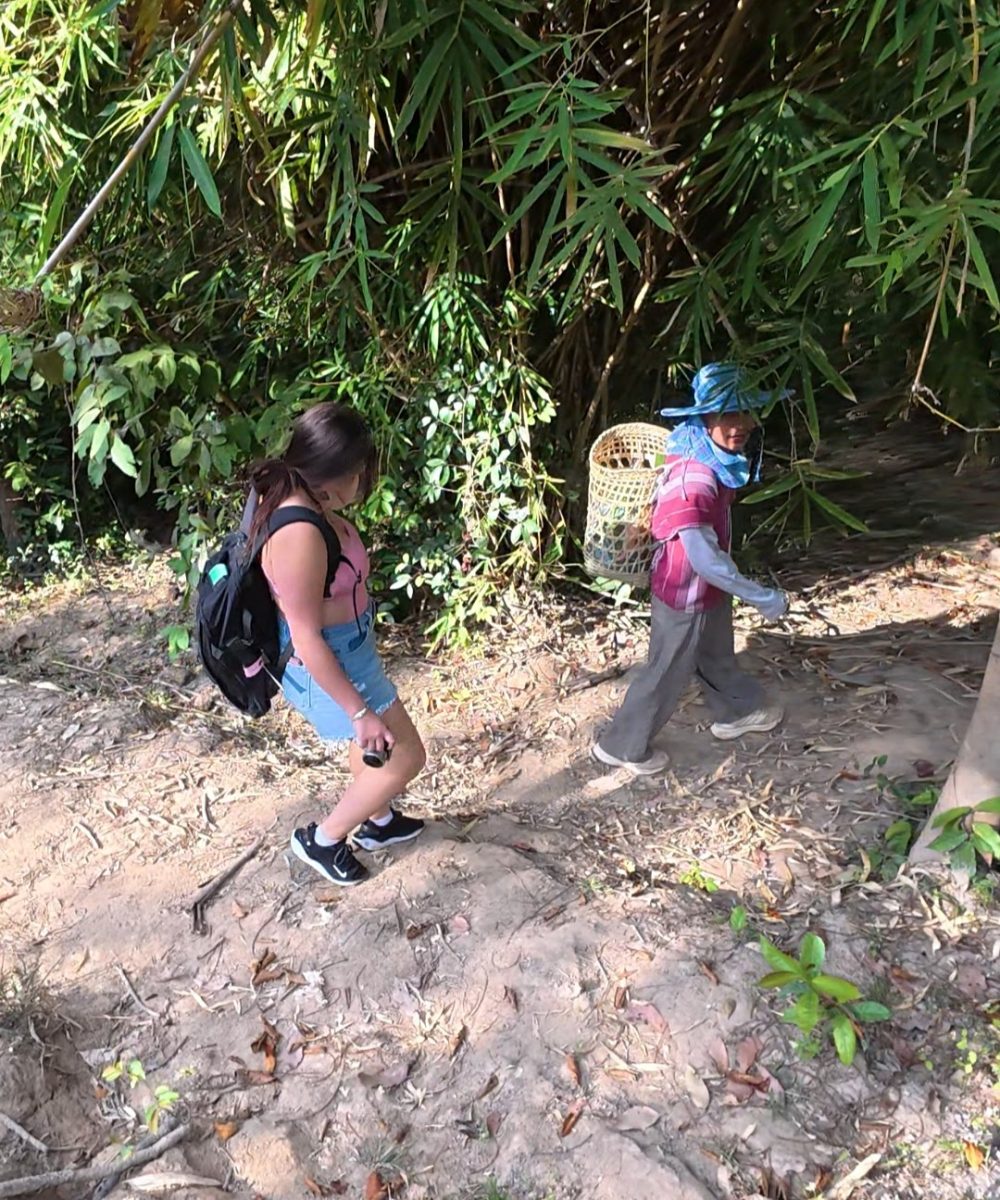
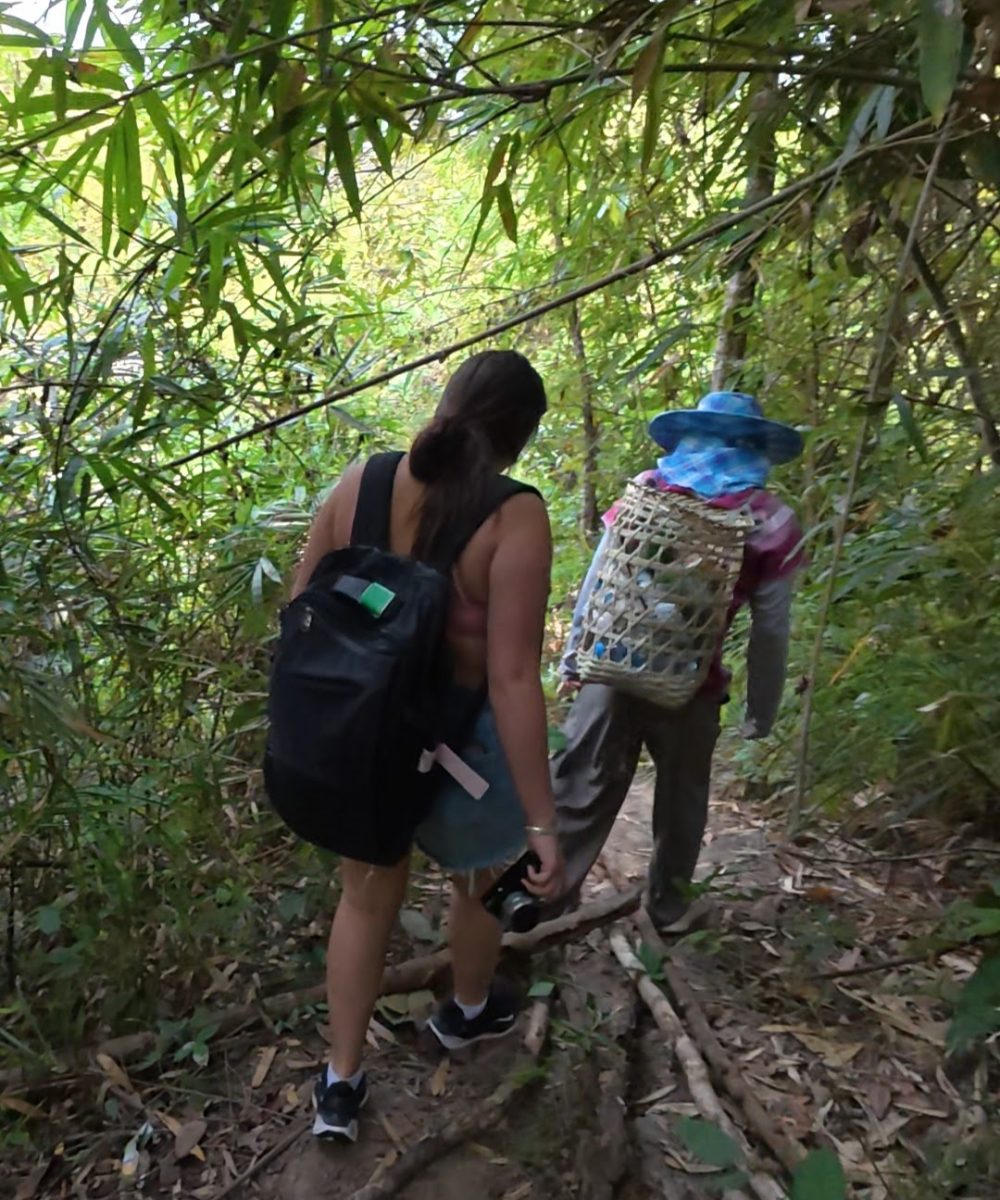
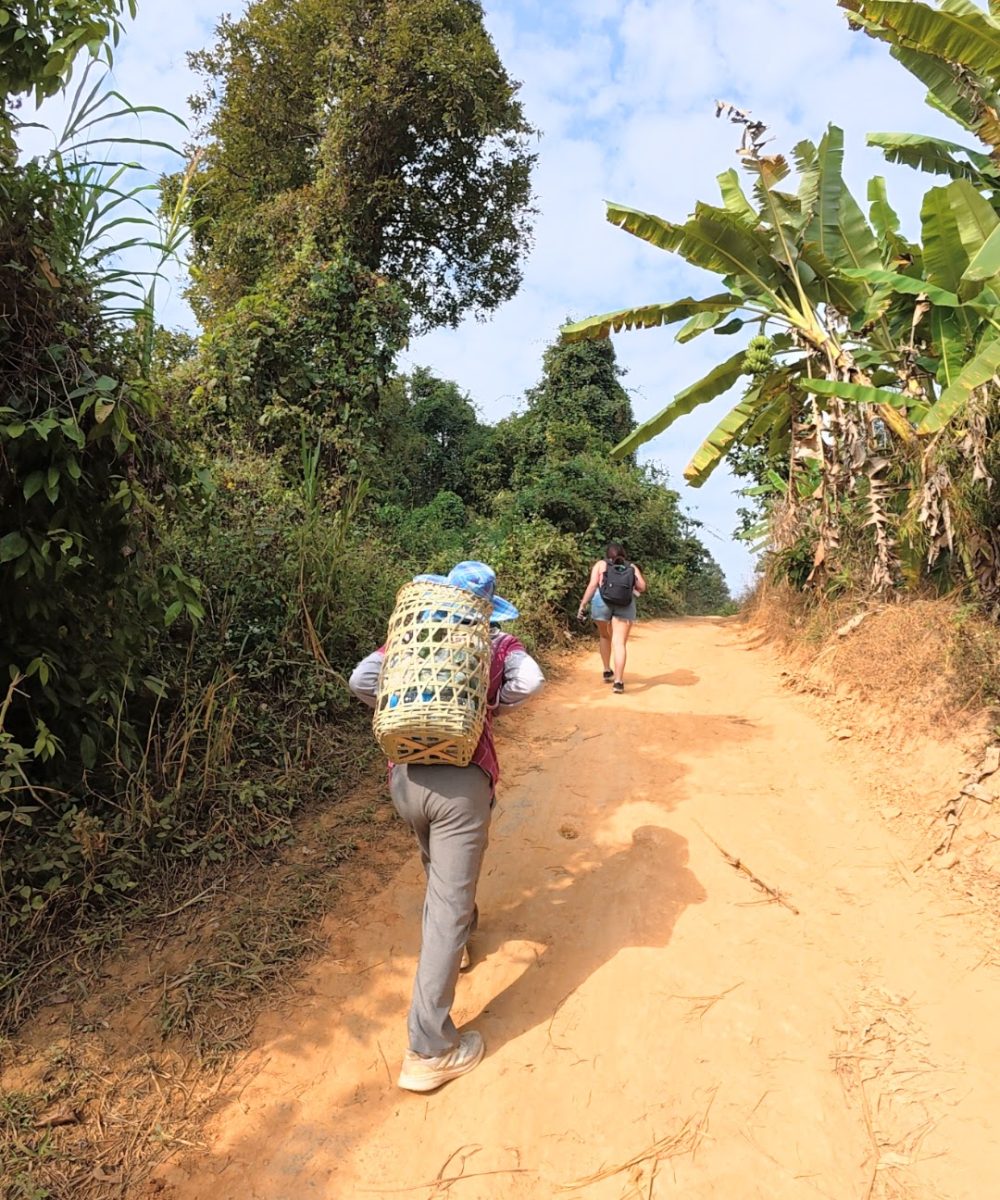
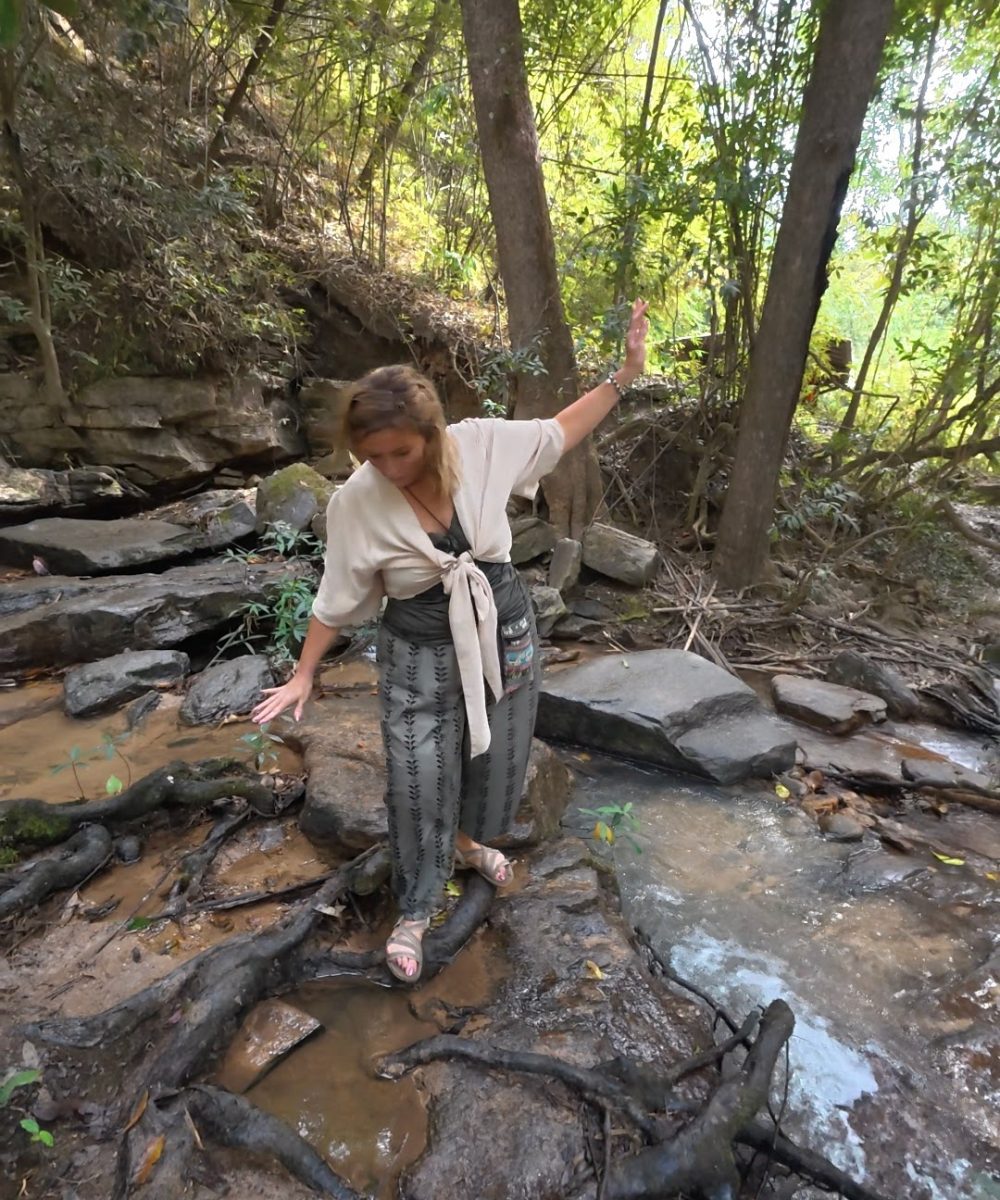
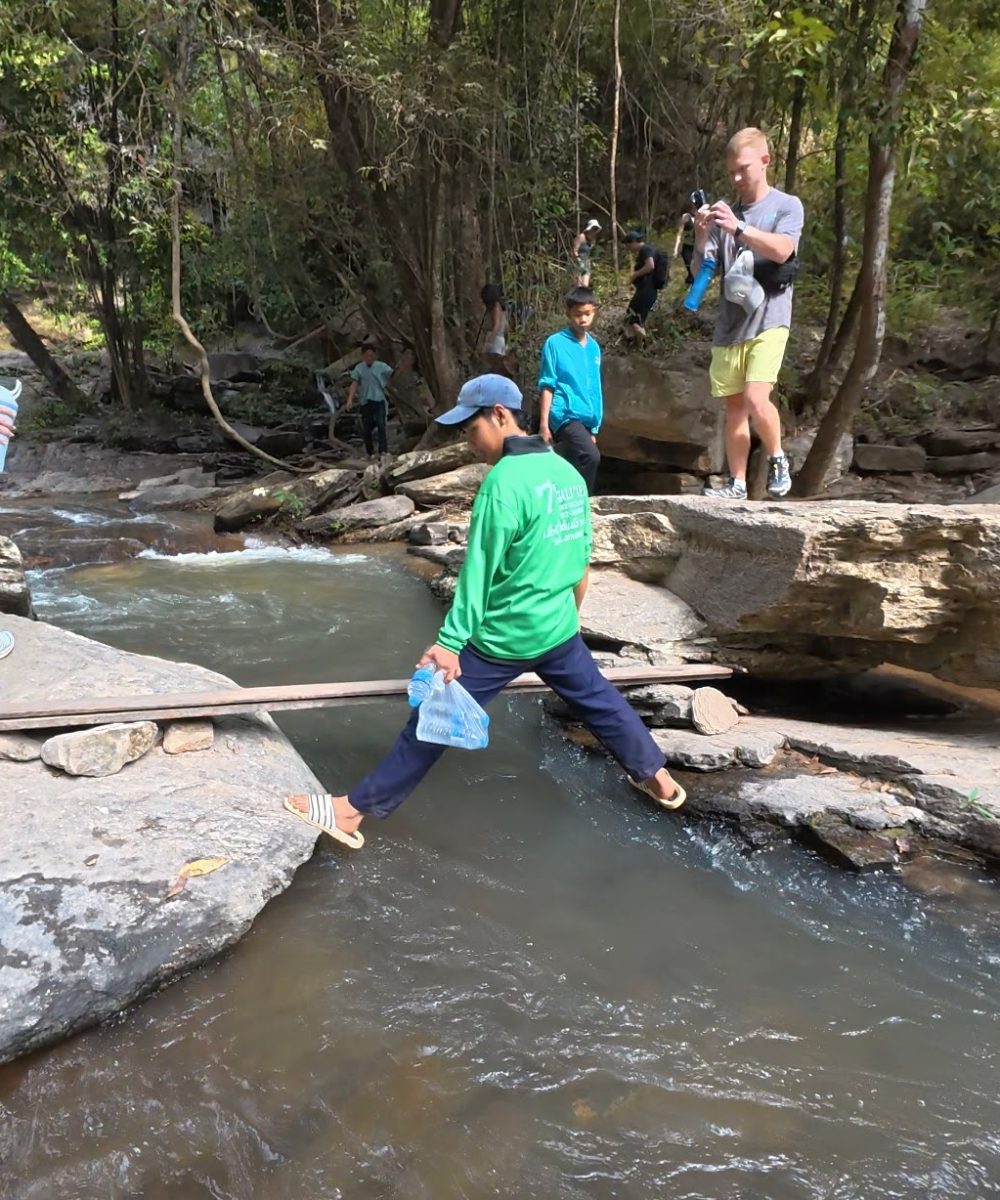
When we arrived, we met our guide and started off our two day adventure with a waterfall hike. The trail led us through bamboo groves and tall trees, with amazing views of the surrounding mountains and rice fields along the way.

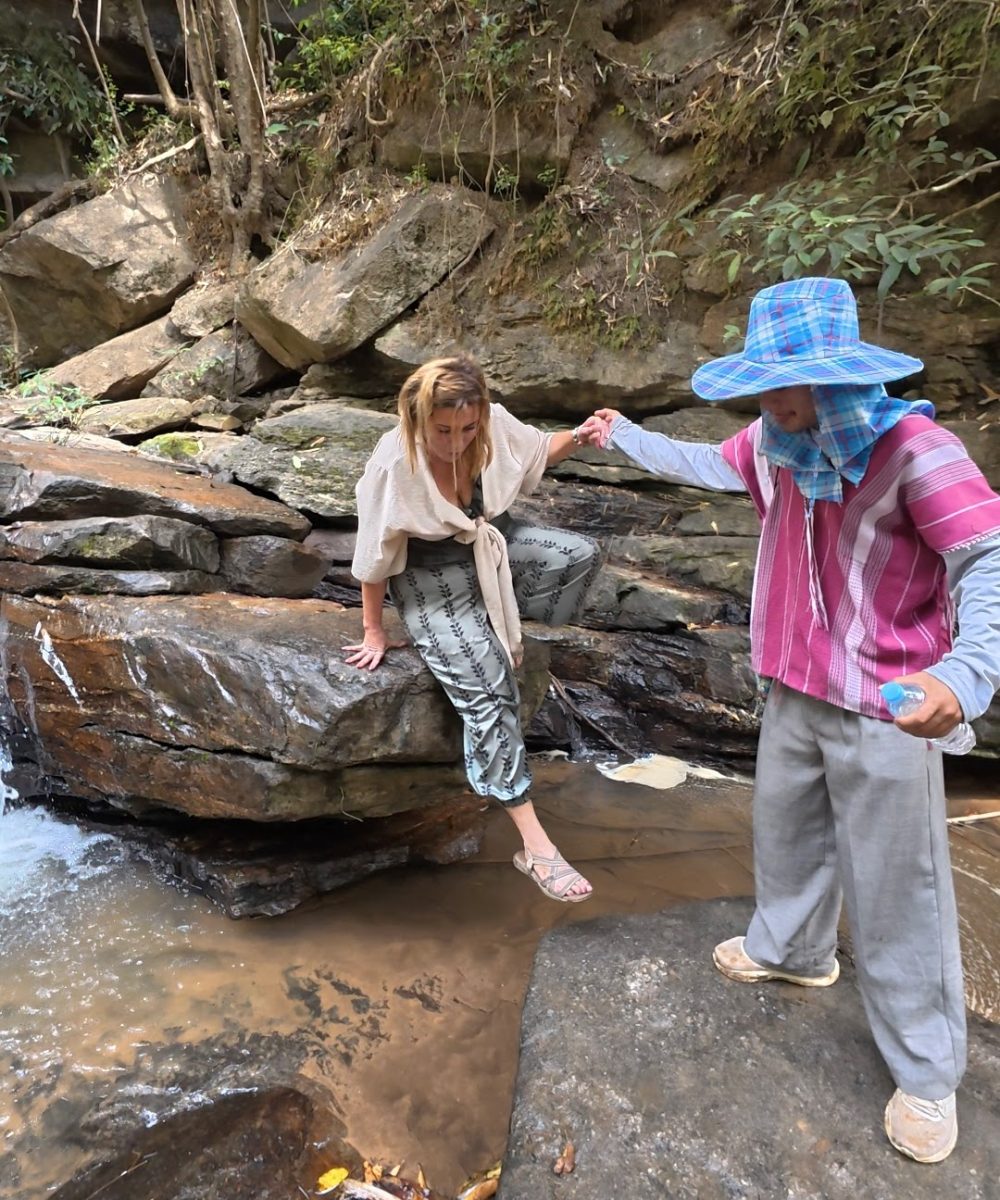
Our guide was a young man who lived in the area and was still learning English. We spent most of the hike joking, laughing, and teaching him a few new words. It made the experience feel more personal and relaxed.

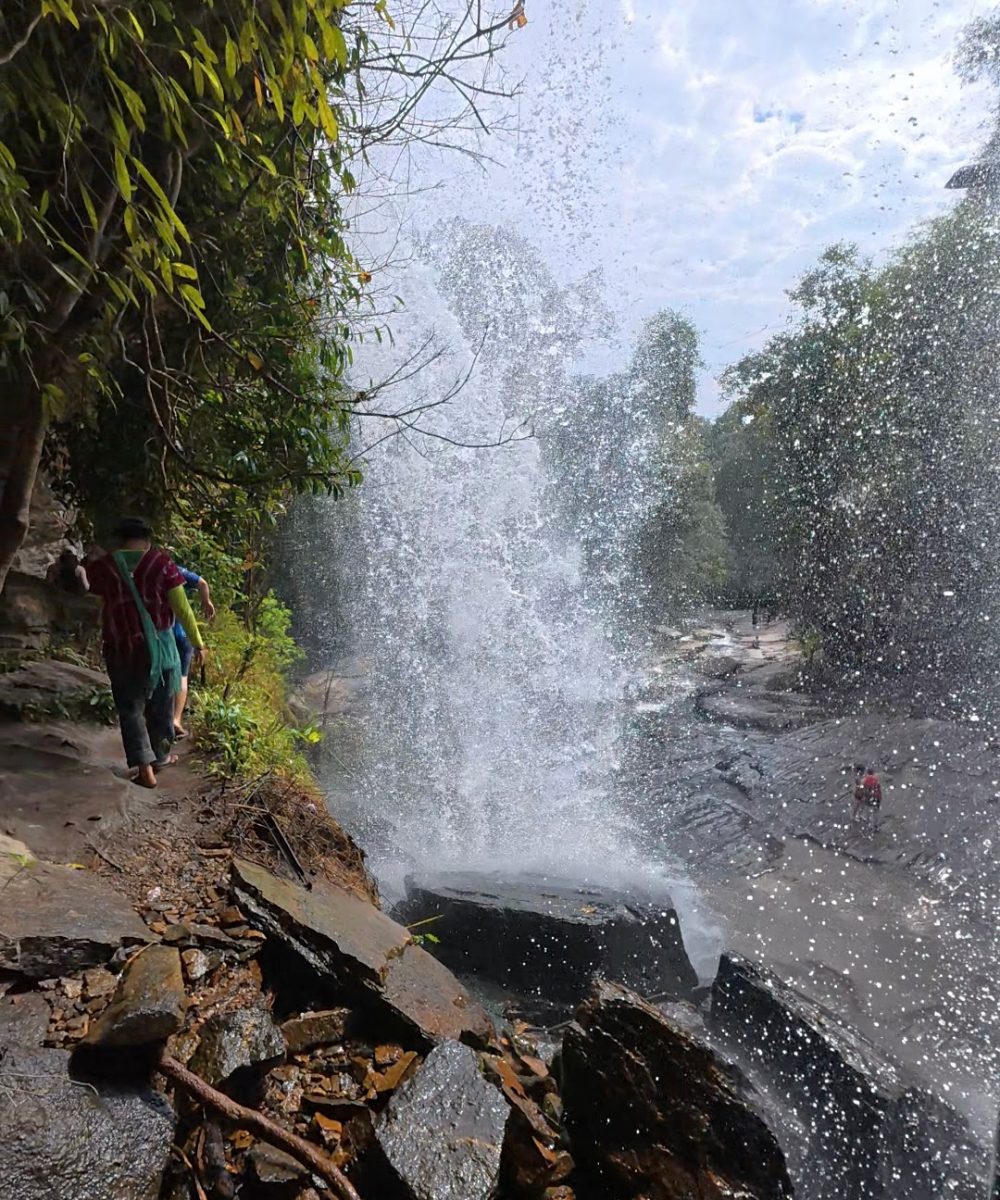
The trail continued up a small cliff where you could pass behind the waterfall, which was exciting but also a little nerve wracking. One wrong step could have sent you sliding down with the water.
Bamboo Cooking In The Jungle

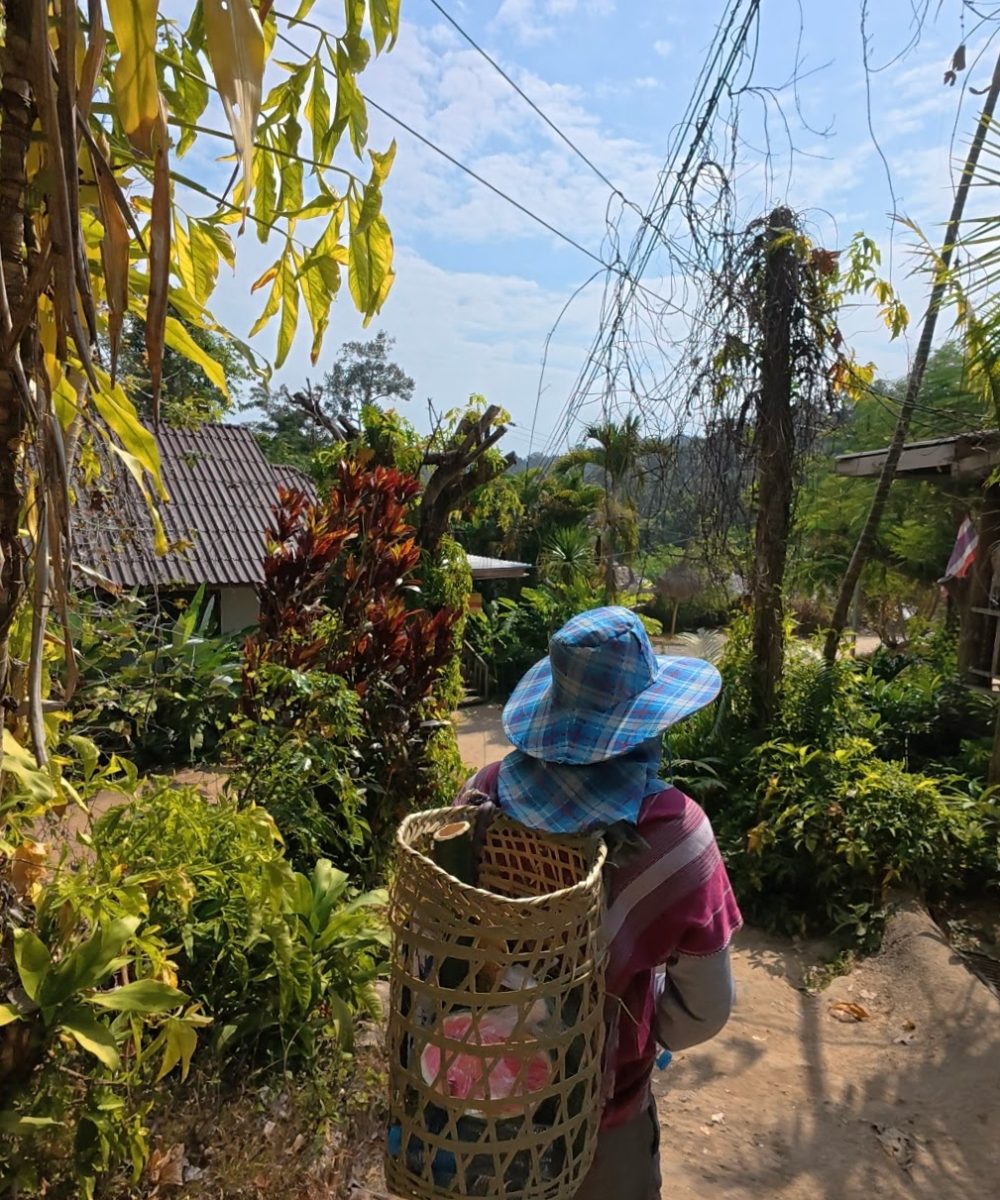
After the waterfall, we continued hiking until we reached an open field where a few other groups were gathering with their guides. There were simple covered shelters with picnic tables nearby, and that is where our guide finally set down his basket.

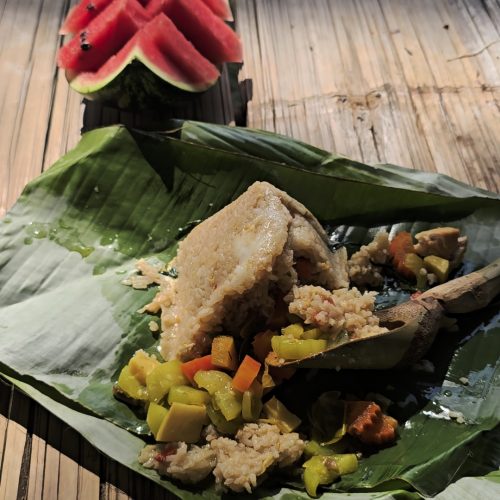
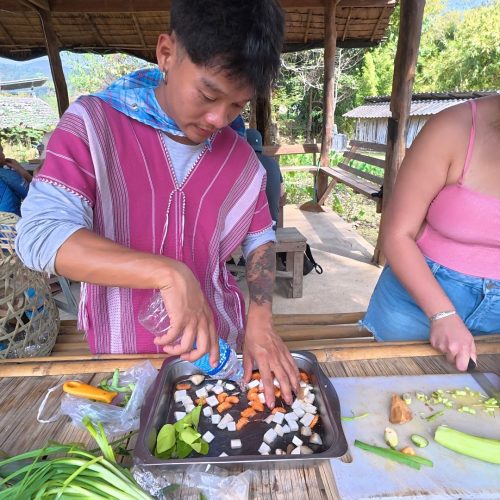
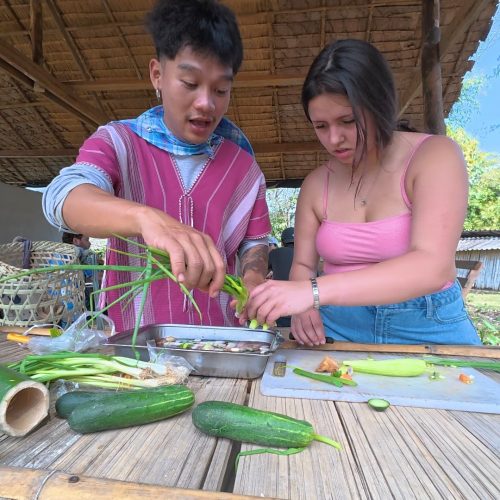
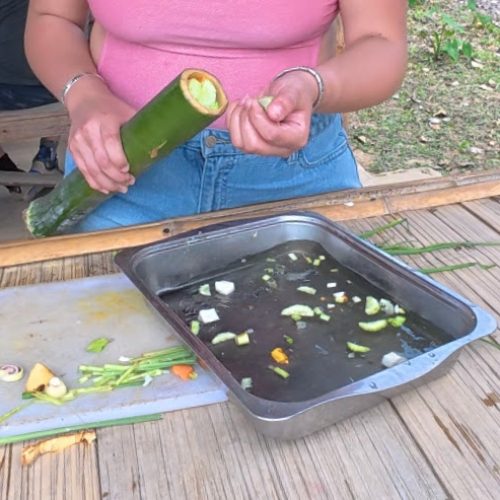
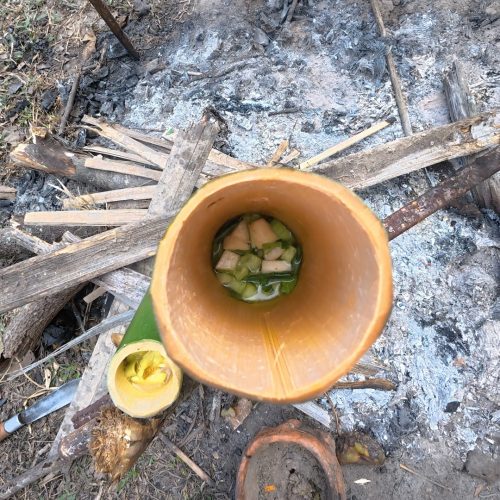
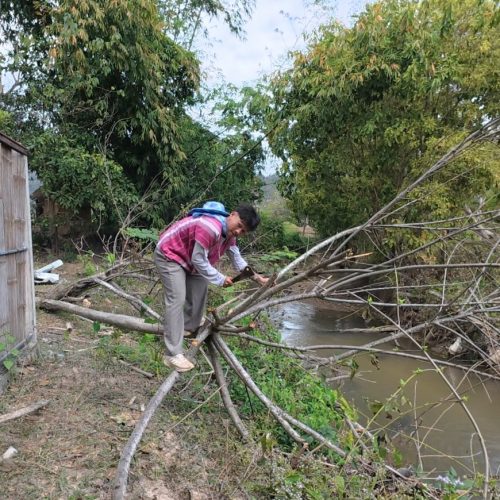
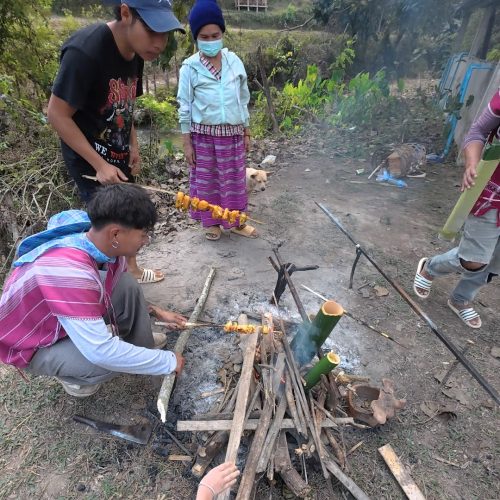
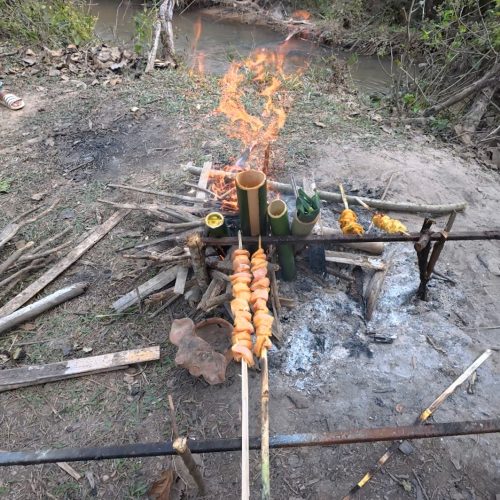
Inside were vegetables, a cutting board, knives, bottled water, and hollowed bamboo tubes. He showed us how to chop the vegetables and pack them into the bamboo. The guides then built a fire pit, placed the bamboo tubes over the flames, and set chicken skewers alongside them. Off to the side, staff prepared rice wrapped in banana leaves.

We then ate lunch our out of bamboo bowls using bamboo spoons. It was unique, authentic, and surprisingly delicious.

Making Treats For The Elephants

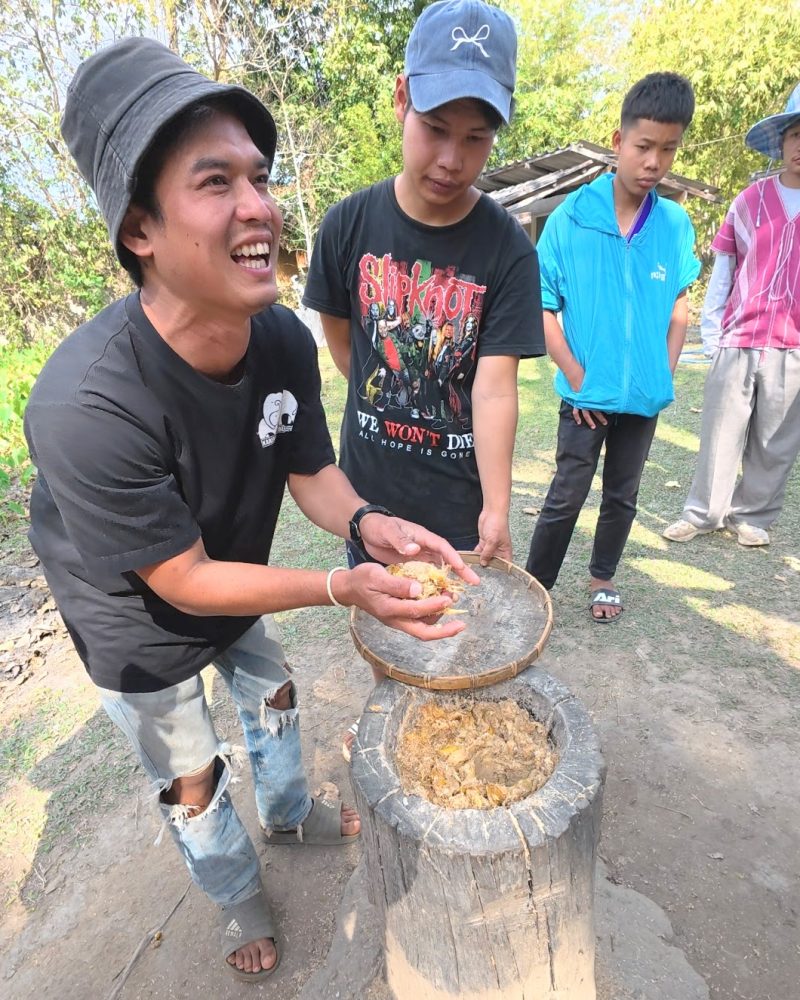
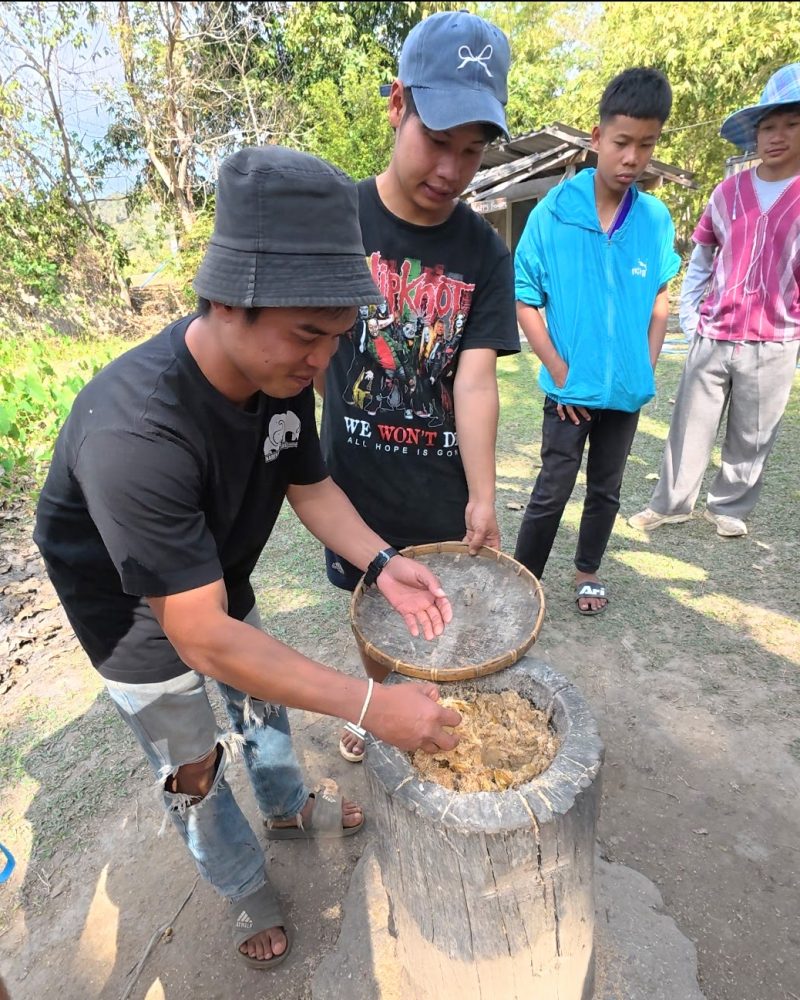
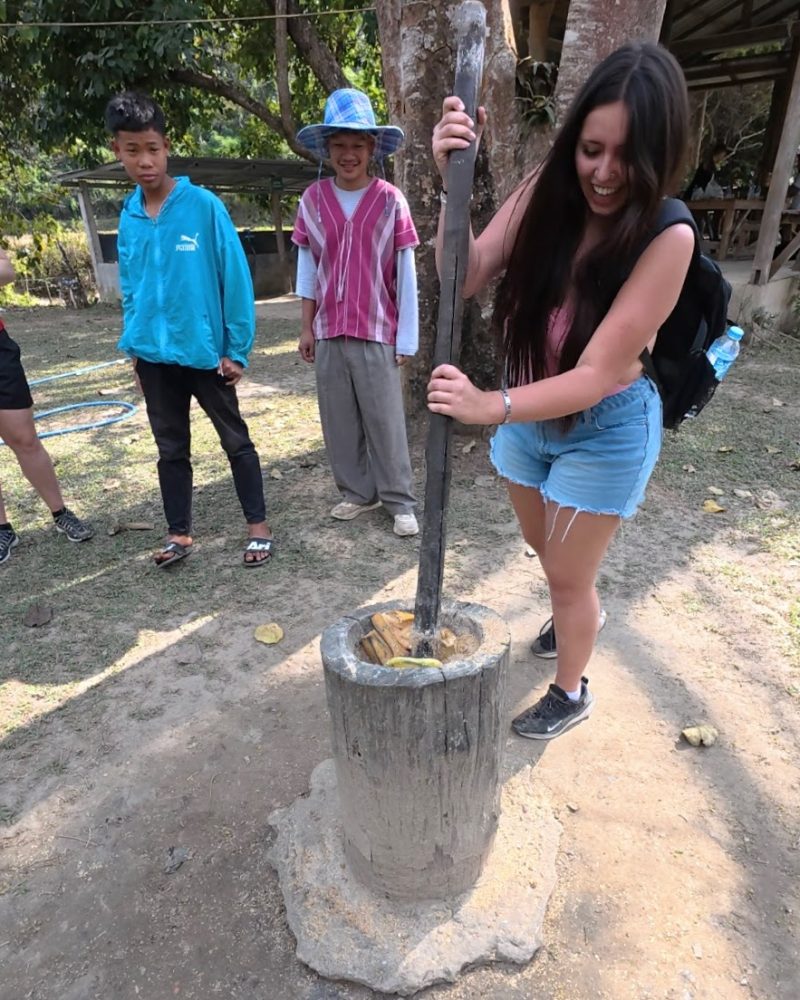
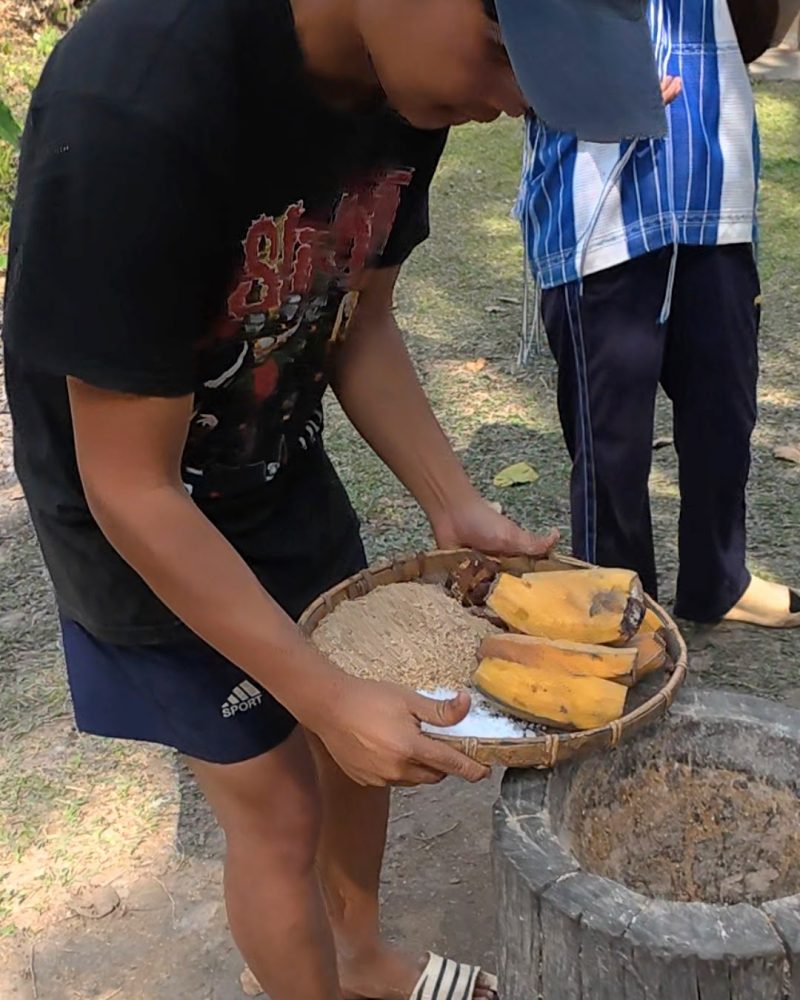
After we finished lunch, all the groups gathered to learn how to make treats for the elephants. They are called medicine balls and are a traditional part of elephant care at sanctuaries like this. They are made from a blend of ingredients that support digestion and overall health. Ours included mashed banana, rice, tamarind, and salt.

We took turns pounding the mixture in a large wooden mortar, then rolled it into balls by hand. It was sticky, messy, a little gross, and a lot of fun.

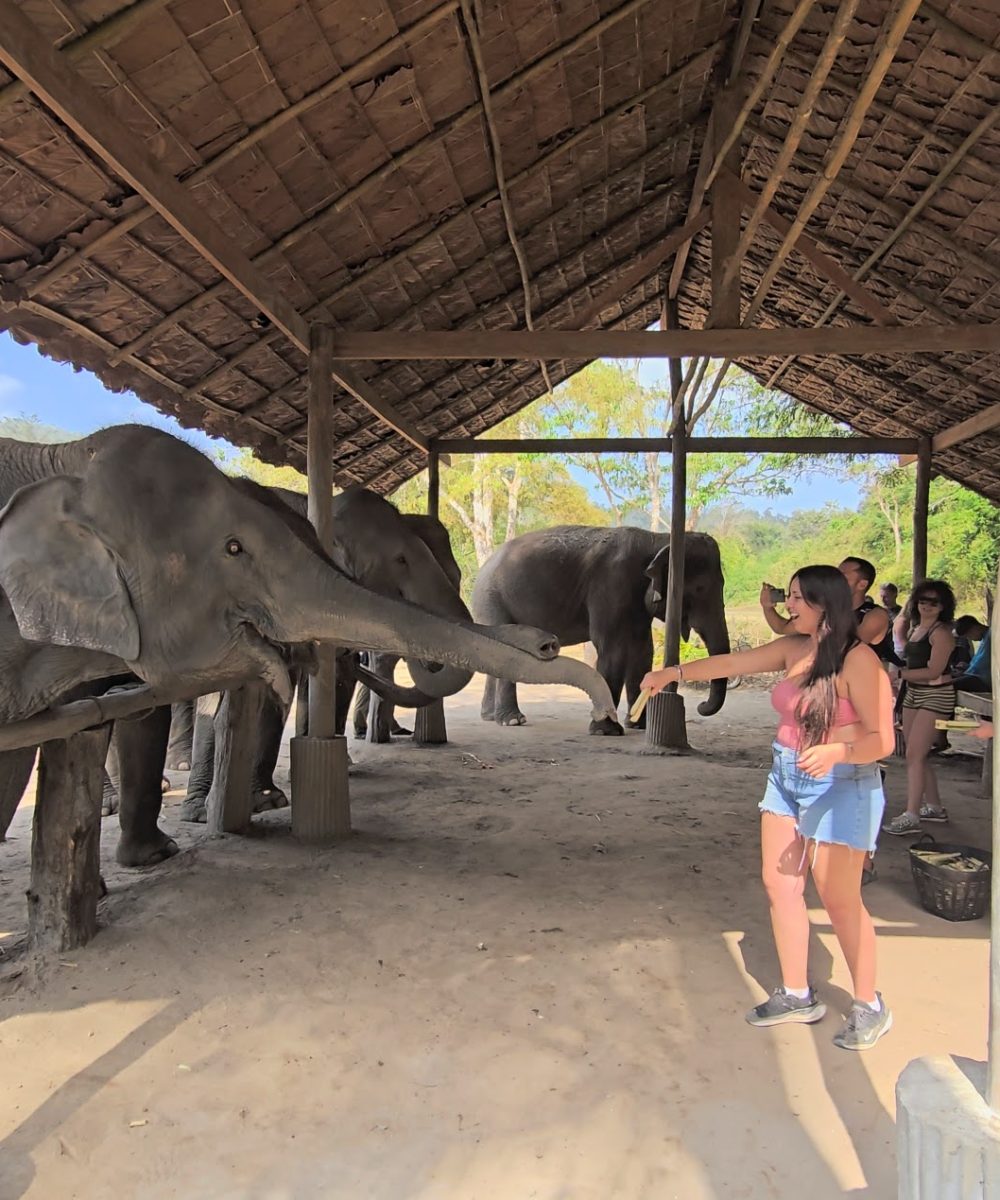
Afterwards we headed over to the area where the elephants were roaming and fed them the treats we had just made, along with plenty of sugar cane sticks.

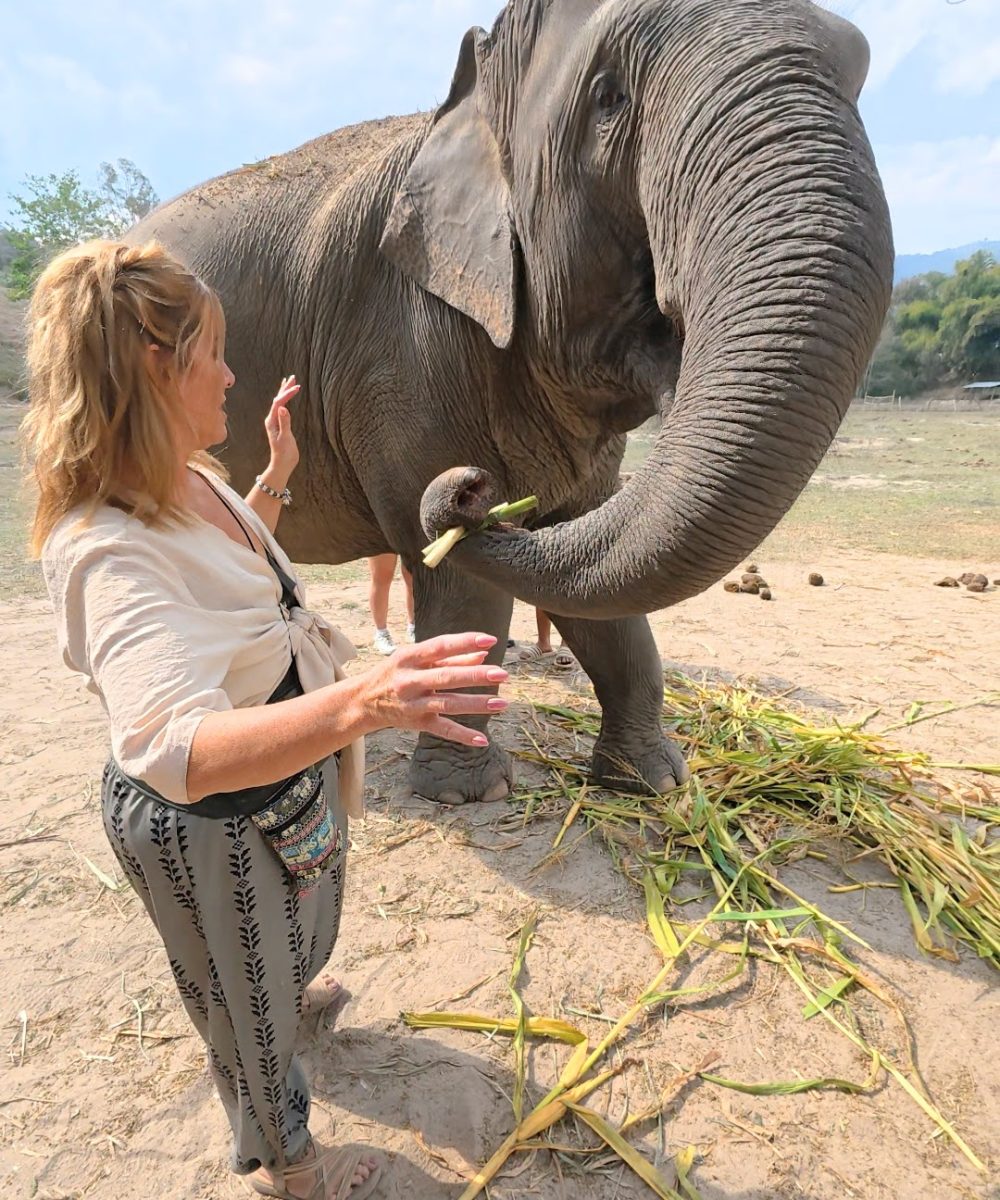
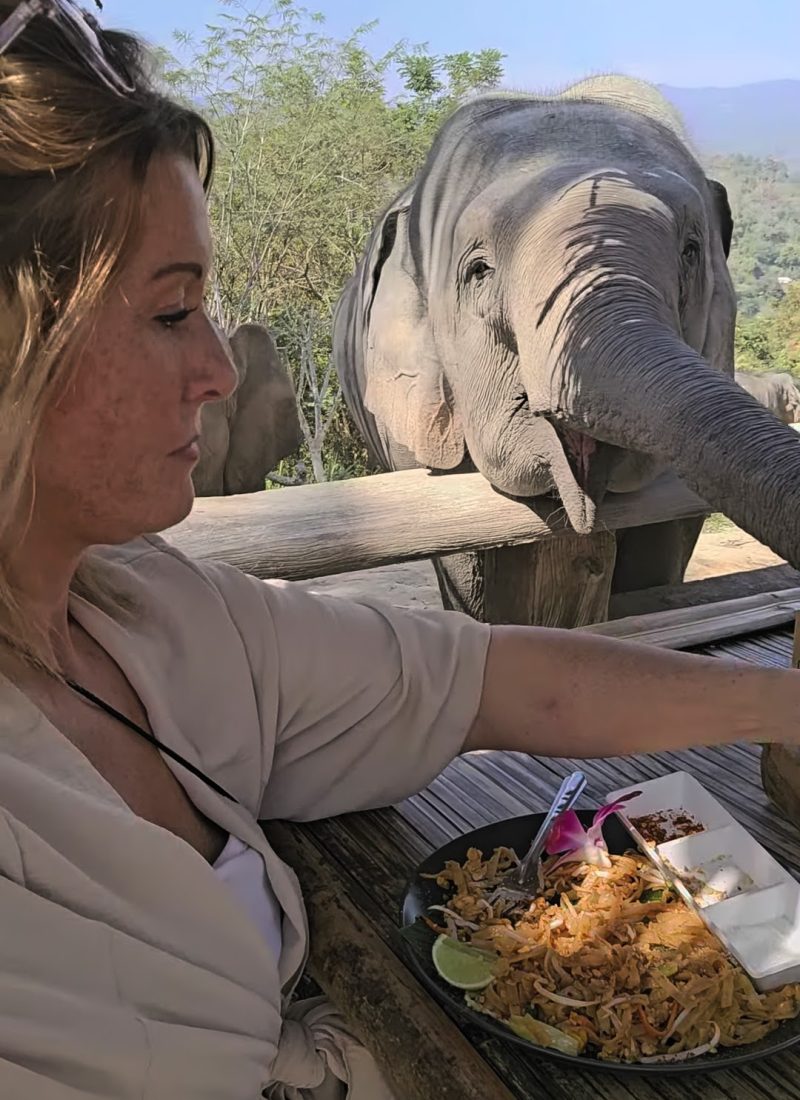
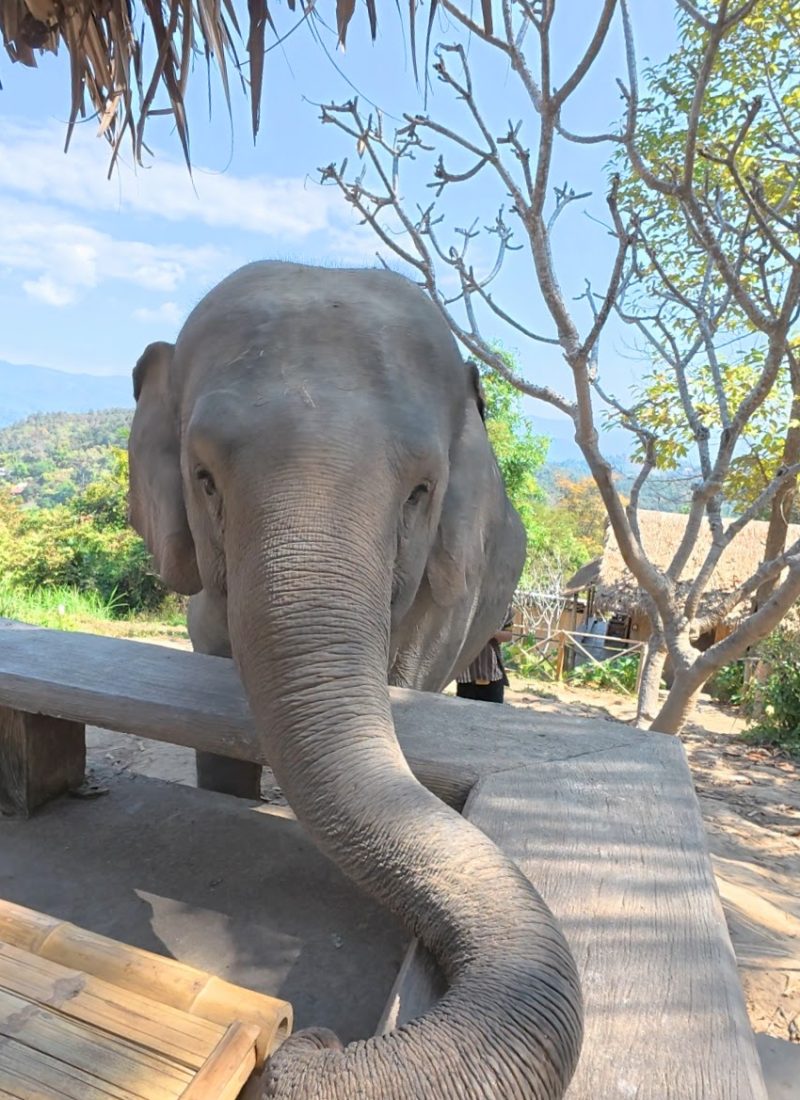
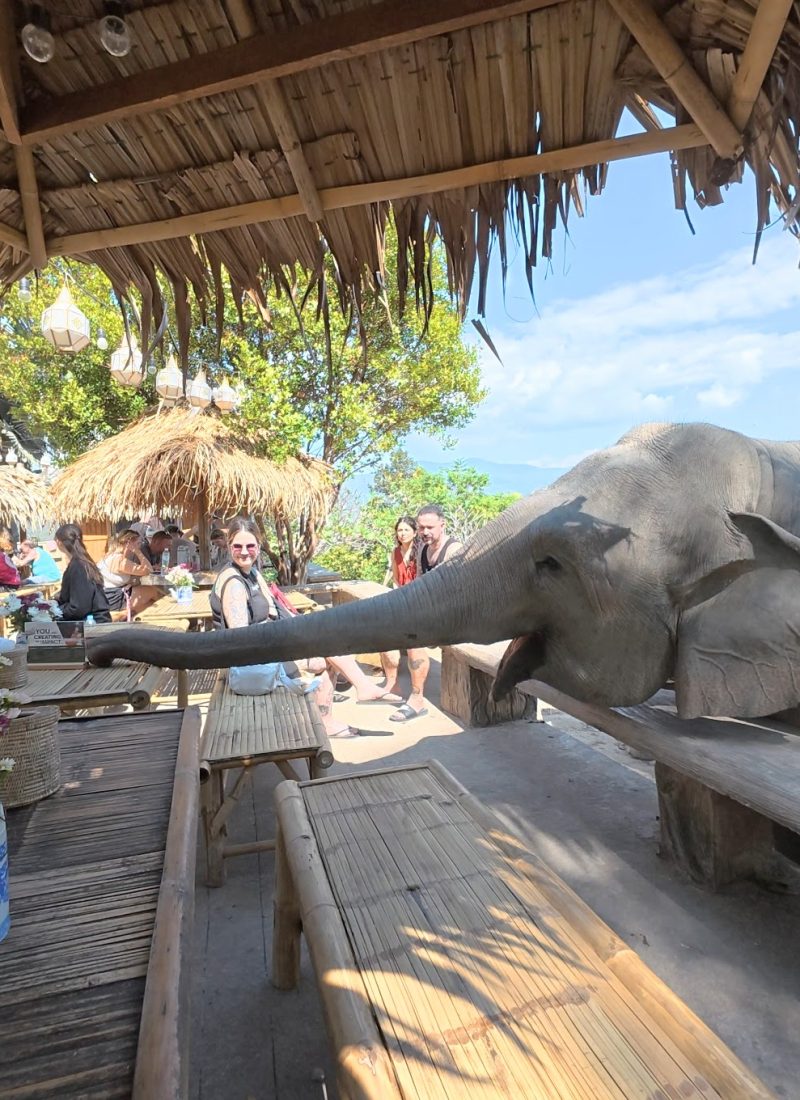
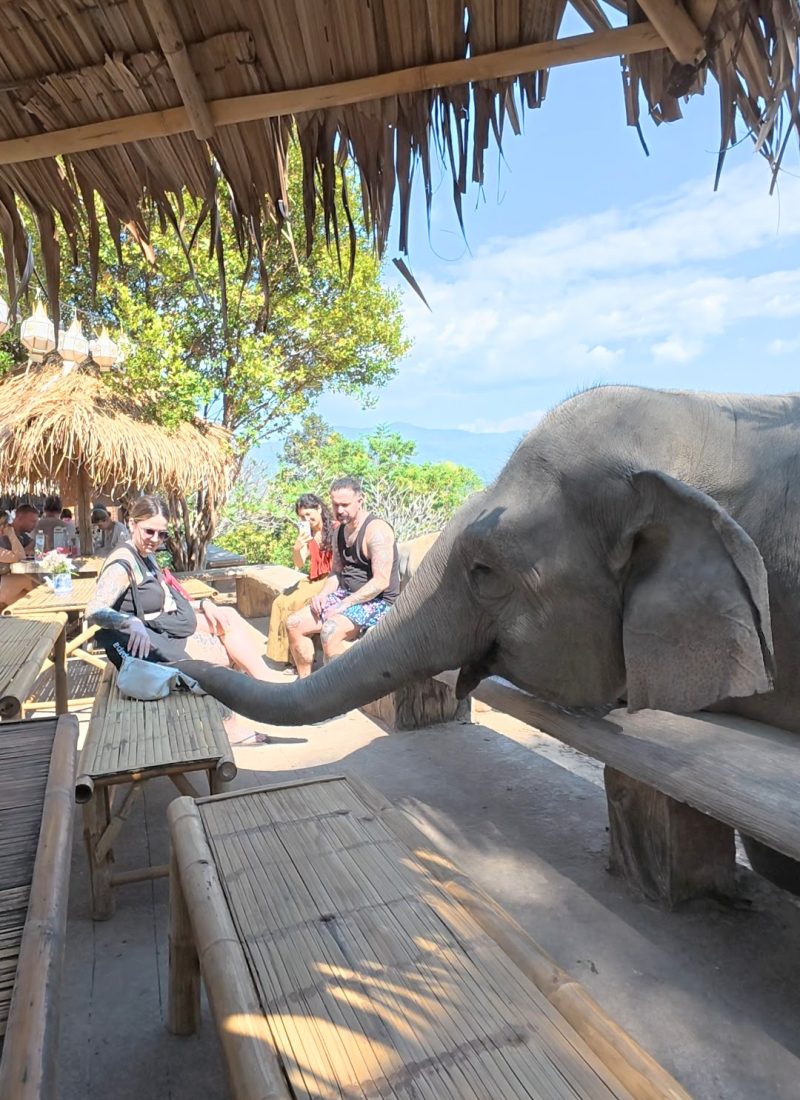
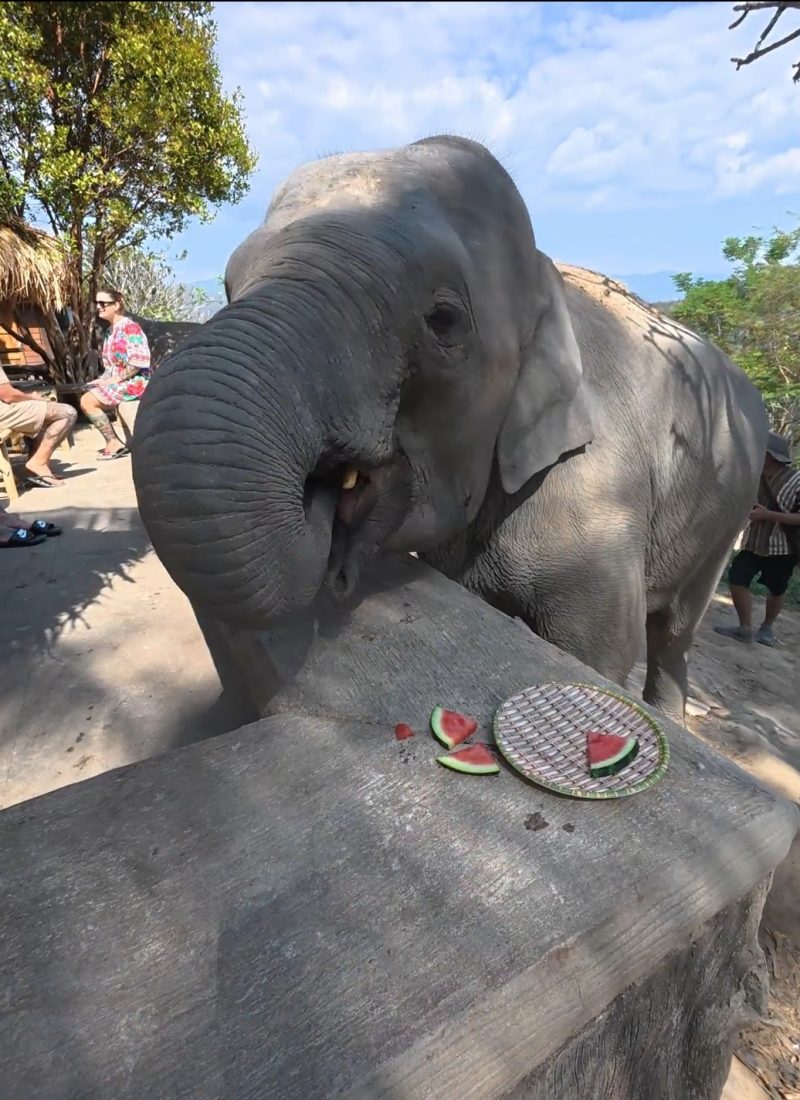
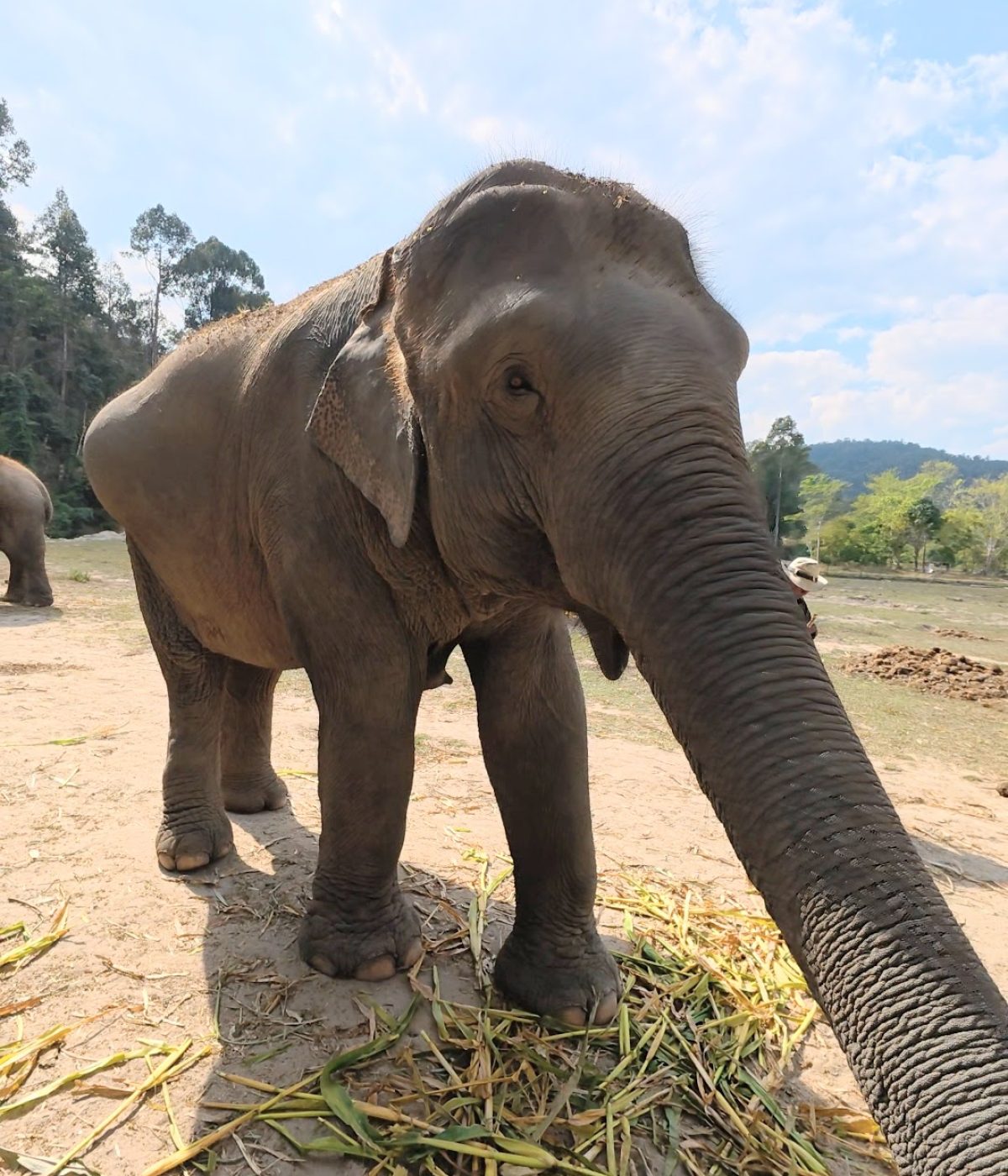
It is a strange feeling feeding an elephant if you have never done it before. I never knew that they have a small finger like projection at the end of their trunk that allows them to grab small objects. They can wrap that little handy little tool right around a small sugar cane stalk, pull it from your hand, and toss it straight into their mouth.


After feeding them for a bit, we walked with them through the fields and down by the river. 
We spent about two hours hanging out with the elephants before setting out on another short hike to the where the bungalows were located. Our guide showed us to ours and gave us time to settle in. Later that evening, we met back at the main gathering shelter where our guide served us dinner.
Day Two: Breakfast With The Elephants, Bamboo River Rafting And Traditional Karen Village

The Morning Wake Up Call

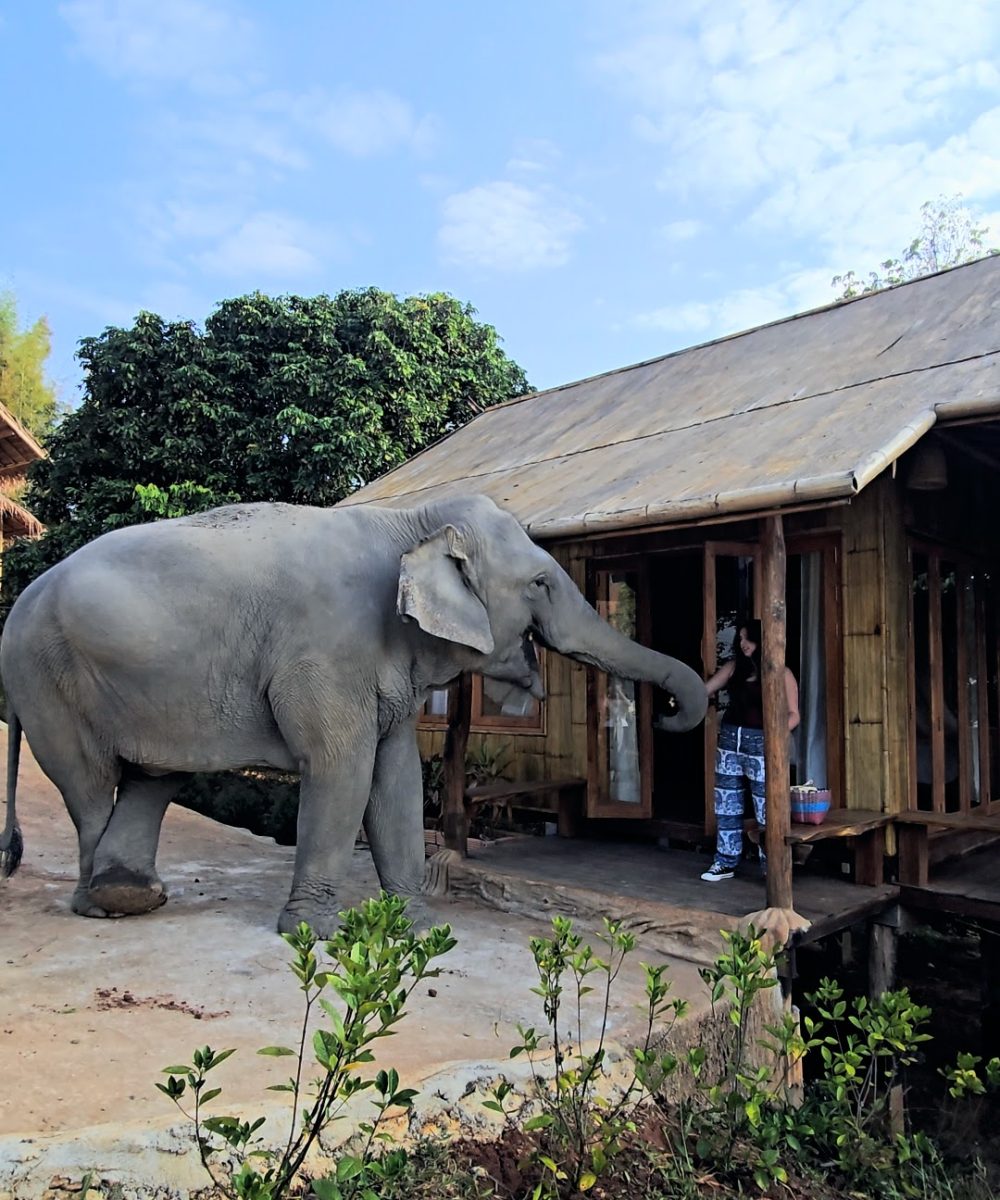
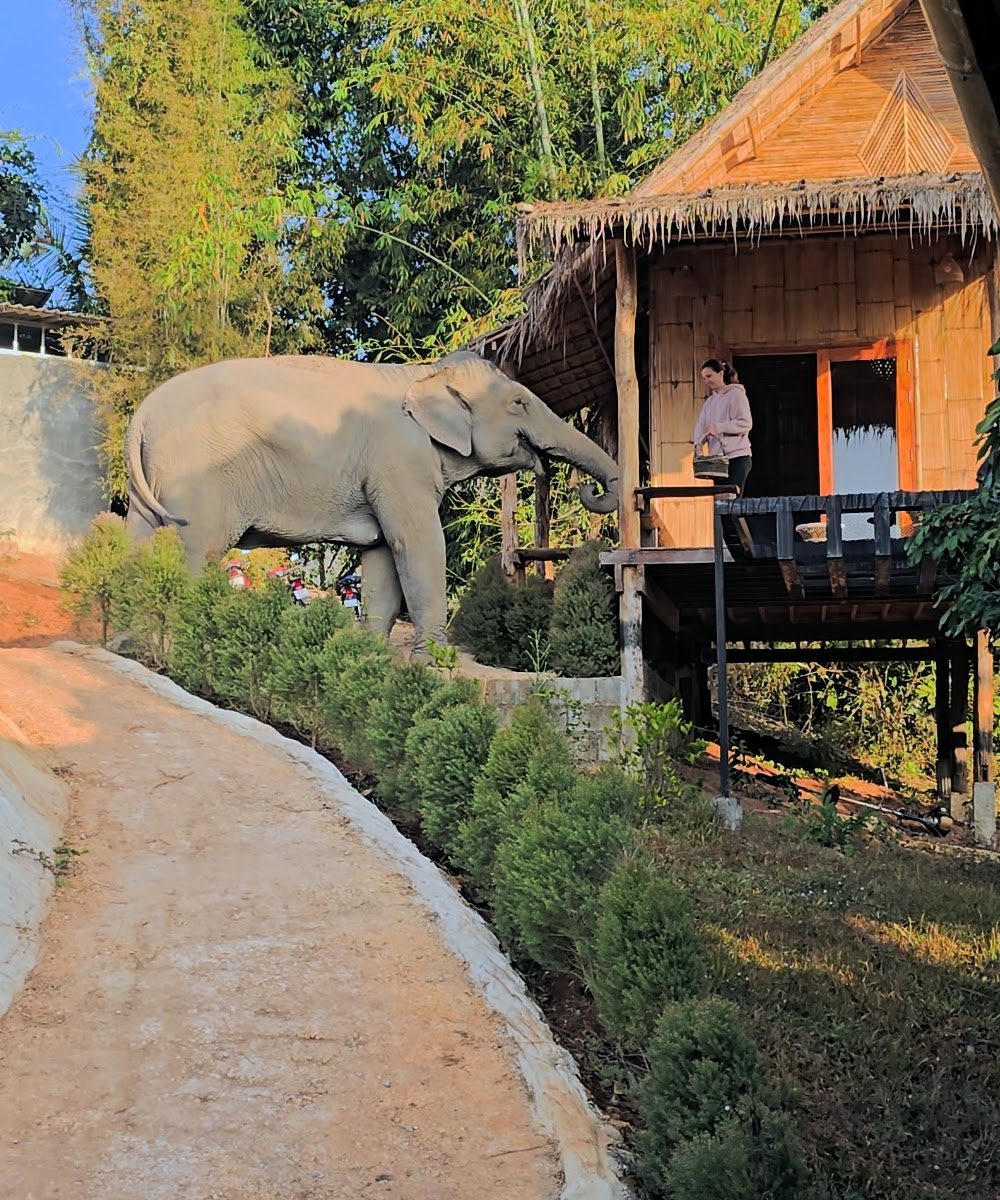
Around 8 o clock the next morning, we were greeted by an elephant at the front porch of our bungalow, along with a basket of sugar cane sticks for us to feed him.  This was definitely one of the funnest wake up calls I have ever had.
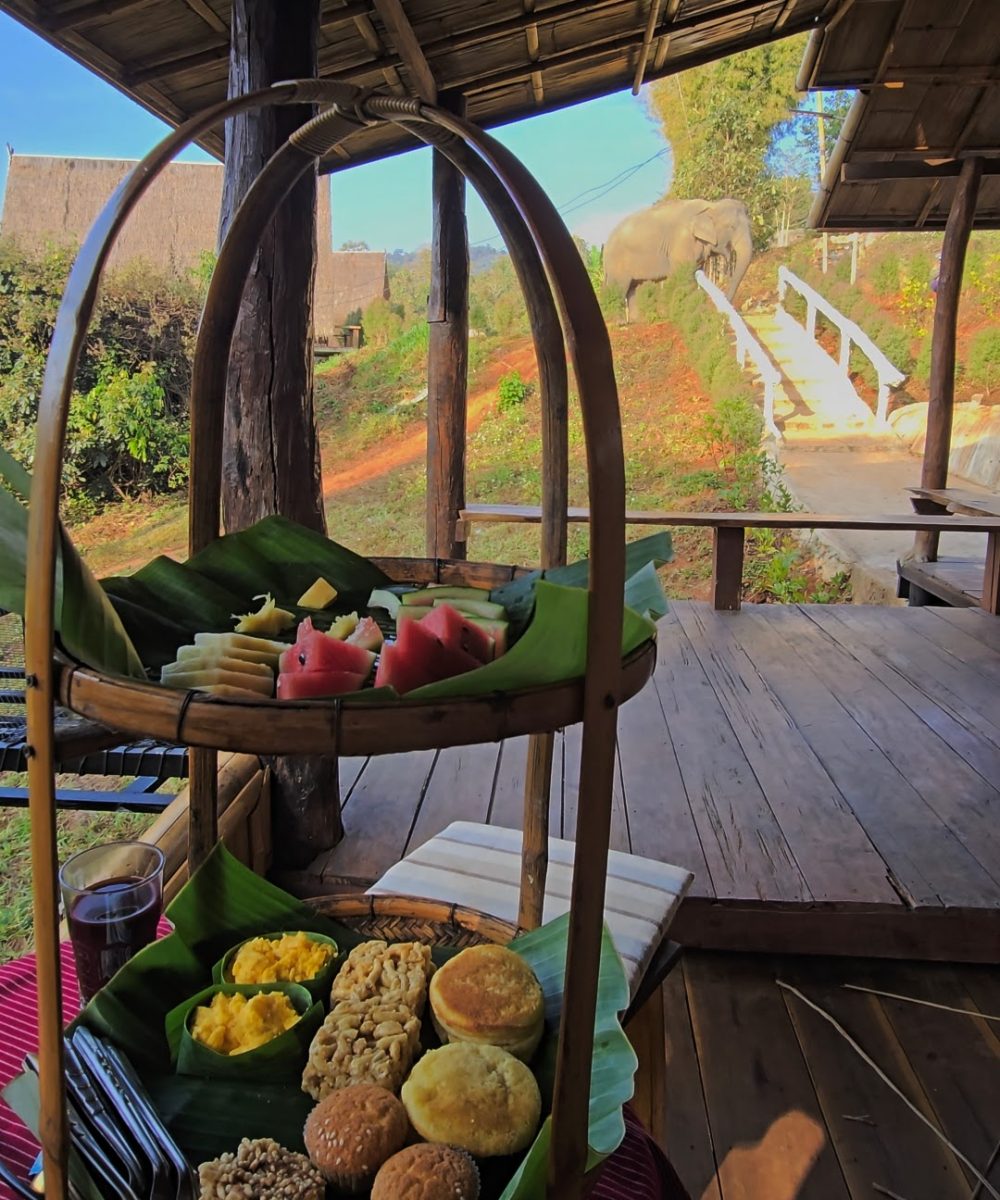
Right after we finished feeding him his breakfast,  a local showed up with ours. It included a variety of baked goods, fresh fruit, and scrambled eggs. We enjoyed breakfast on the deck of our bungalow. Then we packed up our things and hopped into the back of a pick-up truck to head out for the next activity.

Bamboo Rafting On The Mae Wang River And Traditional Karen Village

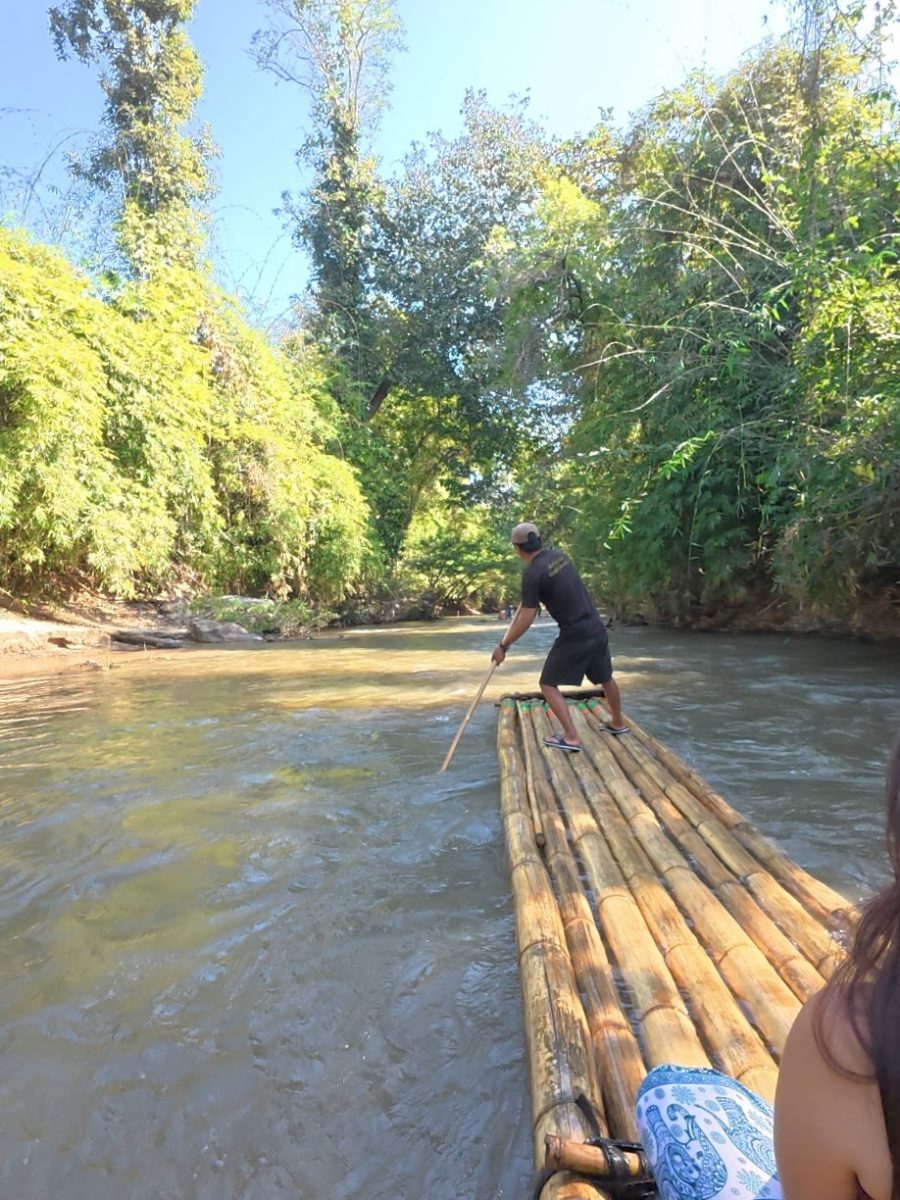
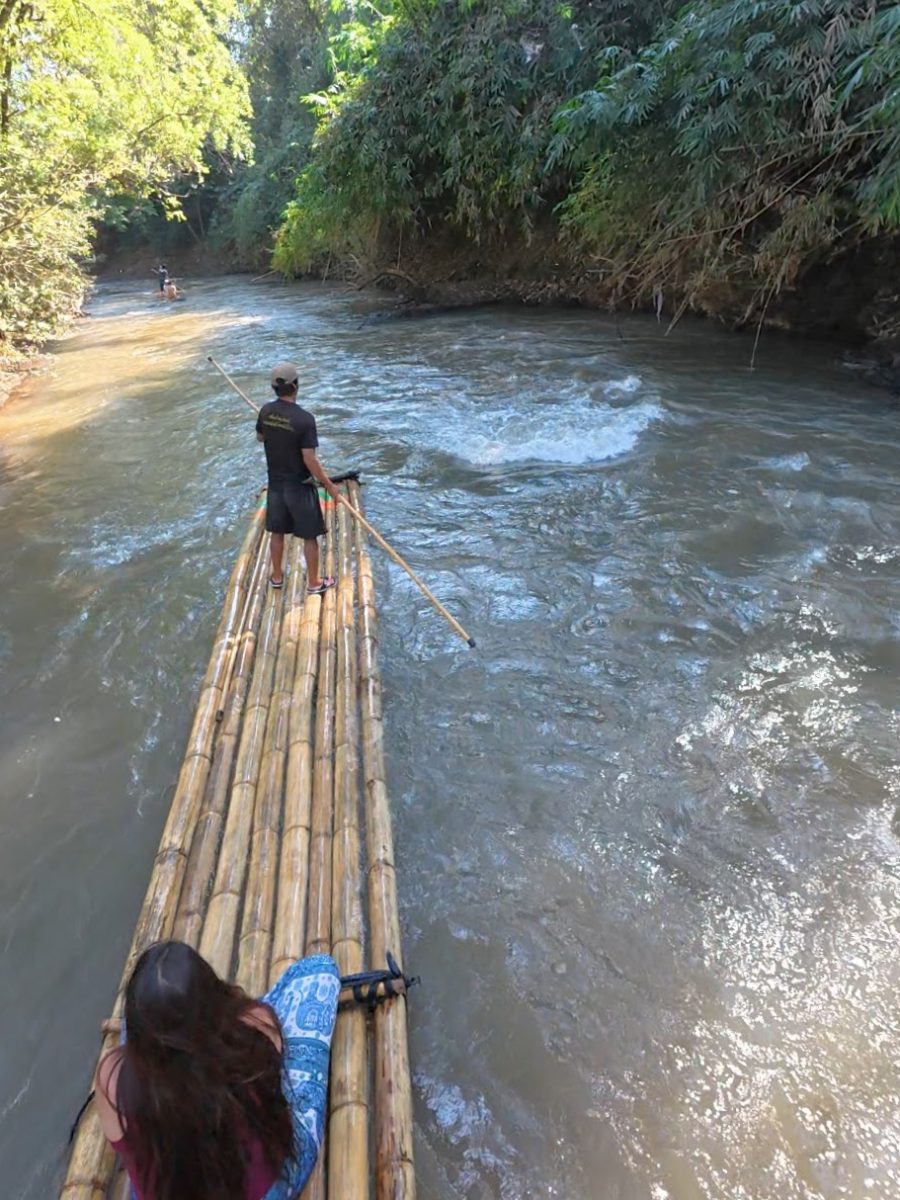
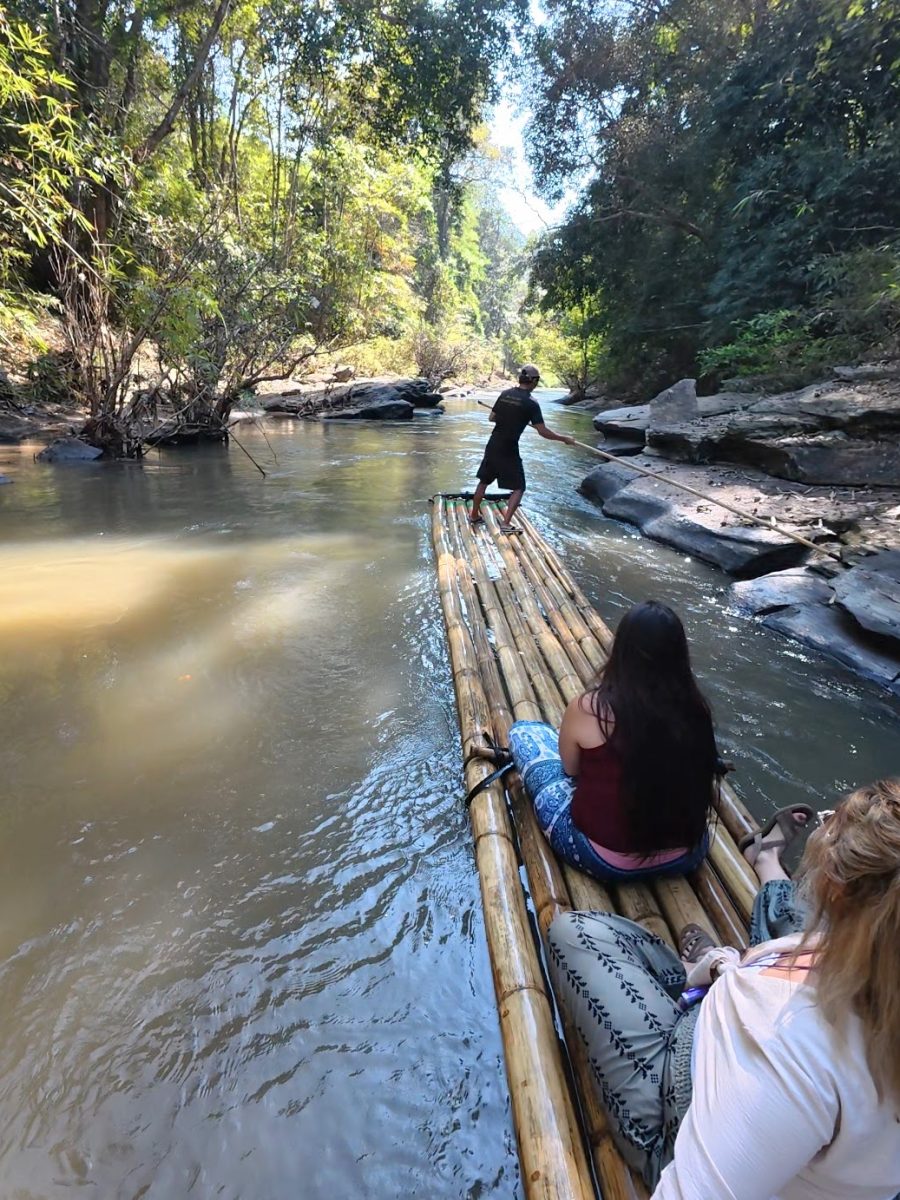
We climbed onto a long bamboo raft and sat toward the back. Our guide stood at the front with a long pole, which he used to navigate us down the river. We spent about half an hour floating through the jungle and over a few gentle rapids.


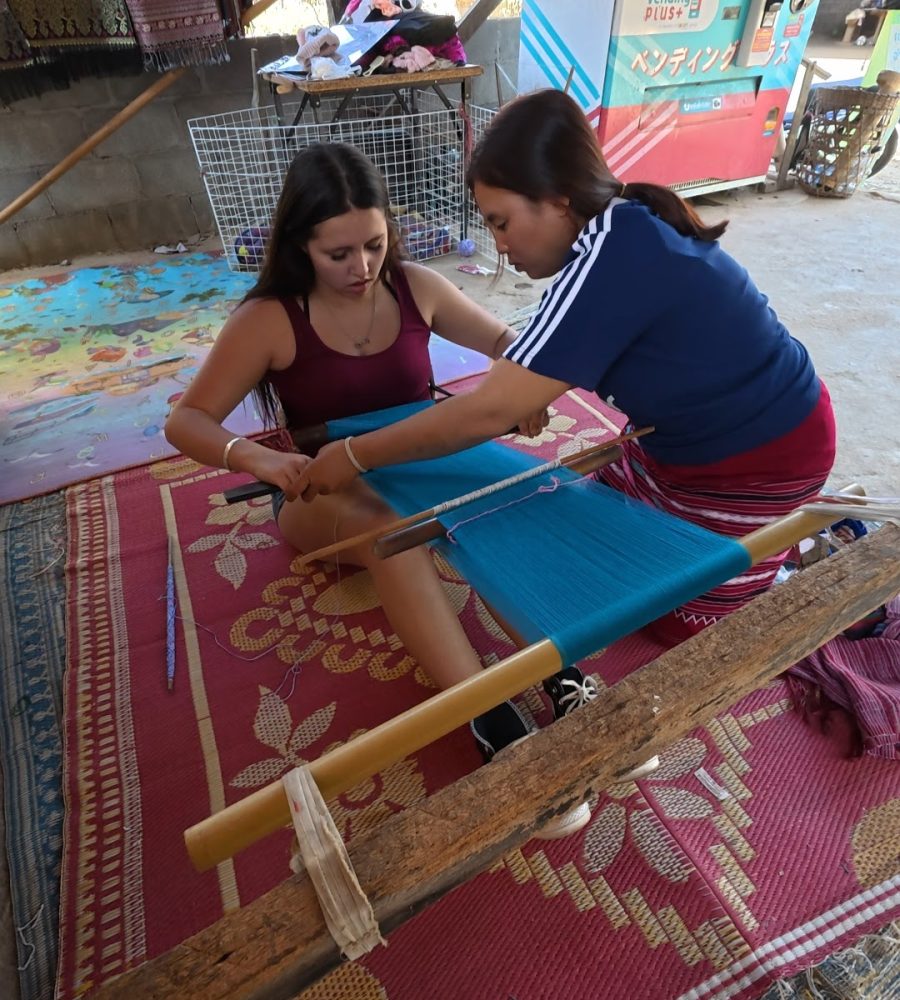
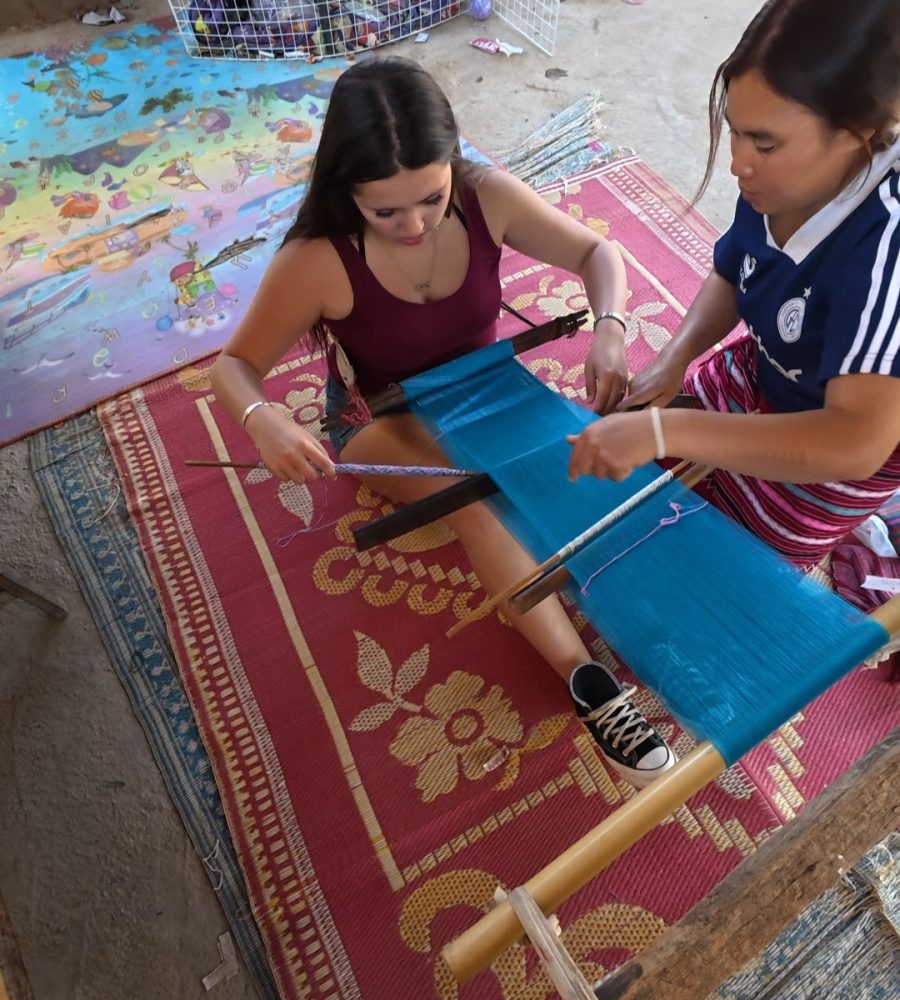
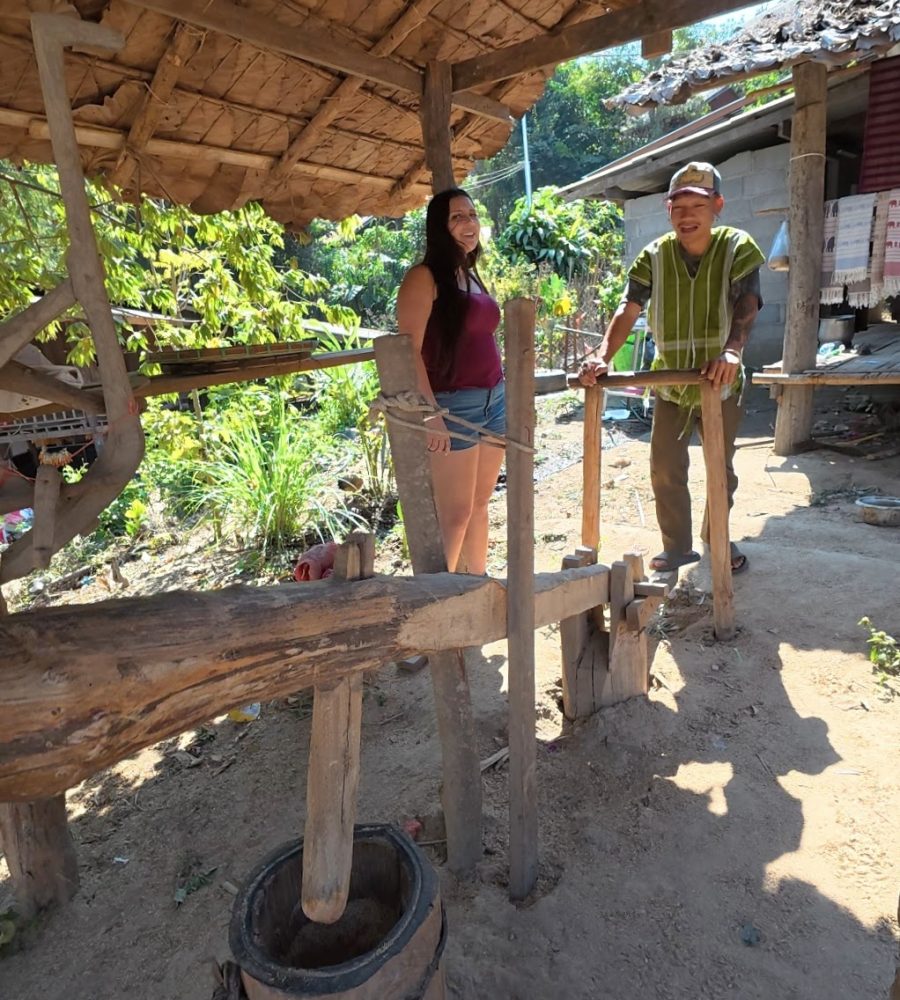
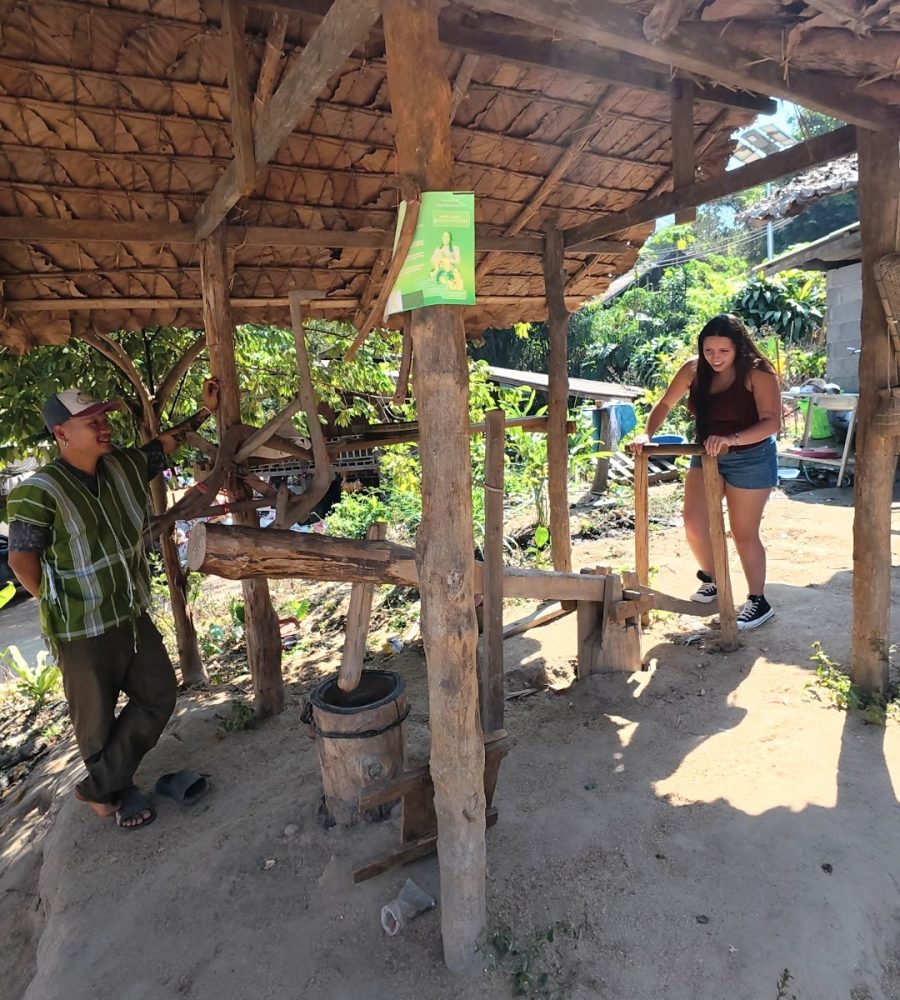
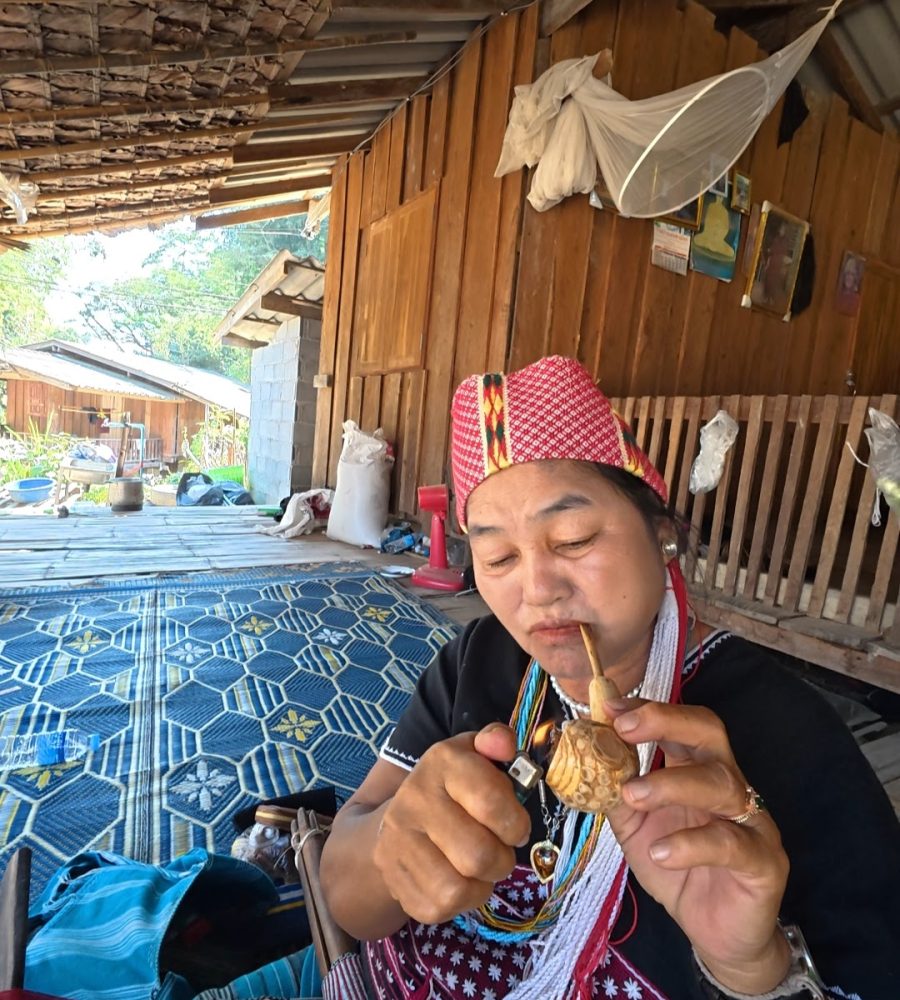
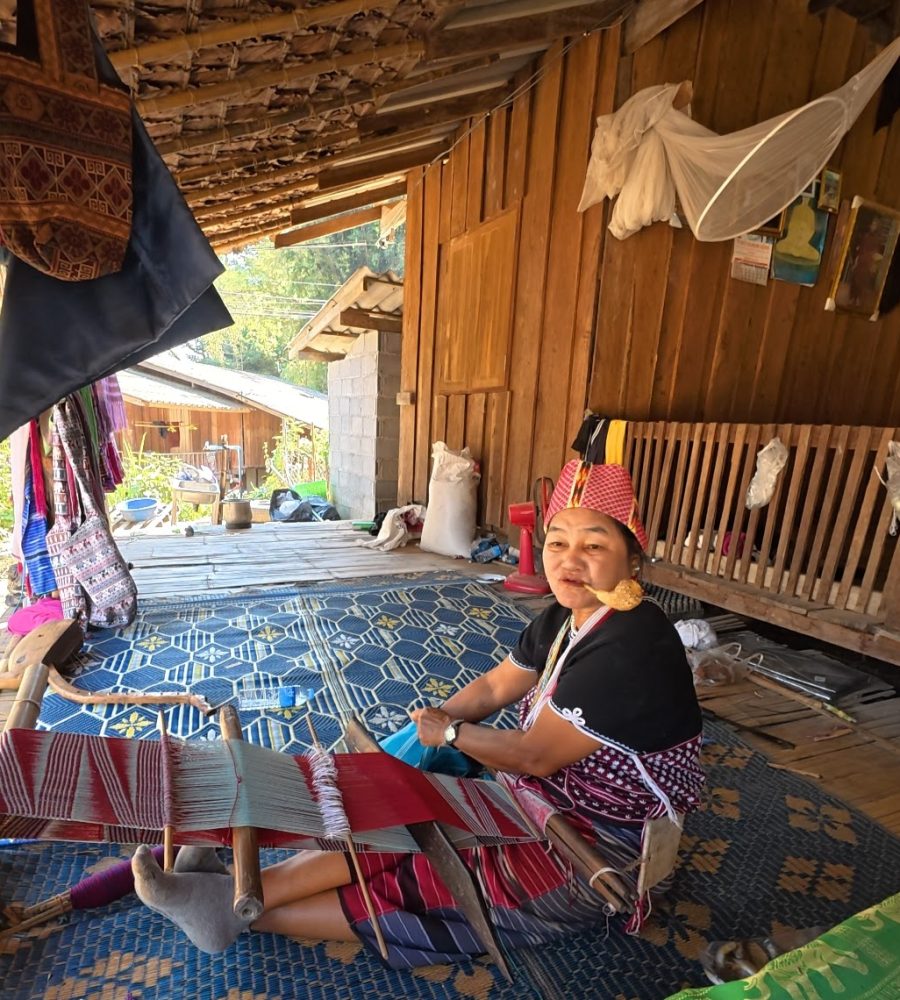
Next, we stopped at a traditional Karen village, an Indigenous community where we experienced daily life and met some of the locals. We learned about hand weaving and how to use a rice pounder to separate rice from the husk. We were also told that the color and style of a woman’s top indicates her marital status.


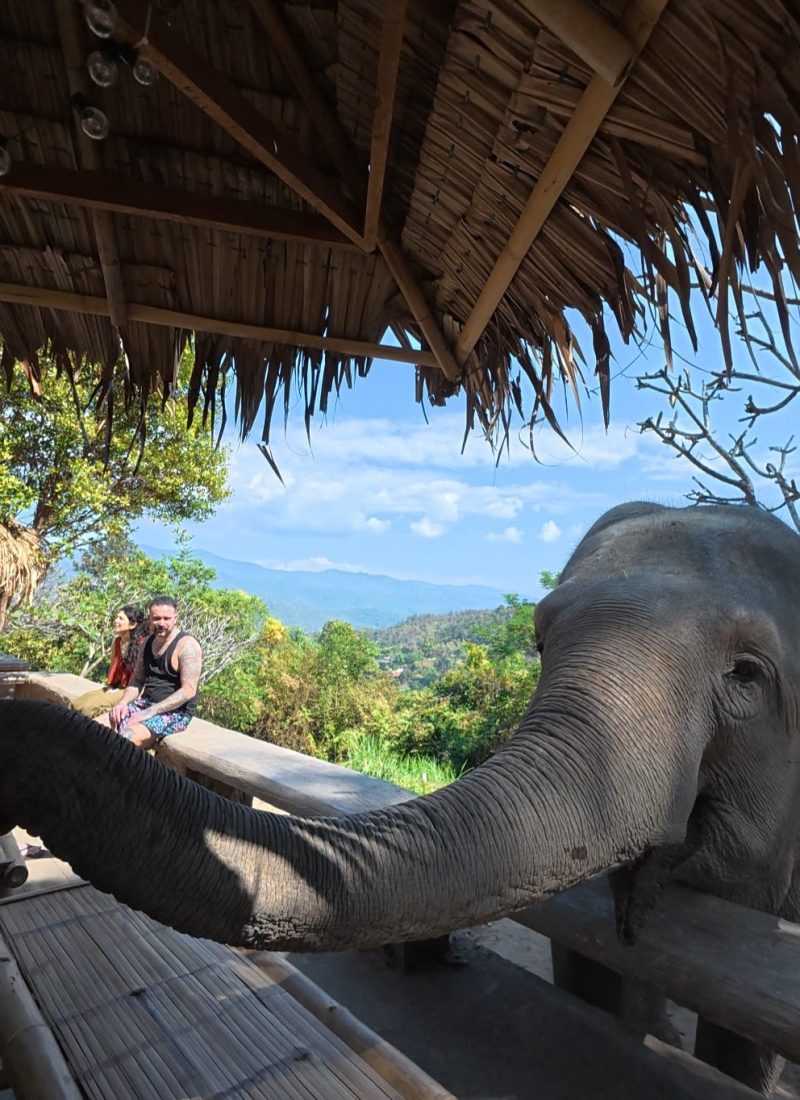
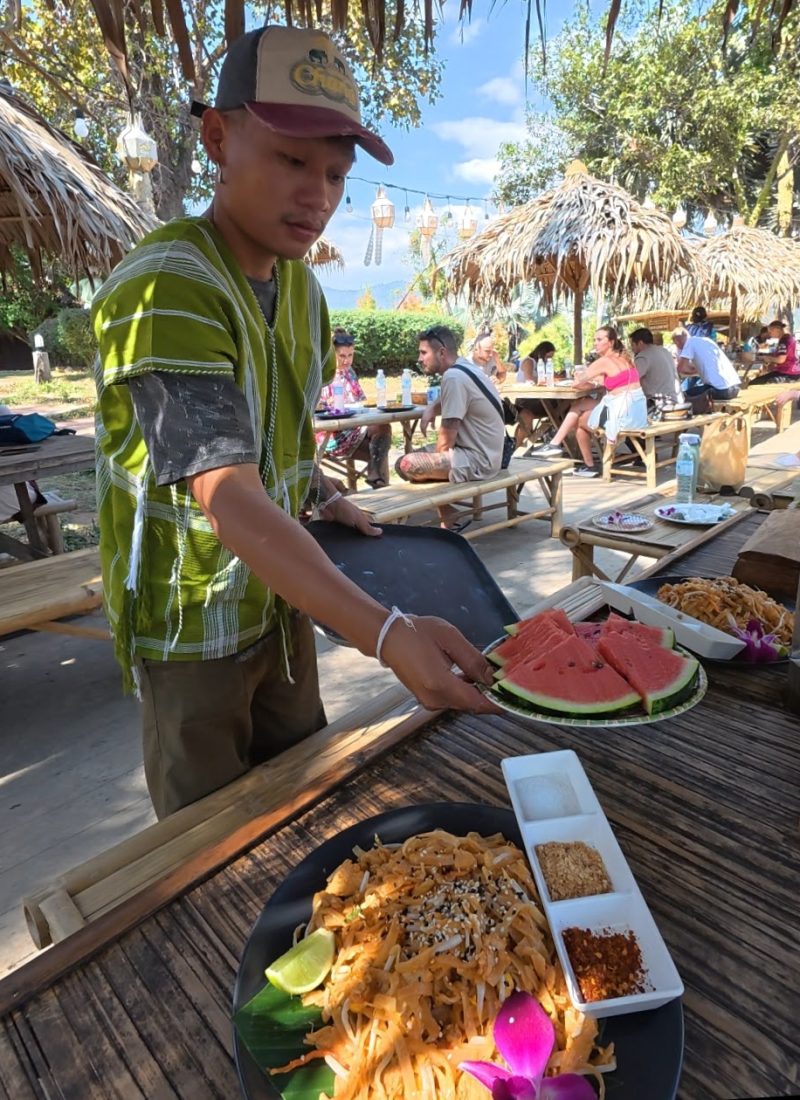
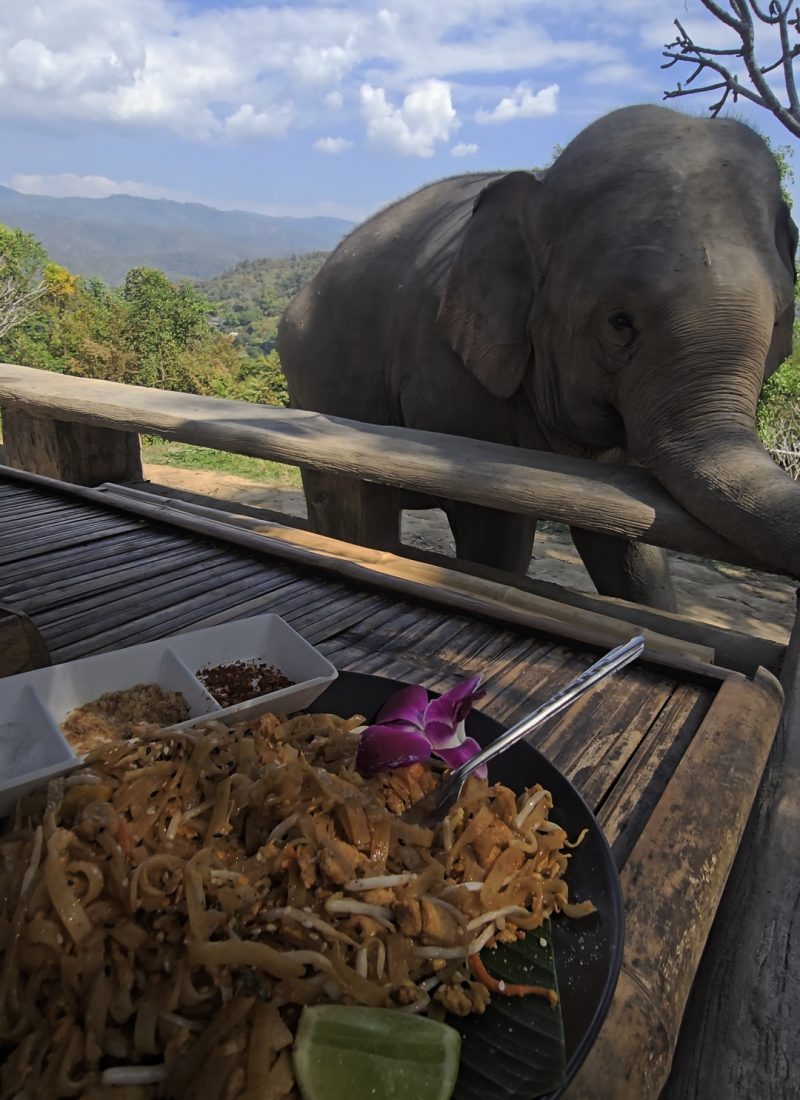
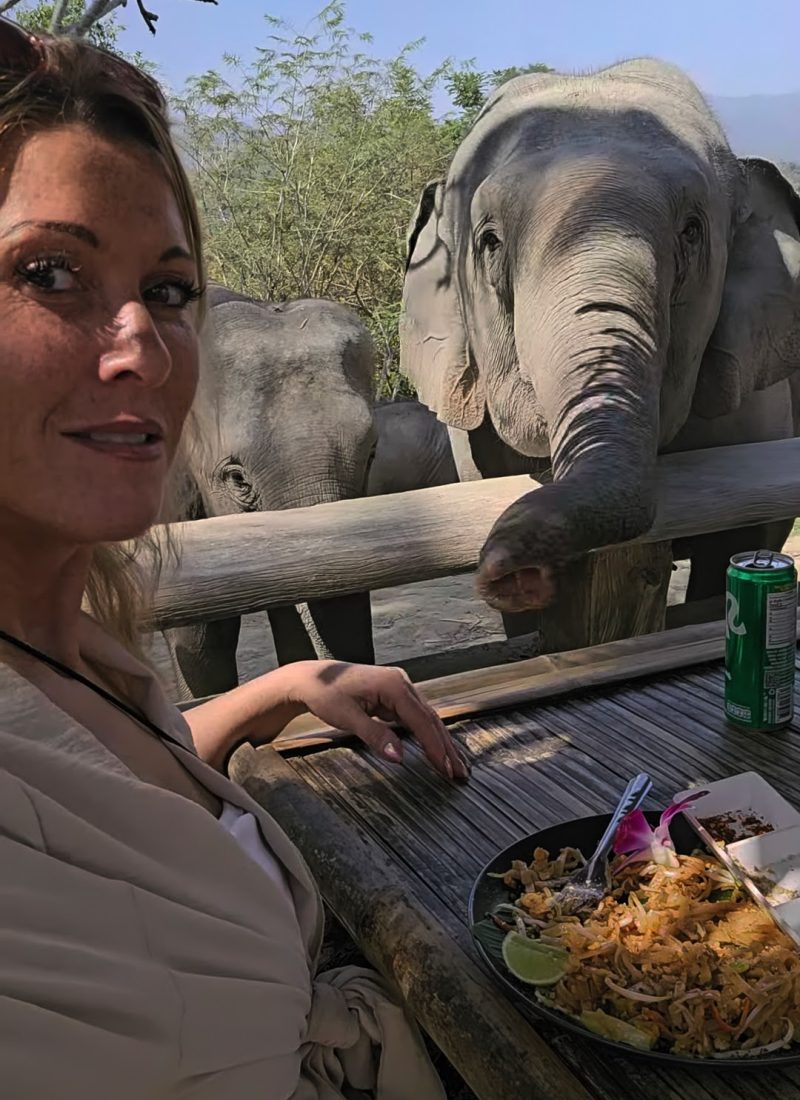
We then headed back to the main gathering area where we had checked in on our first day. It is an open space filled with picnic tables, surrounded by elephants, with wide views of the mountains in the background. Our guide served us a traditional Thai style lunch before we loaded into a van and made the drive back to the city.

Our stay was everything I had hoped it would be. From hiking to waterfalls and cooking in the jungle to waking up with an elephant on our porch, it was one of those trips that stays with you. The staff, the elephants, and the setting all came together to make it truly memorable. I am really glad we chose to do it, and I would absolutely go back. If you are planning a trip to Chiang Mai, this is an experience you will likely be thinking about long after you leave.

What It Cost

We paid about $230 for the two of us  (5,000 THB/ person). That covered everything: roundtrip transportation from Chiang Mai, the overnight stay in an eco-bungalow, all meals both days, and  activity on the itinerary. you can also purchase extra sods, alcoholic beverages, and souveniers. the money spent not only helps the locals, but as mentioned earlier, goes to support the Daughters Rising Organization helping at risk women and girls.