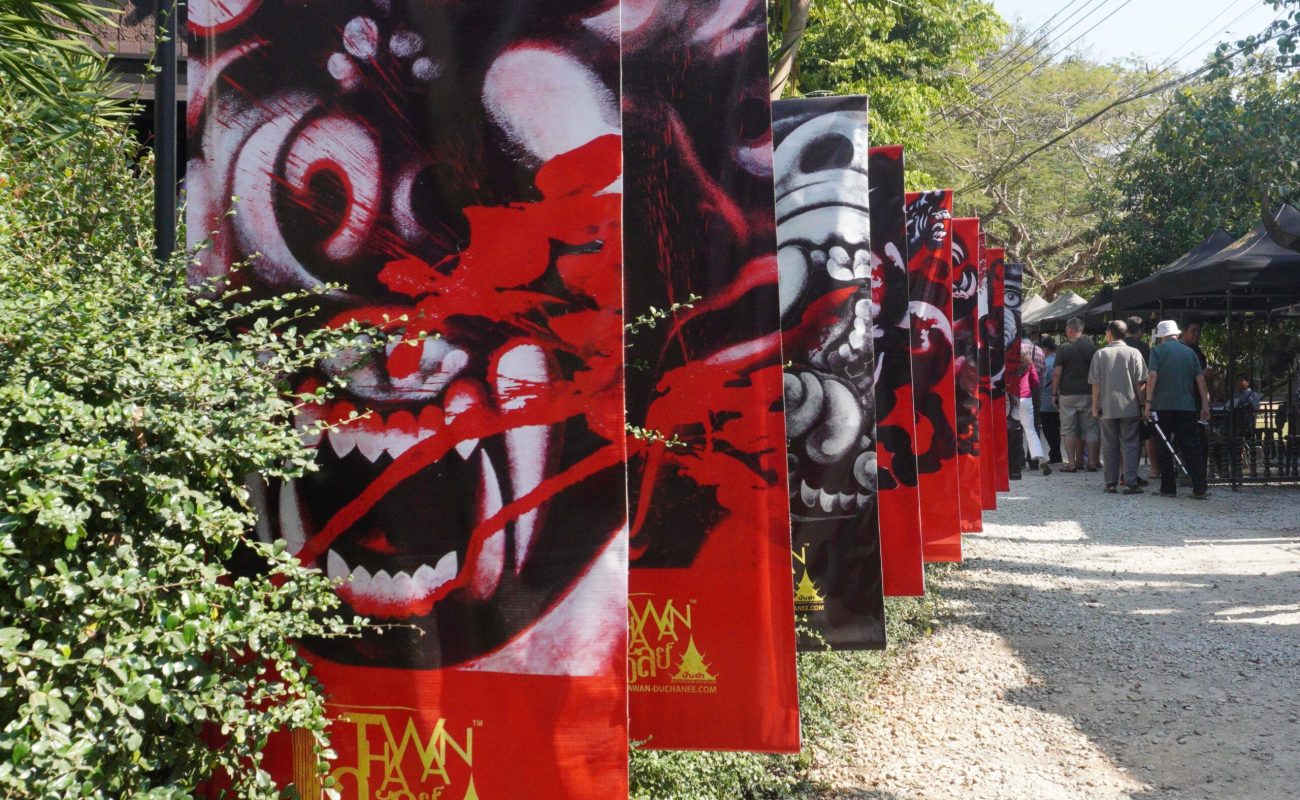
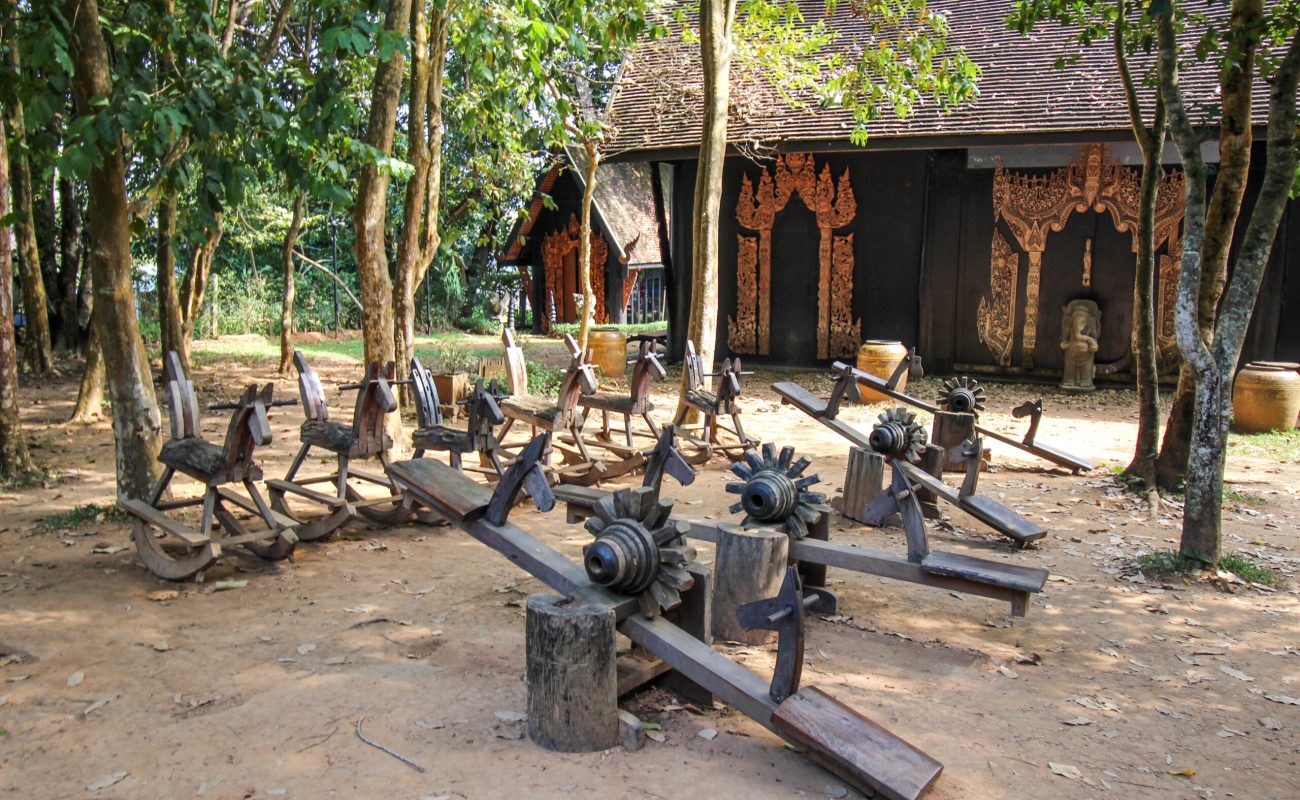
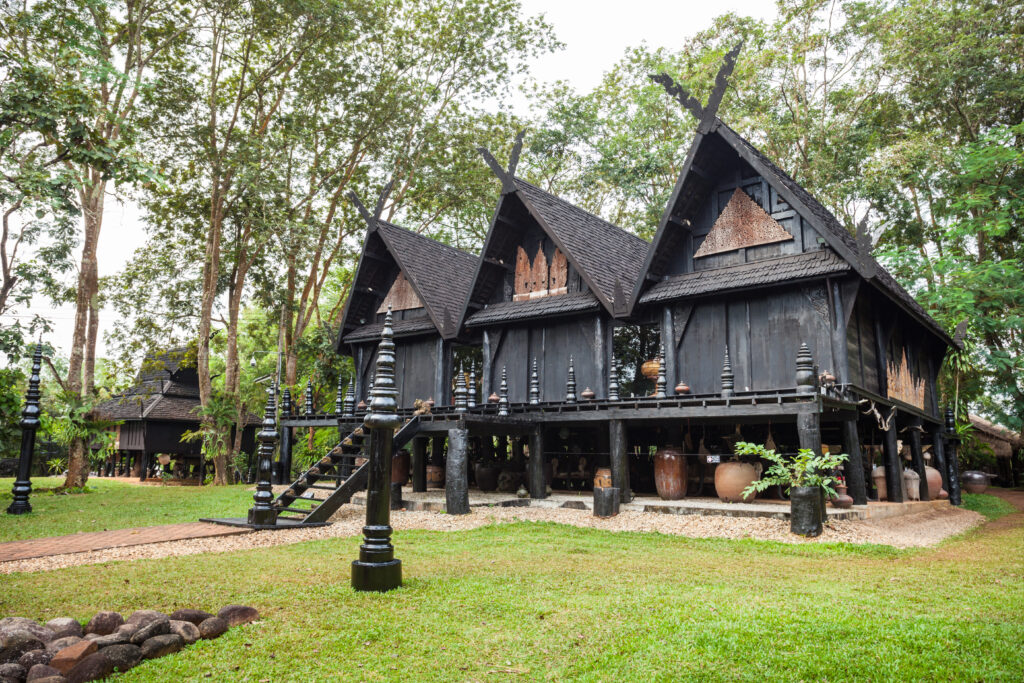
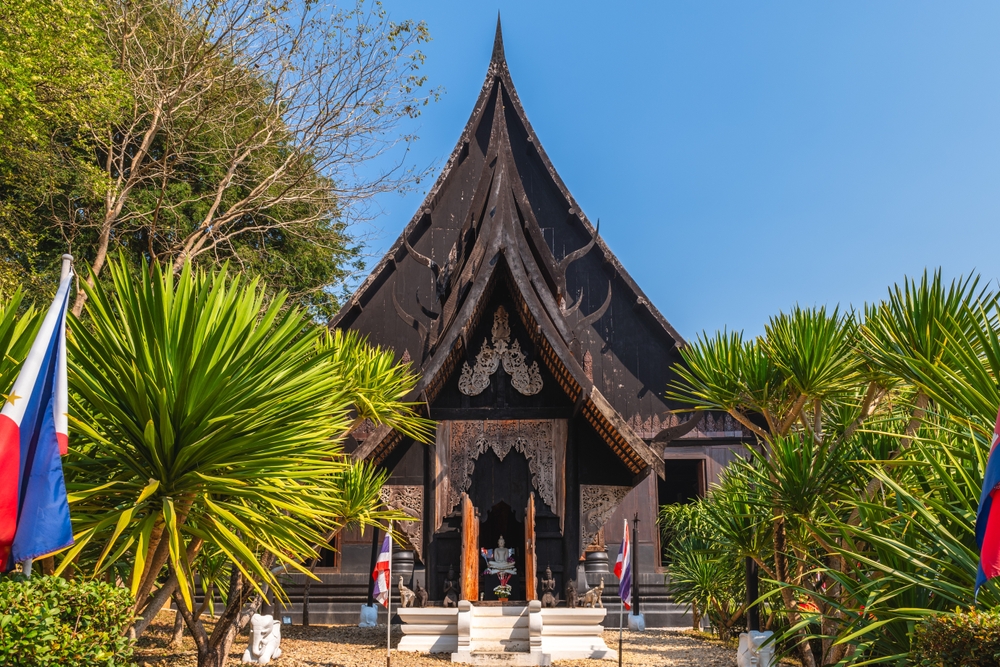
A striking black temple with intricate architectural details, surrounded by lush green vegetation and flags in the foreground.

Baan Dam: The Black House Museum

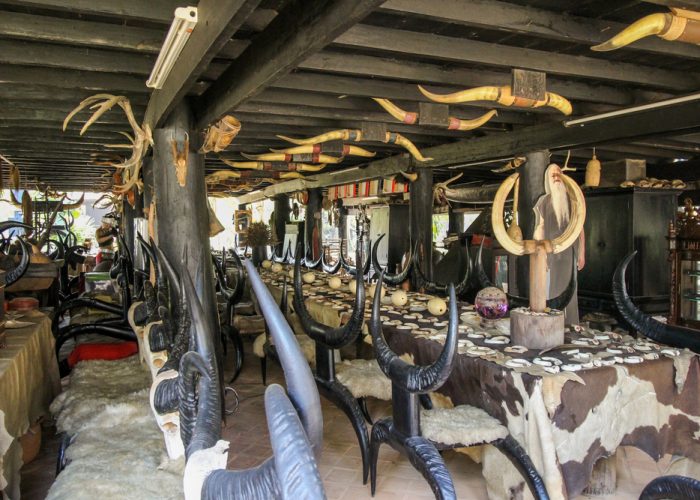
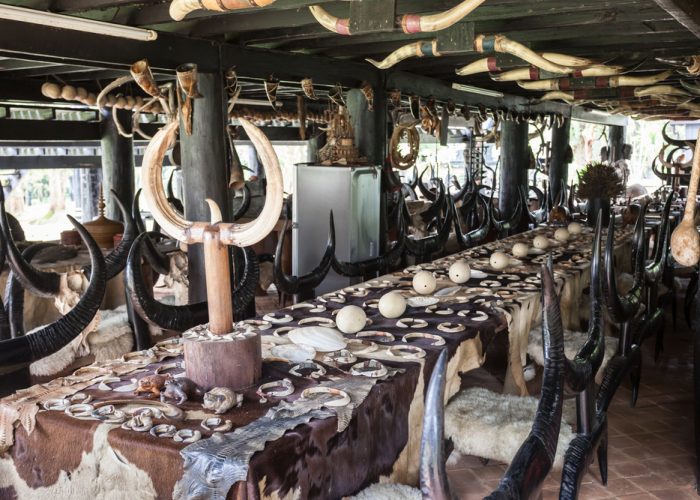
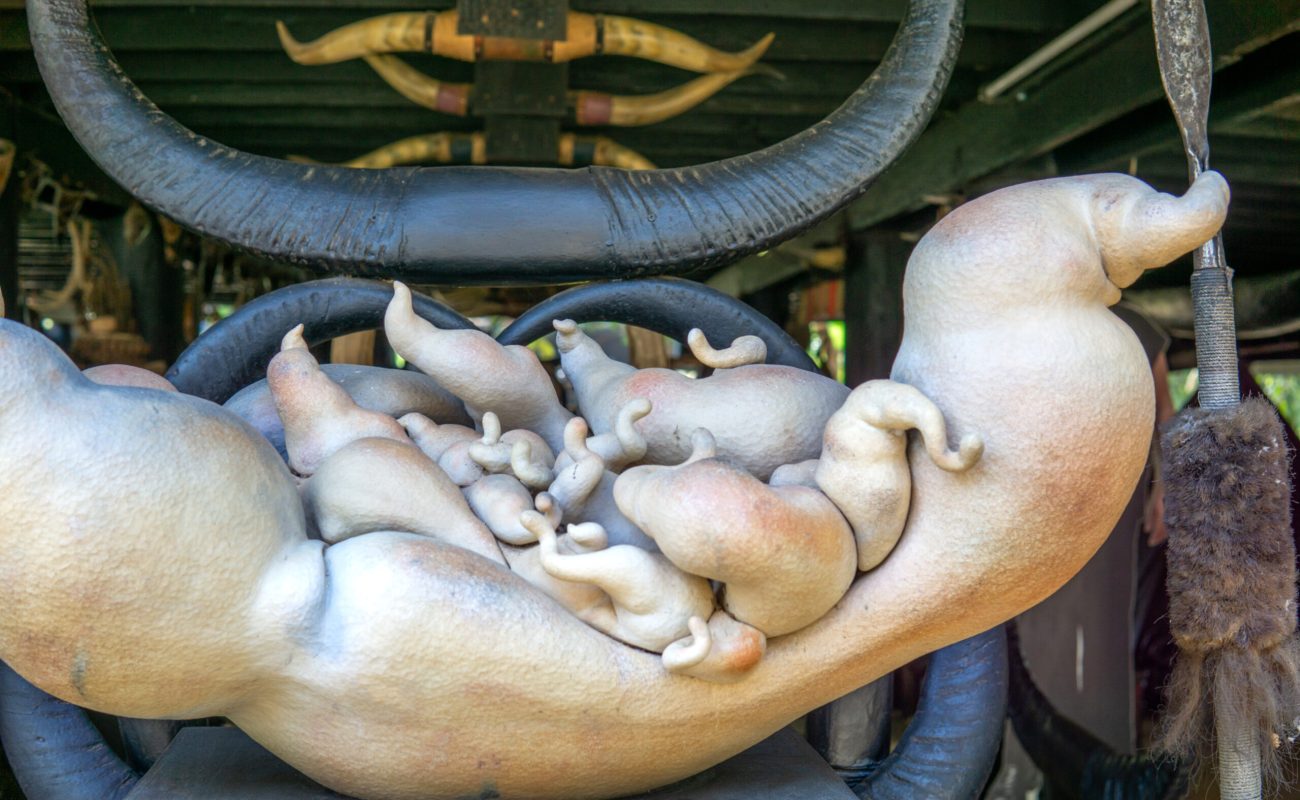
On our recent trip to Chiang Mai, we did a day excursion that took us about three hours north to Chiang Rai, a city known for its artistic yet somewhat unconventional temples. One of our stops was the Baan Dam Museum, also known as the Black House. It is sometimes referred to as “The Black Temple” but it is not actually a temple at all. It is more of a dark natured, unconventional art exhibit filled with animal bones, skins, horns, and phallic sculptures, often interpreted as a representation of hell.

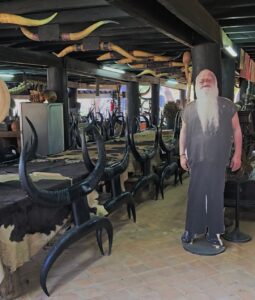
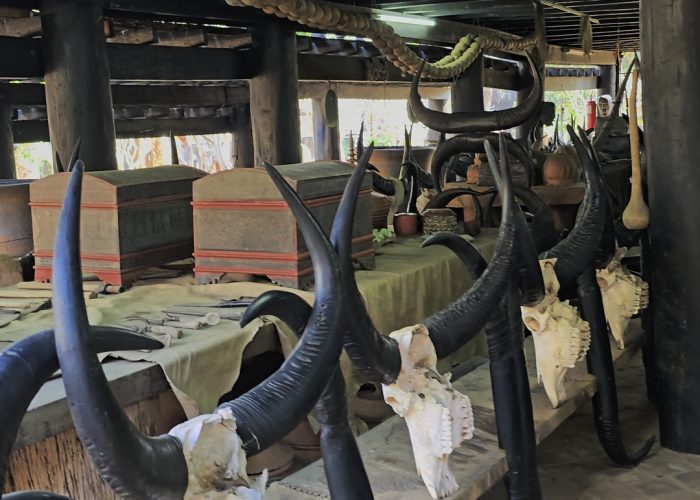
Interior view of a workshop filled with horned furniture and a life-sized cutout of a bearded man.

Baan Dam translates directly from Thai as “Black House,” with baan meaning house, and dam meaning black. It was created by Thawan Duchanee, a Chiang Rai-born artist and architect who lived from 1939 to 2014 and began building the property in the mid-1970s, continuing to expand it for nearly four decades. A devout Buddhist, his mindset behind Baan Dam was rooted in themes of mortality, desire, and the impermanence of life, using dark materials and heavy architecture to explore the shadow side of human nature rather than the light and devotion most Thai artists leaned toward. His work was controversial enough early on that some of his paintings were physically destroyed, but he never changed course, and by 2001 Thailand named him a National Artist.
What You Will See

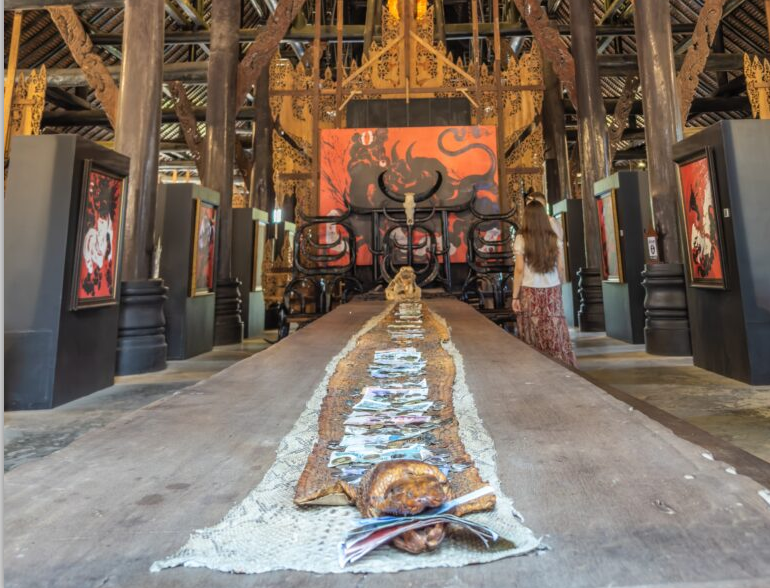
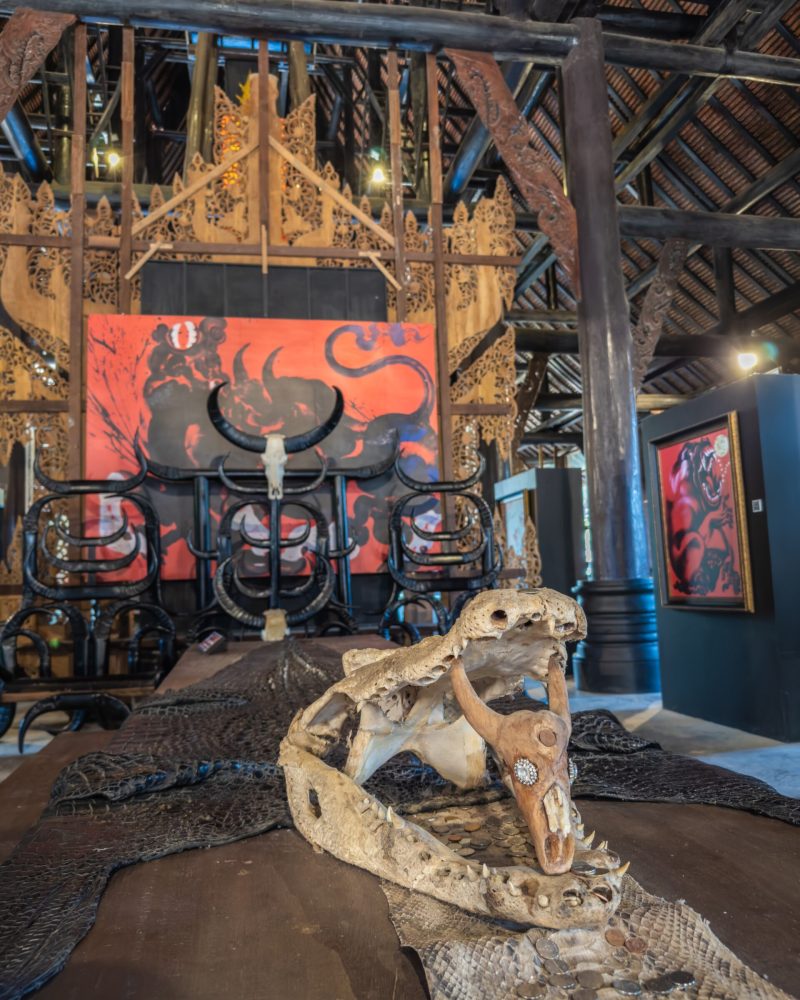
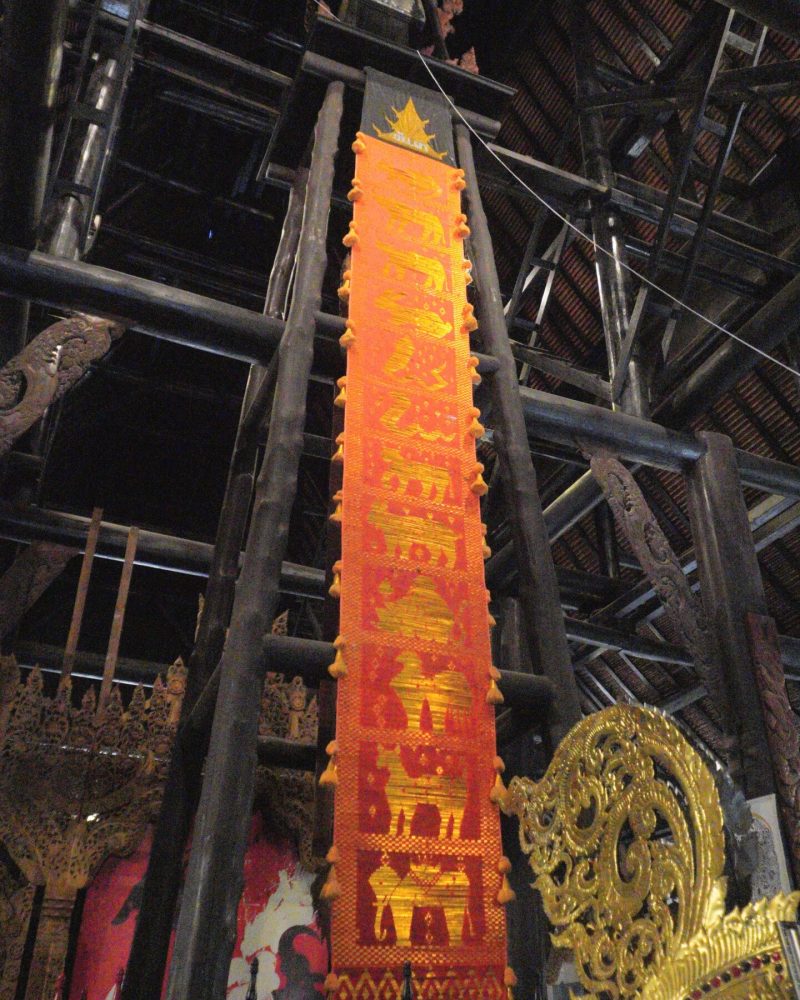
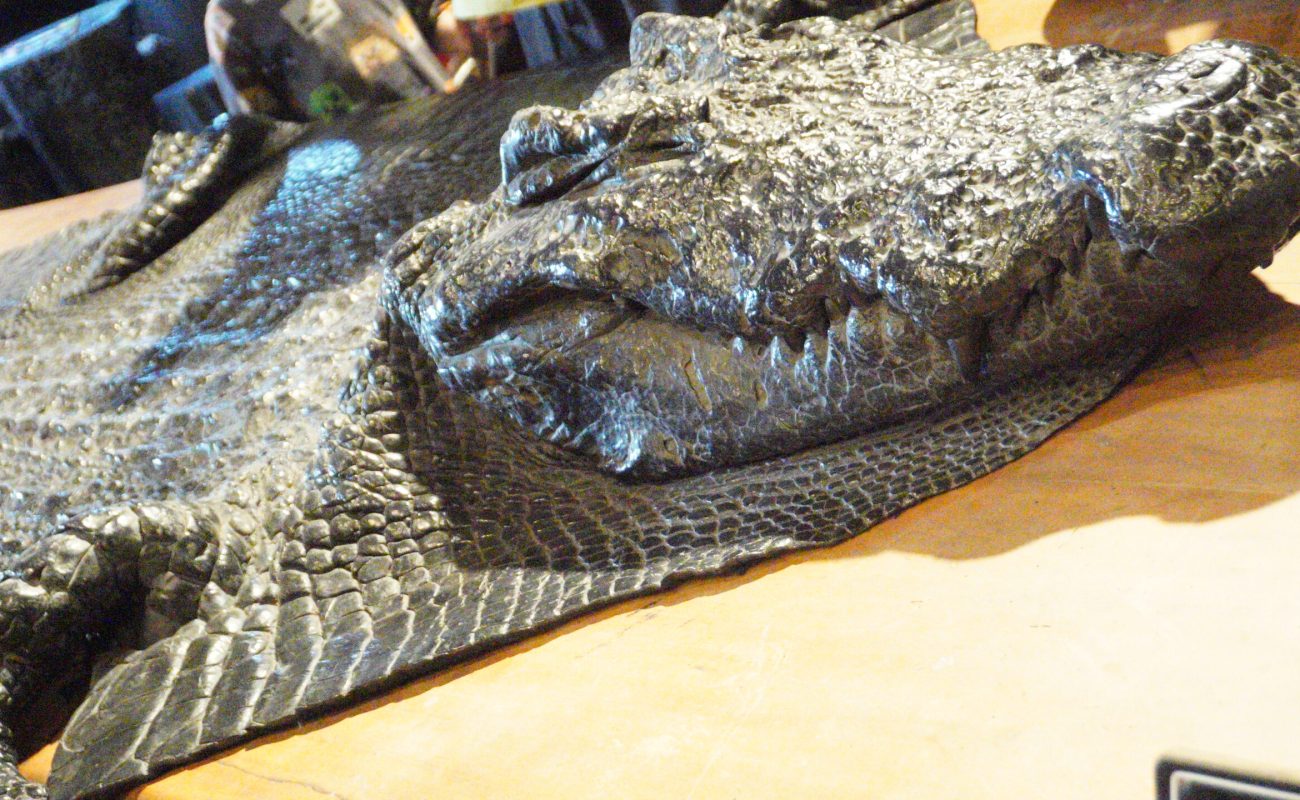
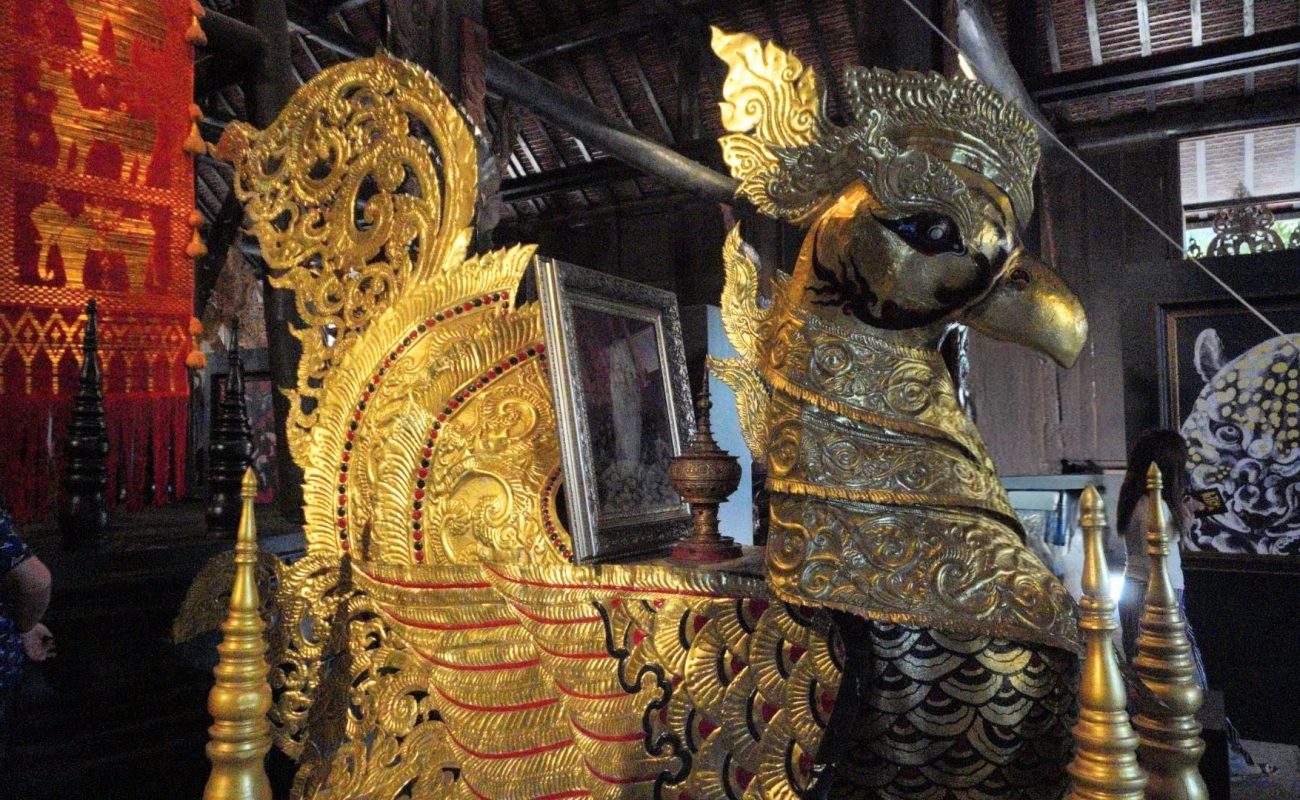
The main building is a large wooden hall in the traditional Northern Thai Lanna style, but darker and more stripped down than anything you would expect in a temple complex. Inside, a long wooden table runs nearly the full length of the room with a snakeskin runner draped across it end to end. When we visited, coins and currency from around the world had been left along the table by guests as a spiritual offering. 

A view of a unique art installation featuring a long wooden table adorned with artifacts, while a visitor admires the vibrant artwork in a culturally rich environment.

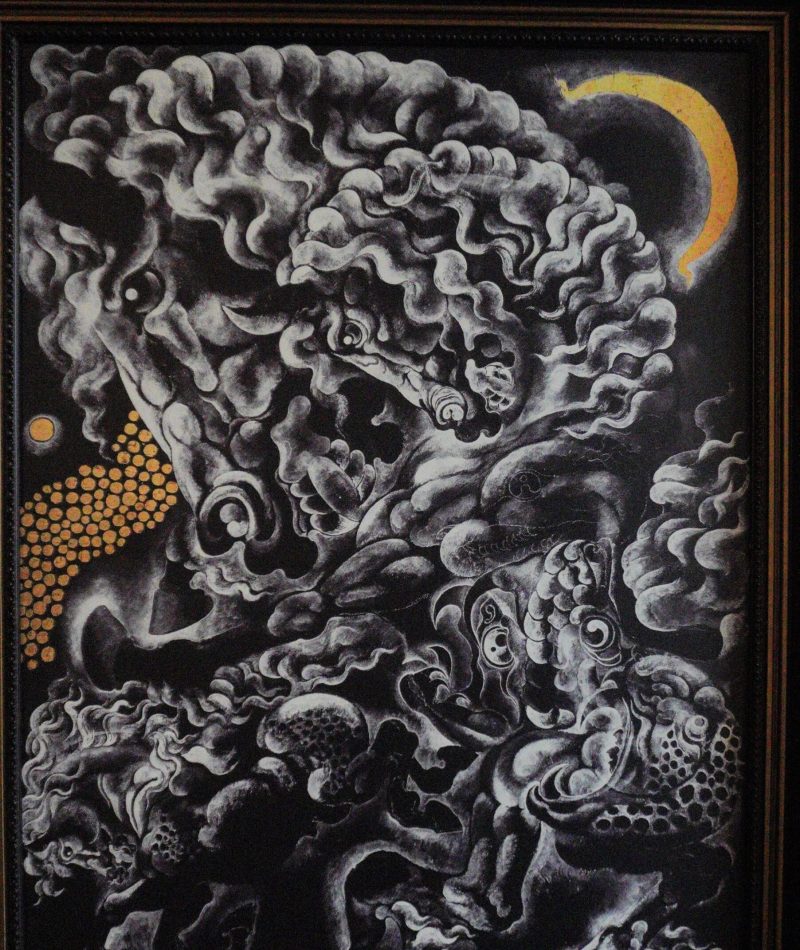
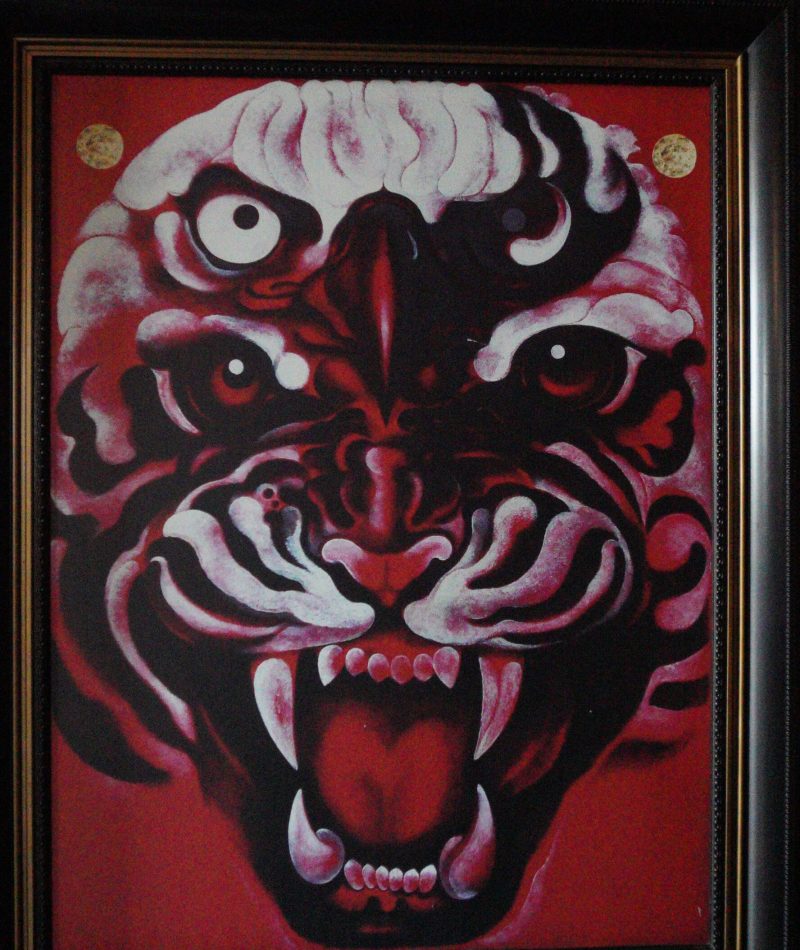
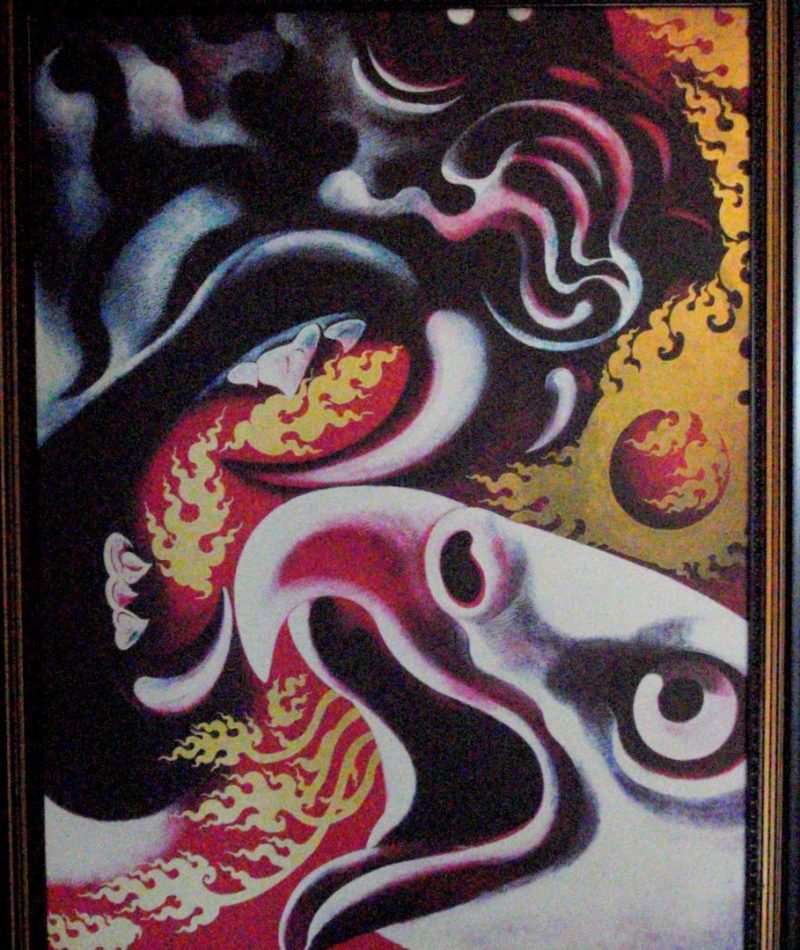
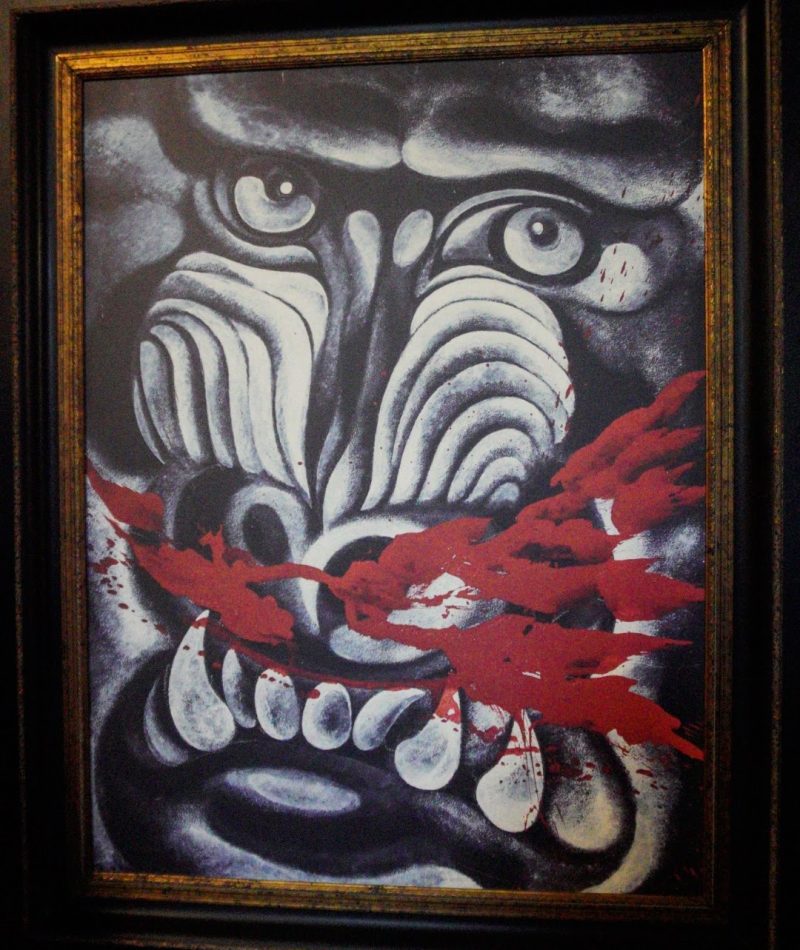
Duchanee’s paintings are displayed throughout the buildings and they are as intense as everything else on the property. He worked heavily in black and red.  The subjects pull from Buddhist philosophy, Hindu mythology, and his own interpretation of the darker side of human nature, think mythological creatures, demons, and figures caught somewhere between the spiritual and the earthly.Duchanee’s paintings are displayed throughout the buildings and they are just as intense as everything else on the property. He used a lot of black and red in his work. The subjects are inspired by Buddhist ideas, Hindu mythology, and his own take on the darker side of human nature. You will see things like mythological creatures, demons, and figures that feel caught somewhere between the spiritual world and the human one.

Many of the buildings contain furniture and installations made from animal remains including skins, bones, horns, and skulls. Duchanee maintained that the animals died of natural causes and drew on the role of animal remains in tribal traditions throughout the region.

You will also notice phallic sculptures scattered throughout the property.  Duchanee placed them there as ancient symbols of fertility, creation, and life force rooted in Buddhist and Hindu traditions, rather than something provocative. They connect to his broader focus on desire and craving, which Buddhism identifies as one of the root causes of suffering. You’ll come across them in some of the strangest places as you wonder throughout the property.

Good To Know Before You Go

Baan Dam is open daily from 9:00 AM to 5:00 PM. Entry for foreign visitors is 80 Thai Baht. Most people spend about an hour walking the grounds.

Address – 414 Mu 13 Mueang Chiang Rai, Chiang Rai