Table of Contents
Toggle
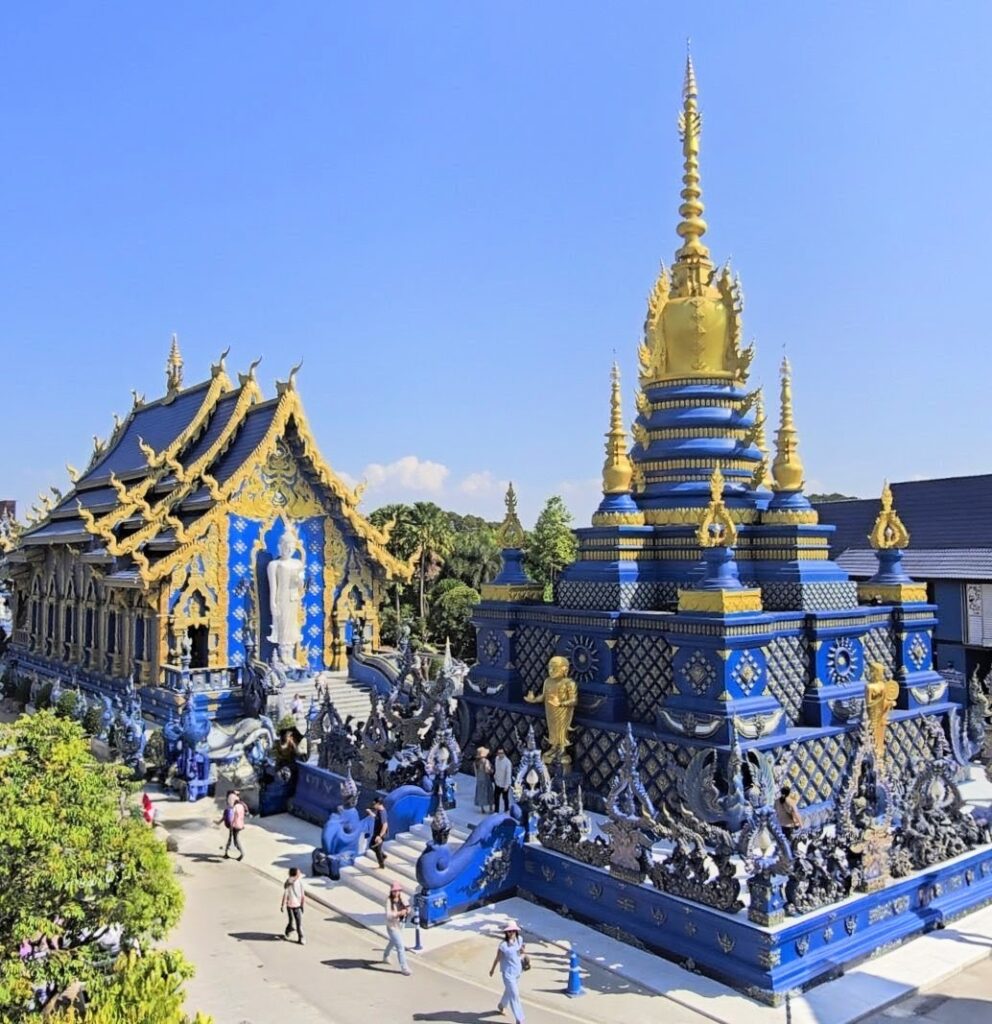
During our January 2026 trip to Chiang Mai, we took a tour to check out some of the famous temples in Chiang Rai. One of those was the Blue Temple, officially known as Wat Rong Suea Ten. The name means Temple (or House) of the Dancing Tiger. According to local legend, tigers once roamed this area near the Kok River, where an older abandoned temple stood before the current temple was built.
What stands today is not a restoration, but a completely new vision. The temple was designed by Phuttha Kabkaew, a student of Chalermchai Kositpipat — the artist behind the famous White Temple — and completed in 2016.


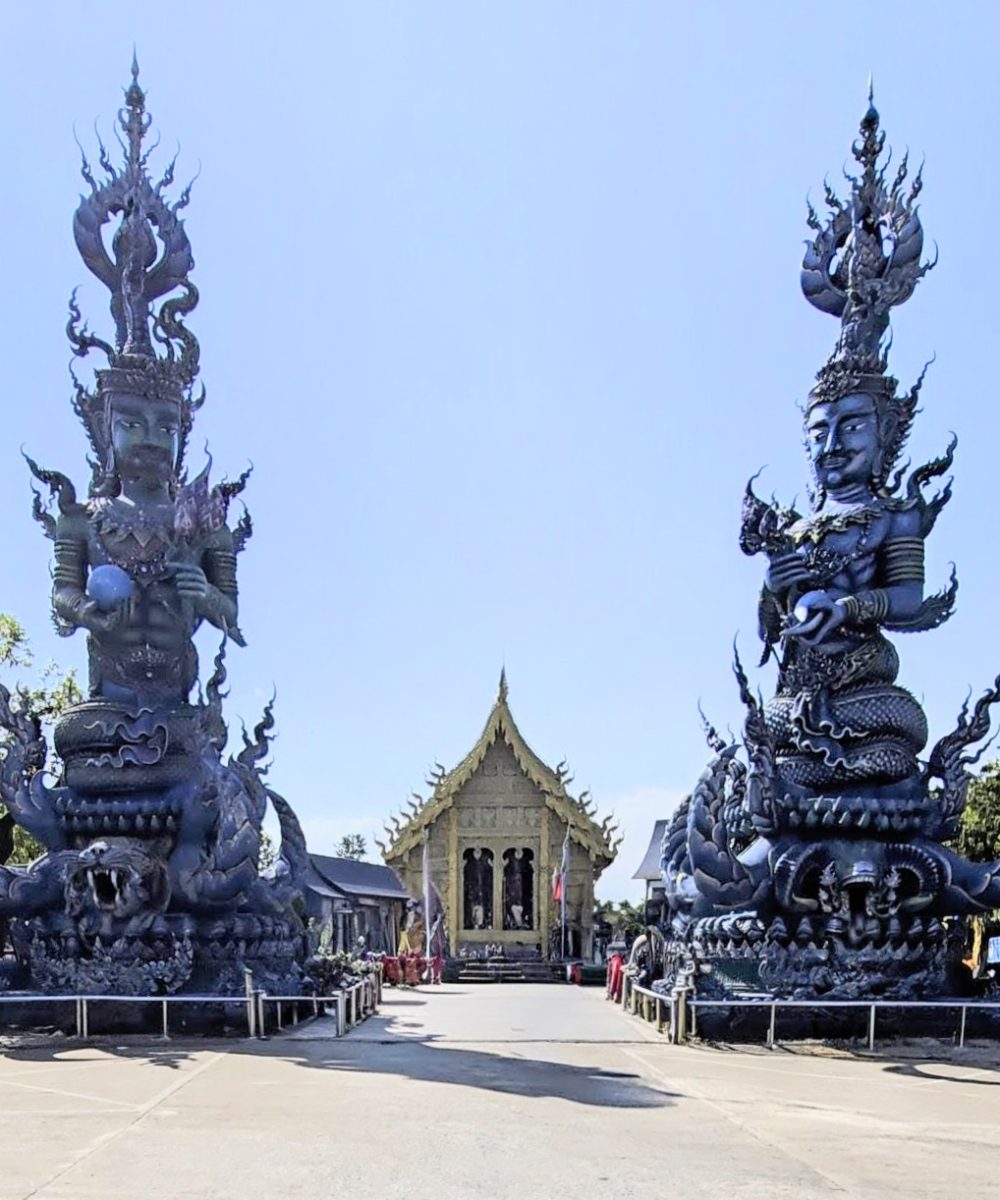
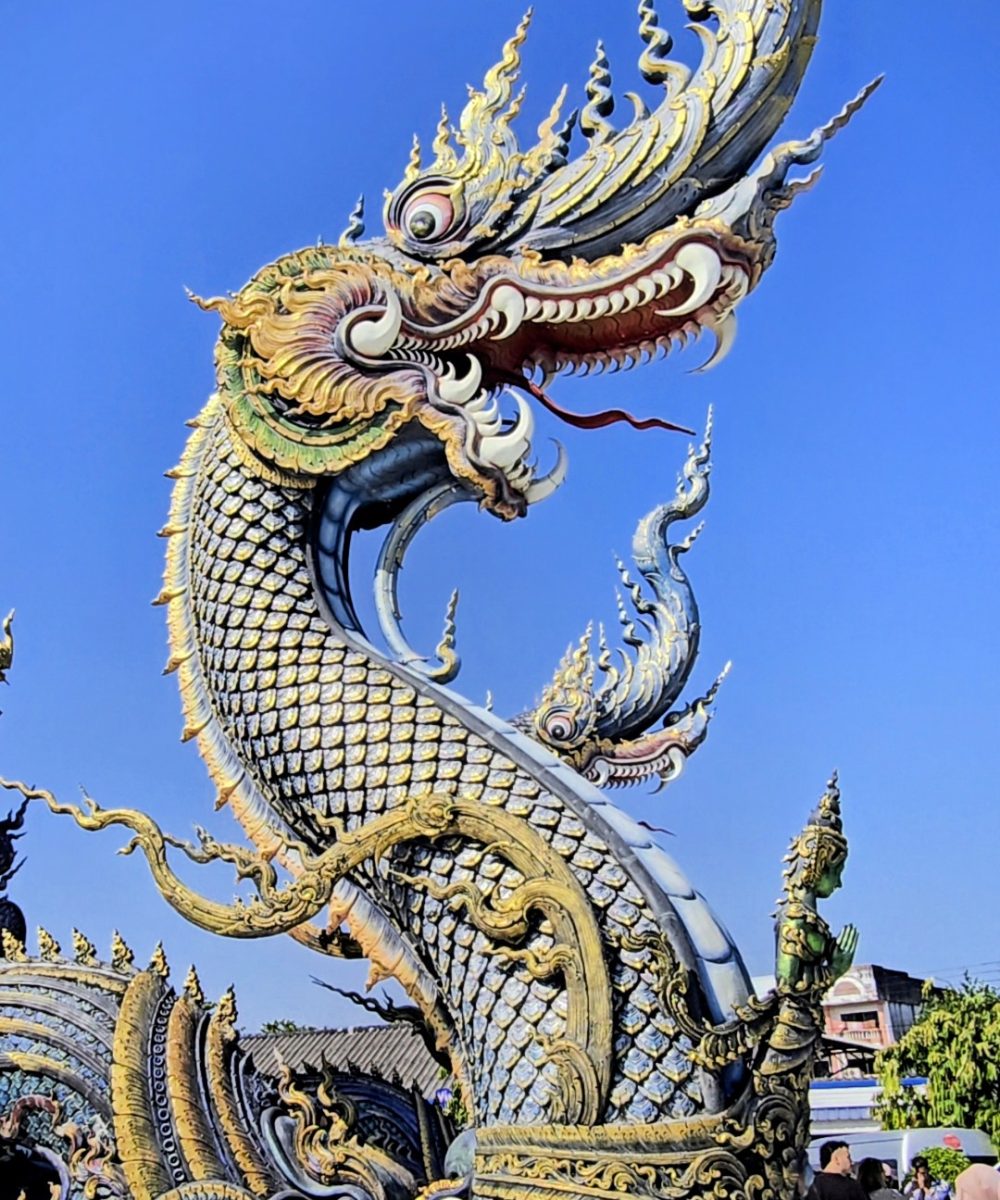
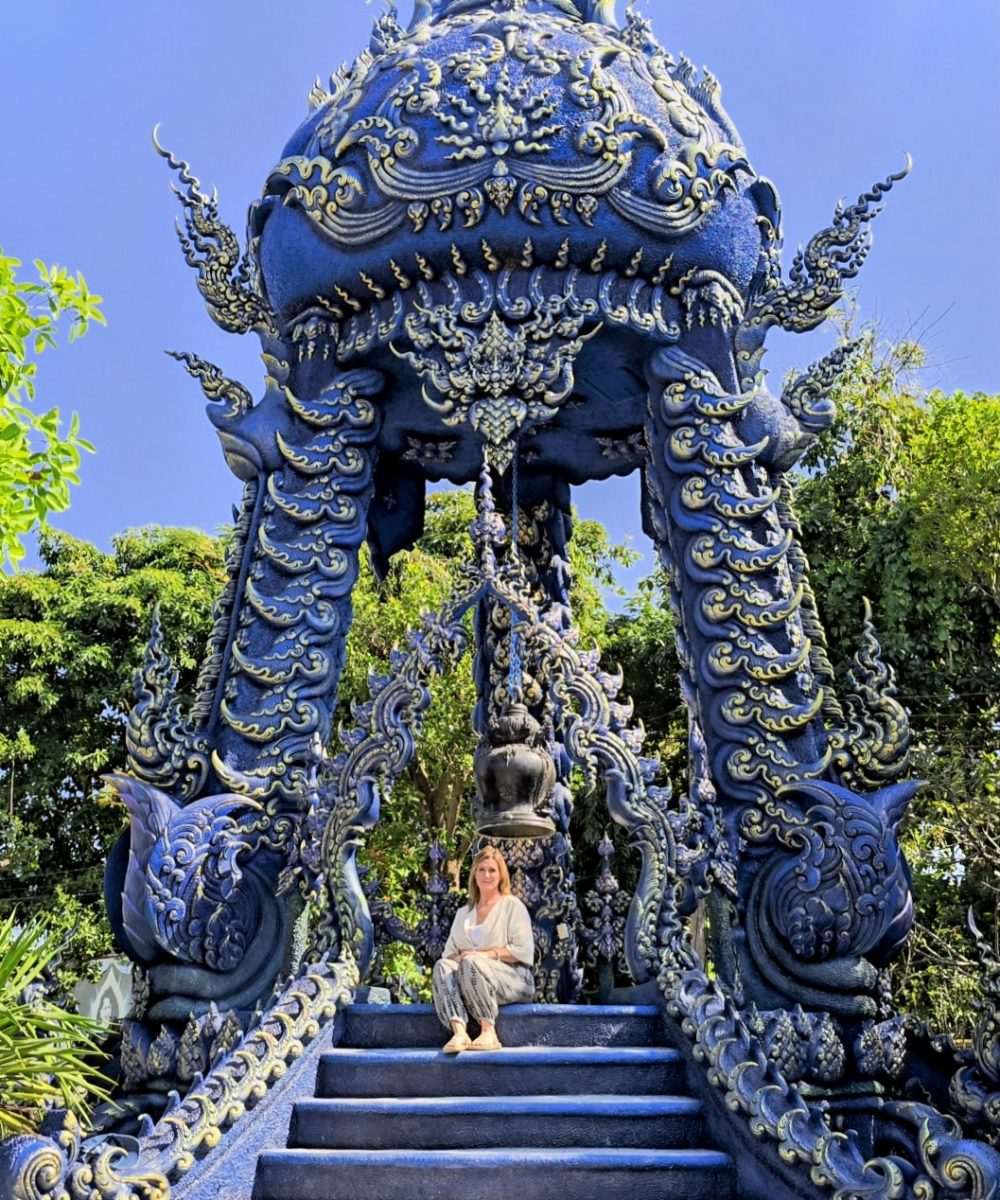
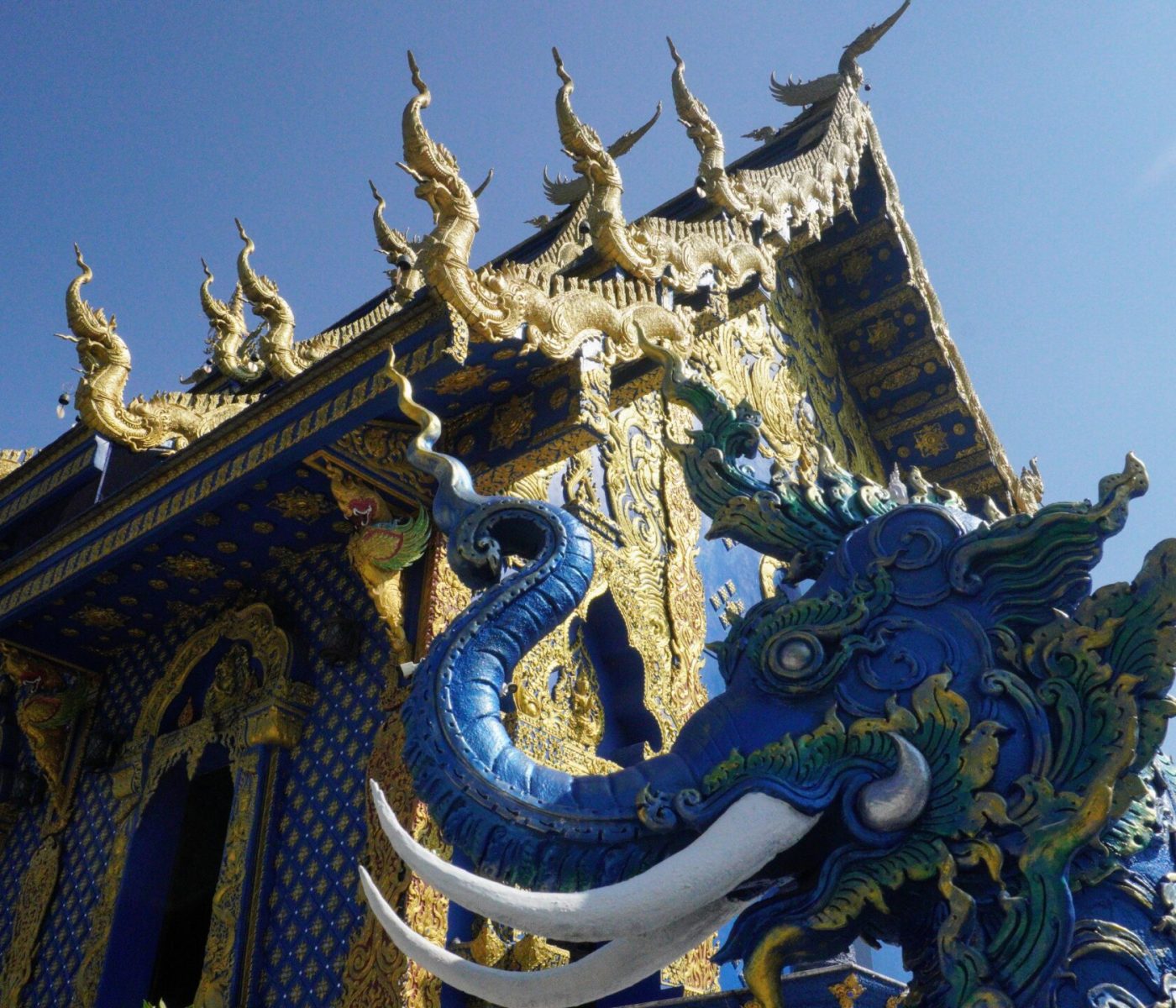
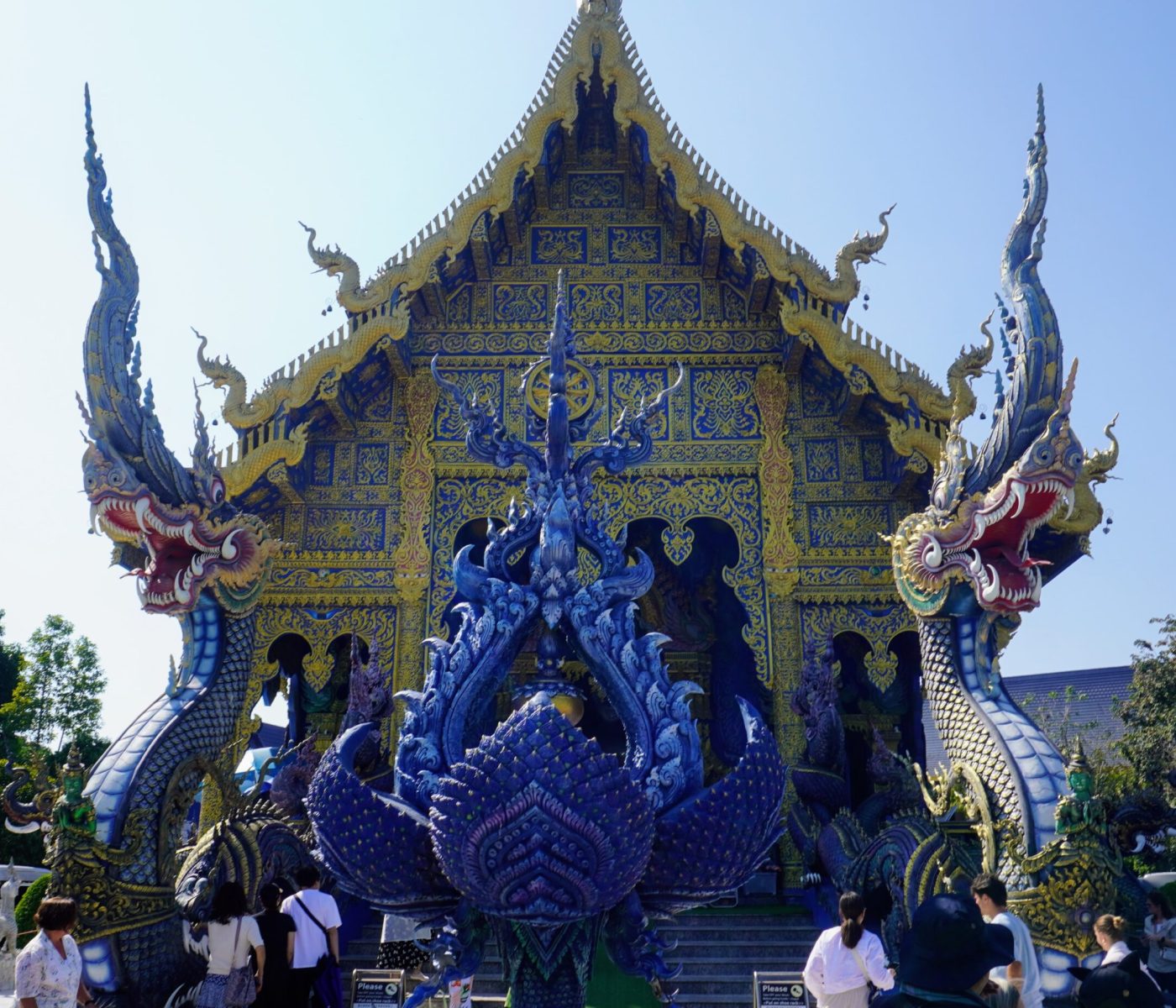
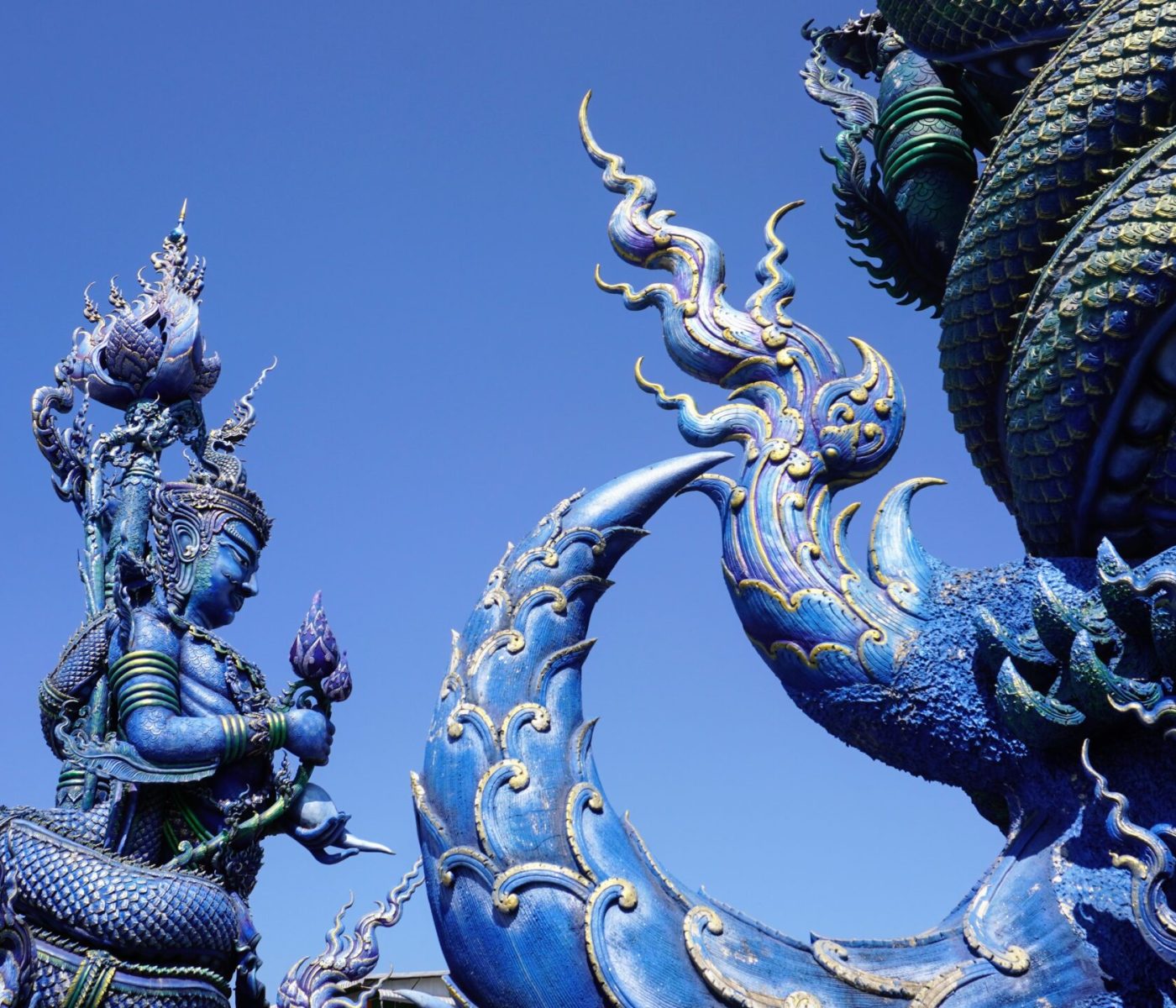
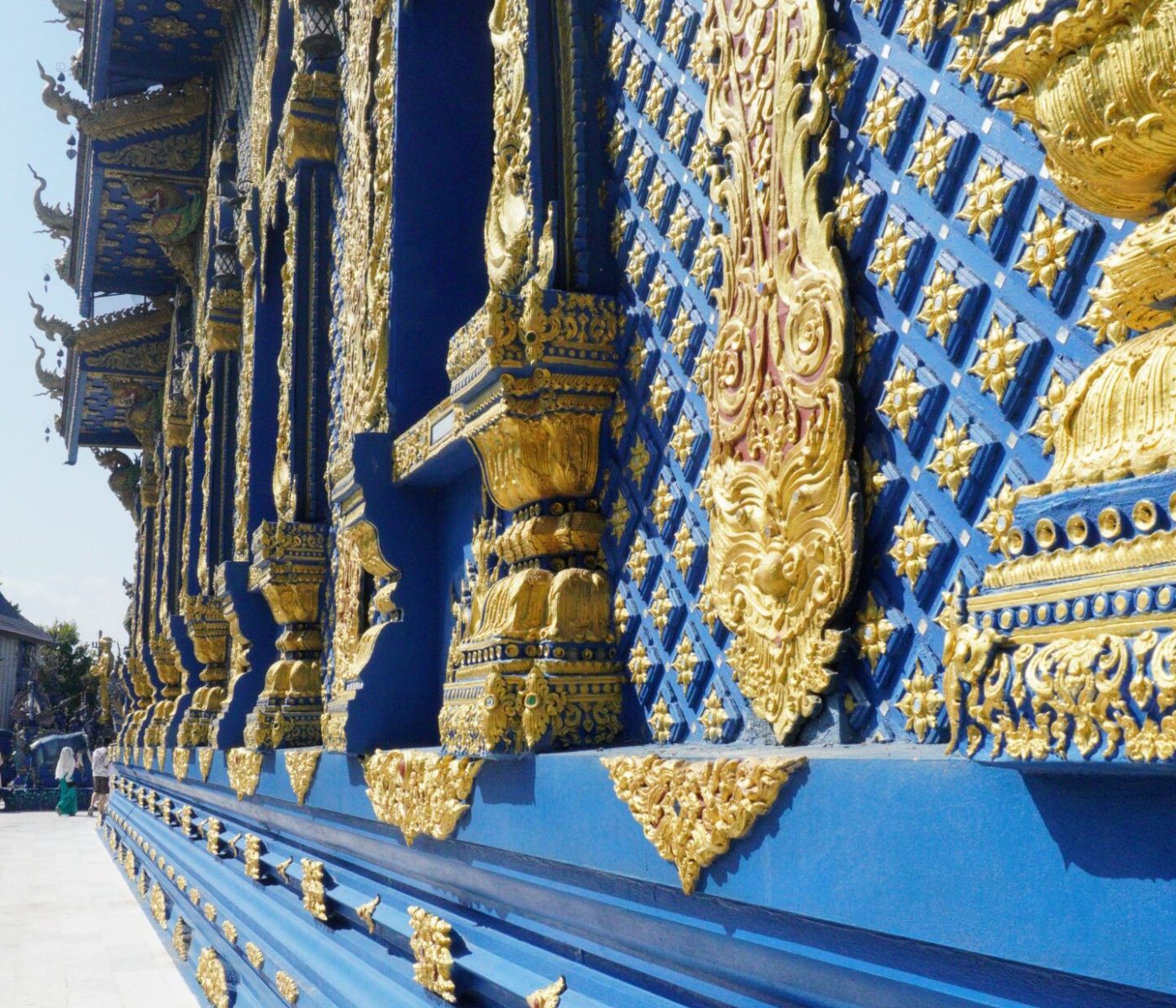
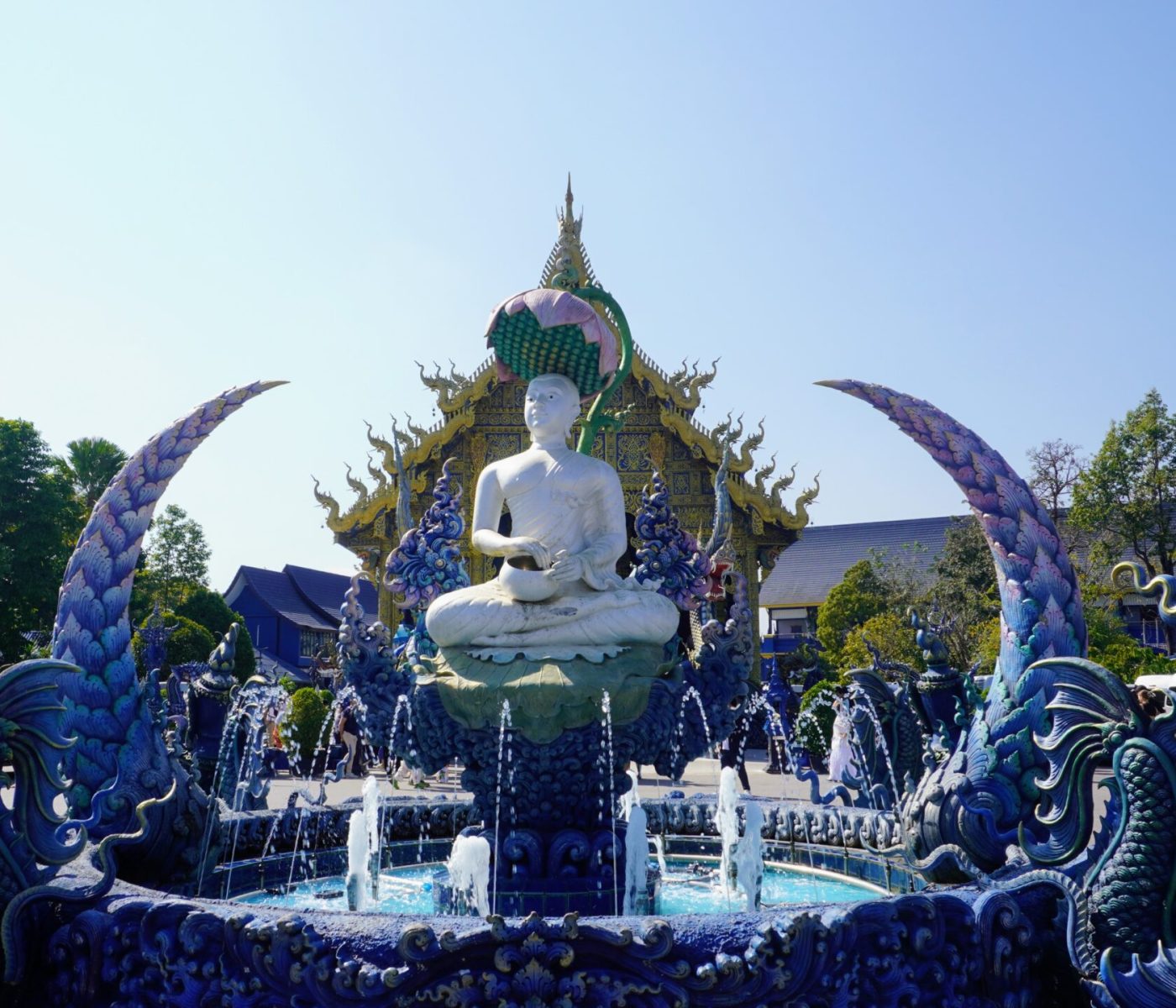
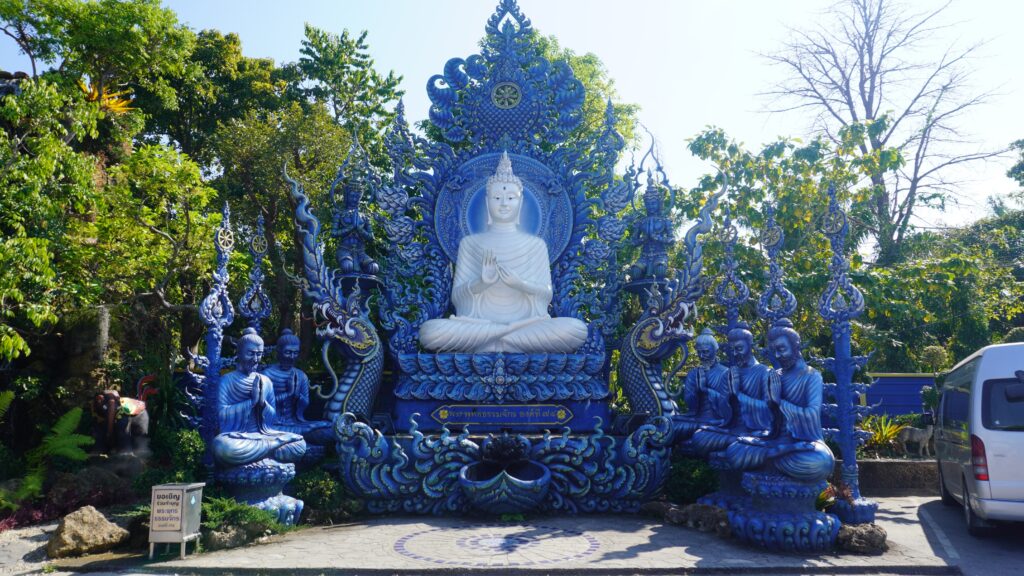
A deep blue saturates nearly every surface, broken only by gold details that glisten in the sunlight. In Buddhist symbolism, blue is commonly associated with wisdom, purity of mind, and the teachings of the Buddha. Naga serpents run along the staircase railings, their scales layered with detail. Guardian figures stand watch along the walls, which are believed to ward off harmful spirits. Behind the main hall stands a large white Buddha in the abhaya mudra. Against the blue surroundings, the statue appears almost luminous.


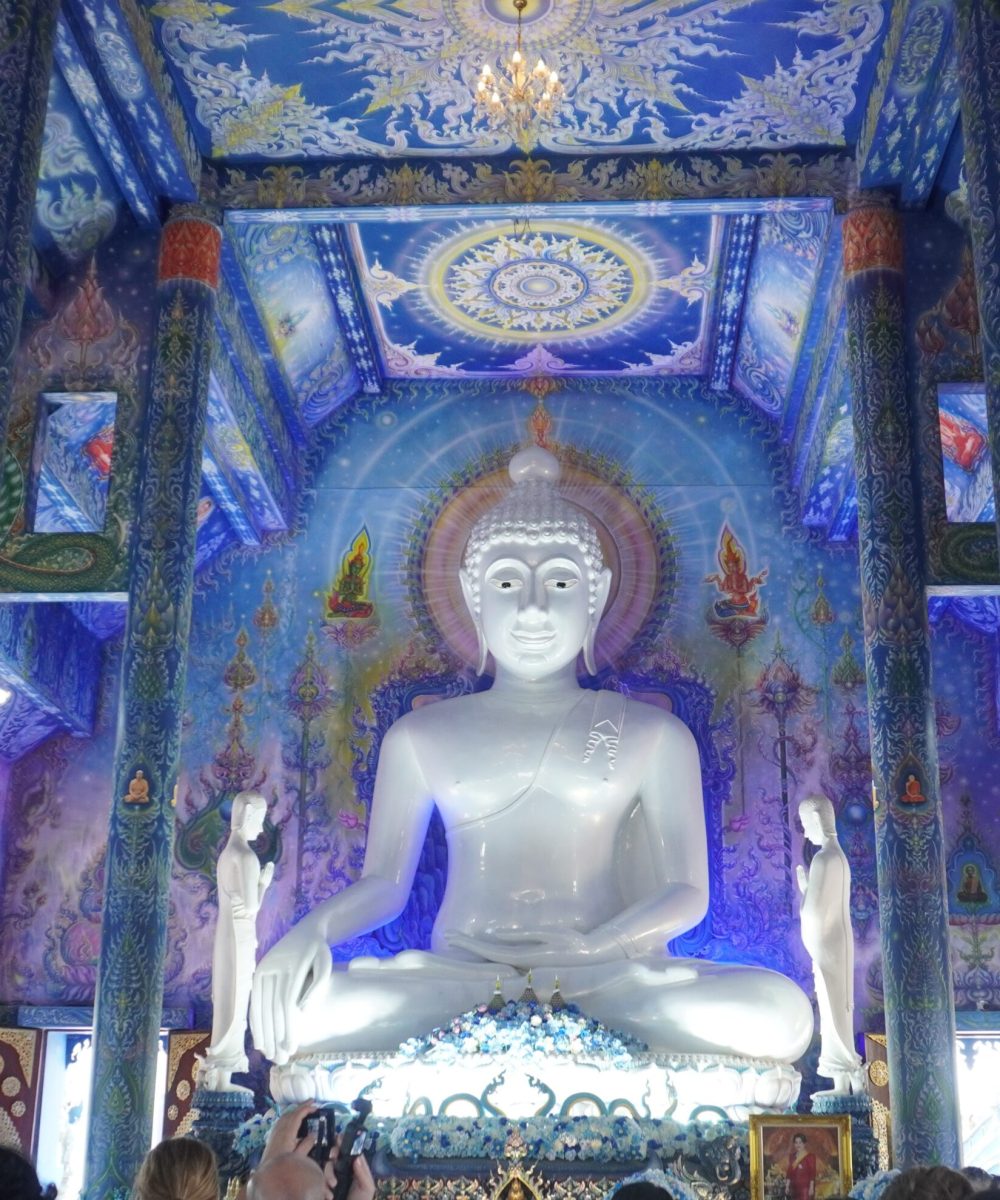
Inside the Prayer HallThe walls are covered with contemporary murals inspired by Buddhist cosmology and teachings, painted in vivid blues and golds rather than traditional earth tones.
At the center sits a white Buddha in the bhumisparsha mudra, representing the moment of enlightenment. The statue’s simplicity contrasts with the surrounding detail, naturally pulling your focus toward it.
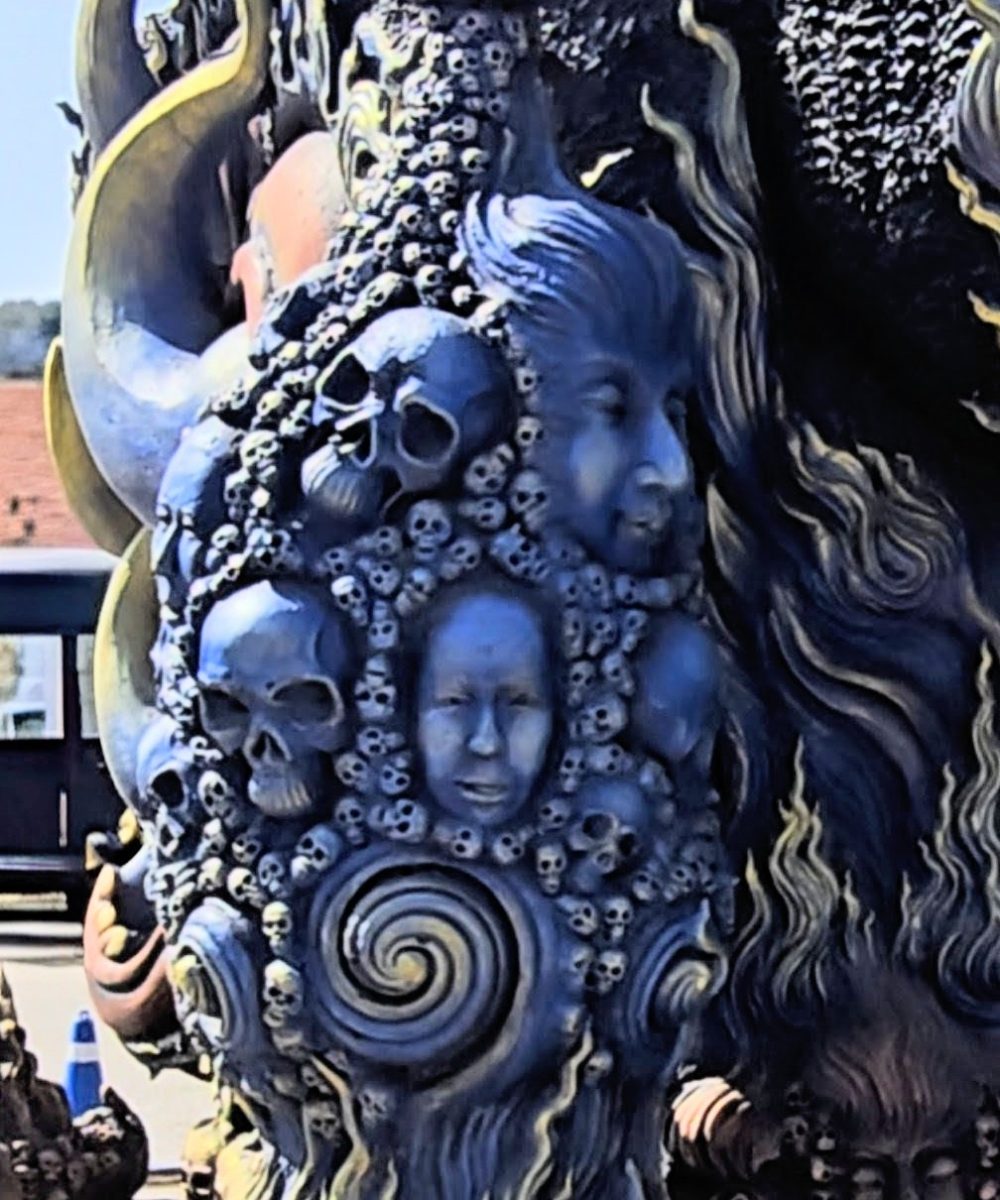
Overhead, geometric patterns repeat across the ceiling in gold and blue, giving the room a subtle glow. Toward the exit, artwork depicting suffering and hell realms frames the doorway — representing the cycle of existence outside the sacred space.
Many travelers visit the Blue Temple and White Temple on the same day, and together they form a fascinating contrast.
The White Temple feels radiant and almost celestial.
The Blue Temple feels grounded and reflective.
Add in the nearby Black House (Baan Dam), and the three are commonly referred to as the Colors of Chiang Rai — three interpretations of modern spiritual art, each with a distinct mood.
Location: Rim Kok district, about 6 km north of Chiang Rai city center
Entrance fee: Free
Hours: Approximately 7:00 AM – 8:00 PM daily
Dress code: Shoulders and knees covered; shoes removed before entering temple
Time needed: ~45 minutes to 1 hour