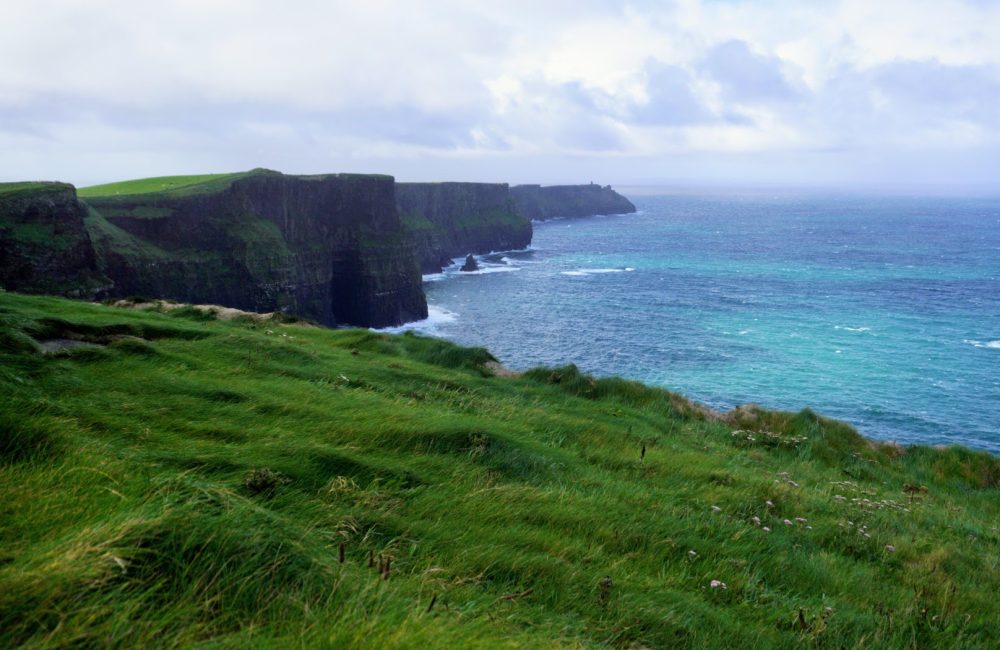
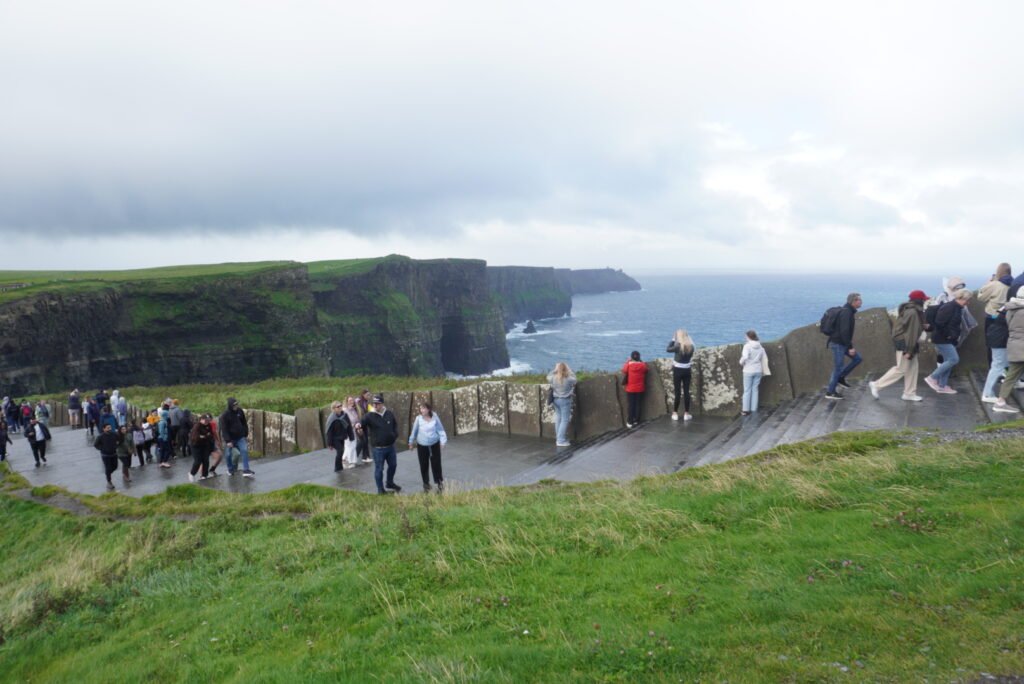
The Cliffs of Moher sit on the west coast of Ireland in County Clare. They run for several miles along the Atlantic and reach around 700 feet at their highest point.
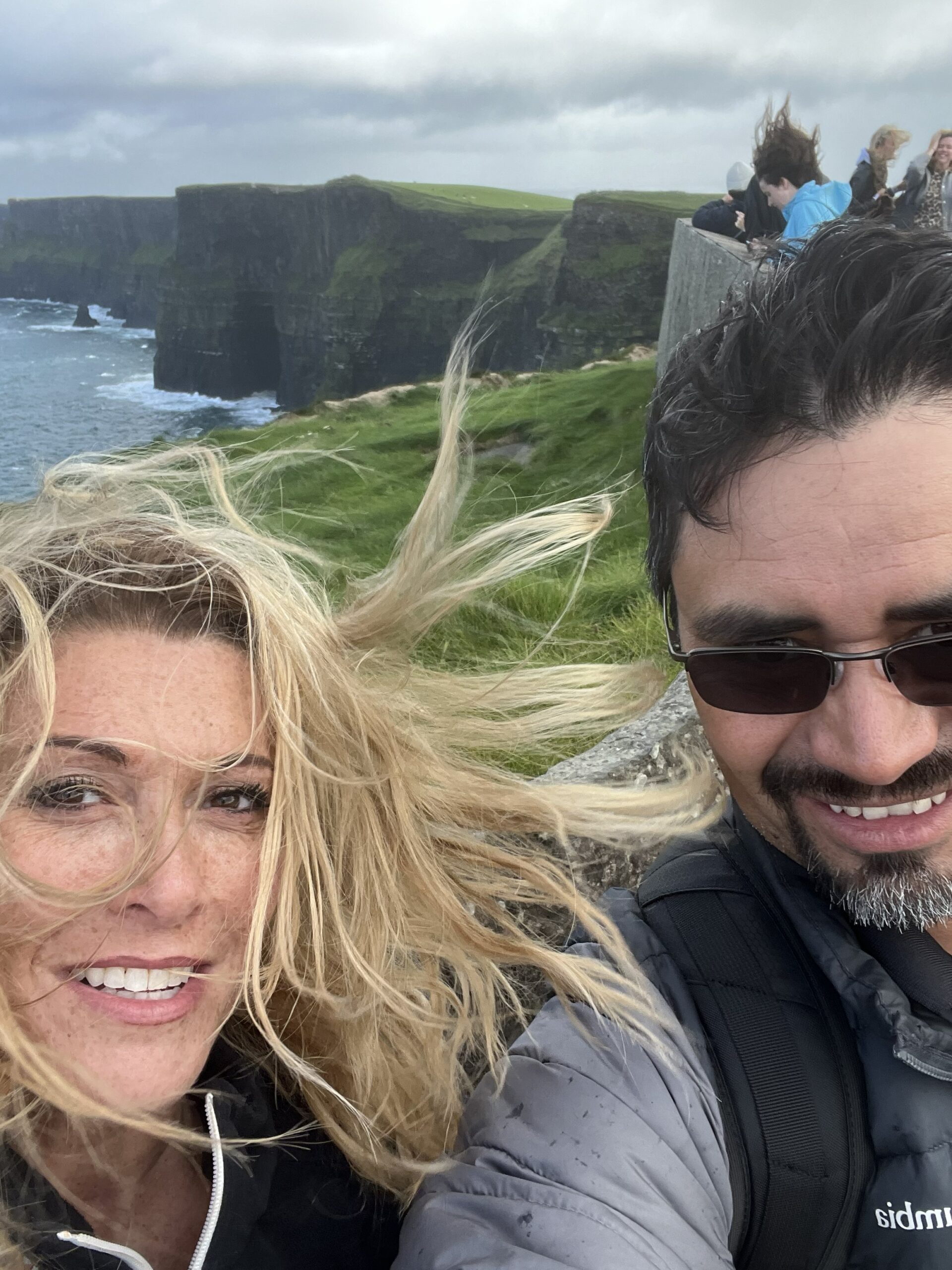
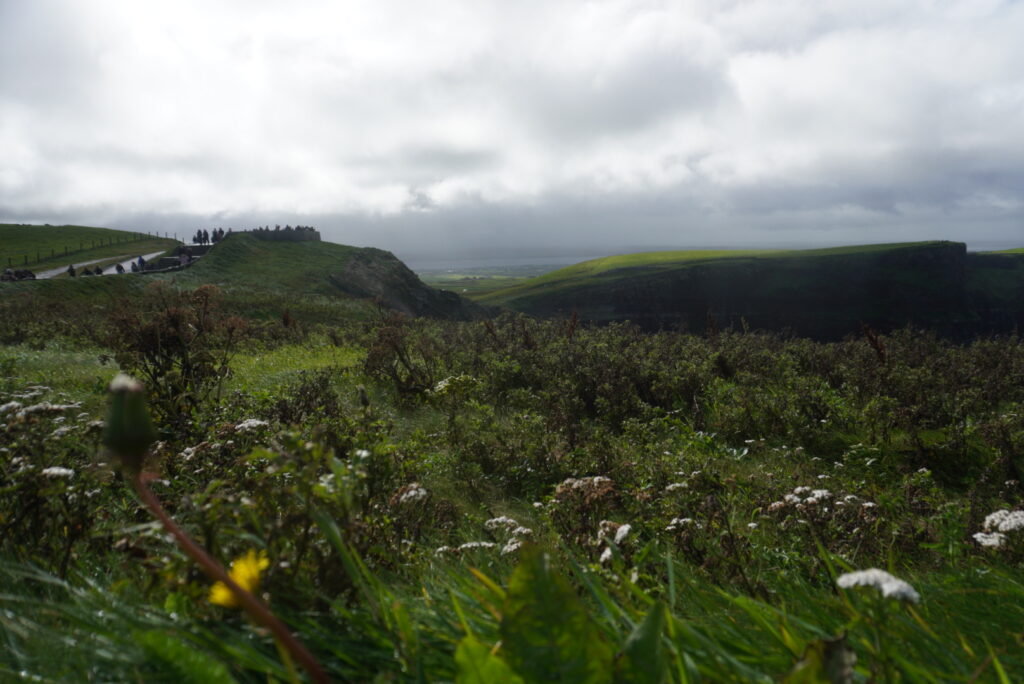
We visited the cliffs as part of a day tour out of Dublin. We only had about an hour, which might seem like enough time but it goes by quick — especially if you walk far along the path and want to stop in and check out the visitor center. When we went at the end of August it was cold and rainy with strong winds, so keep that in mind when you’re packing even if you’re going in the middle of summer.
Getting there and getting in
Access to the cliffs runs through the visitor center. There’s an entry fee that covers parking and site access — booking online ahead of time gets you a small discount and saves you from any line at the gate. If you’re on a tour, this is usually handled for you.
The visitor center has a cafe, restrooms, exhibits on the geology and local wildlife, and a virtual reality experience with an aerial view of the cliffs. It’s worth a few minutes of your time, especially the geology section — once you know what you’re looking at in those rock layers, the cliff face becomes a lot more interesting.
Walking the cliffs
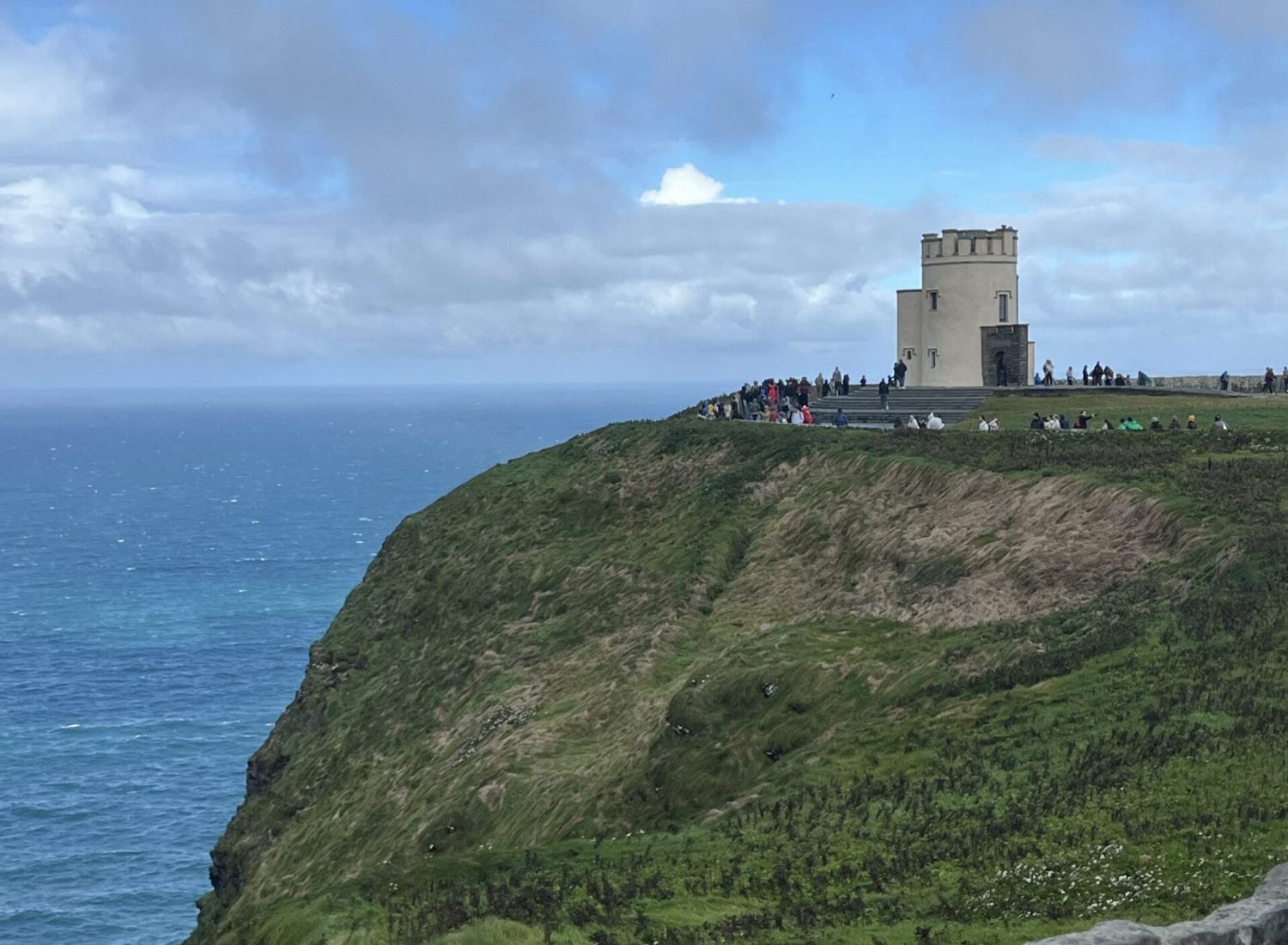
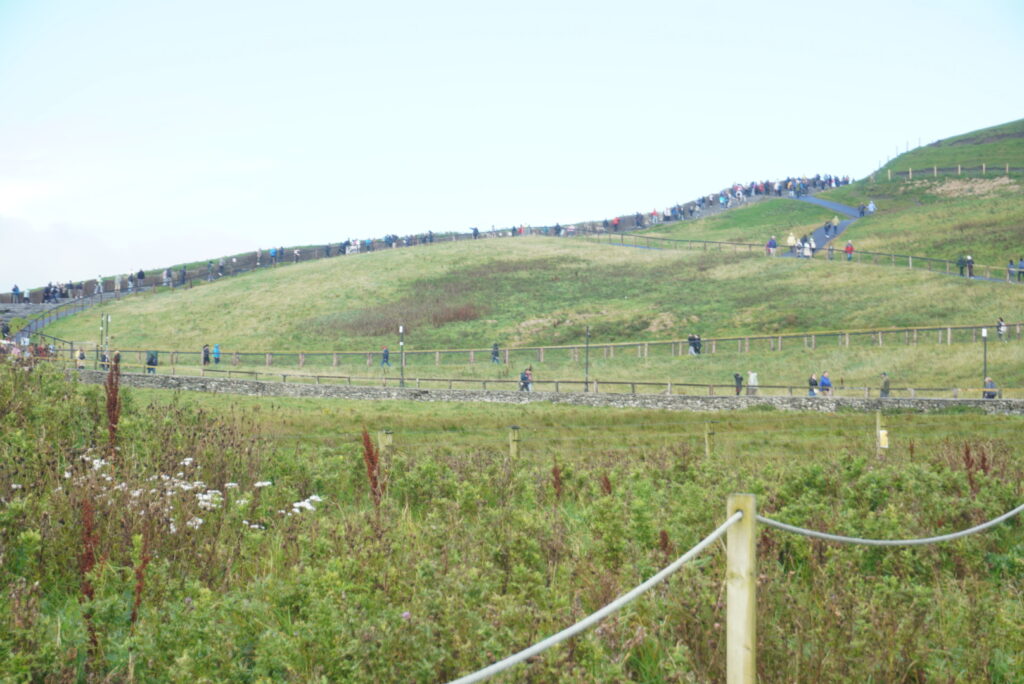
The main paved path runs north and south from the visitor center. Most people stop at the central viewing platform and call it done. If you keep walking — even just ten minutes in either direction — the crowds thin out and the views open up. The path heading north toward O’Brien’s Tower, a stone lookout built in the 1800s, is the most popular stretch and worth the walk.
Wear proper shoes. The paved section near the visitor center is easy, but the path gets rougher the further out you go. Bring a windproof layer no matter what the weather looks like when you leave — it’s reliably windy up there and the temperature feels colder than it is.
A bit of history
The cliffs formed around 300 million years ago when this region sat beneath a shallow sea. The horizontal bands of rock visible in the cliff face — sandstone, shale, siltstone — are compressed layers of sediment from that period, stacked up over millions of years. The site is part of a UNESCO Global Geopark. The name itself comes from an old Irish word meaning roughly “the ruin of a fort,” after a stone promontory fort that stood at the southern end before being demolished in the early 1800s.
They’ve also appeared in a couple of recognizable films — The Princess Bride used them as the Cliffs of Insanity, and Harry Potter and the Half-Blood Prince filmed here as well.
Is it worth it on a day tour?
Yes. The cliffs live up to the reputation. The tradeoff with a tour is time — you’ll want more of it than you get. If Ireland is a place you’re planning to return to, putting the cliffs on a standalone itinerary with a few hours to spare would be worth it. But even a quick stop just to take in the views is enough to understand why this is Ireland’s most visited natural attraction.