The White Temple, Chiang Rai — The Most Beautiful Temple in Thailand?
In January 2026, while staying in Chiang Mai, I booked a full-day excursion to Chiang Rai to check out some of the famous temples in that area. For about $60 USD, the tour took us across northern Thailand to see several places in one long day — the White Temple, Blue Temple, Black House, a Long Neck village, hot springs, and the Golden Triangle. This price included entrance to all of the temples, a guide, buffet lunch, and air-conditioned shared van.
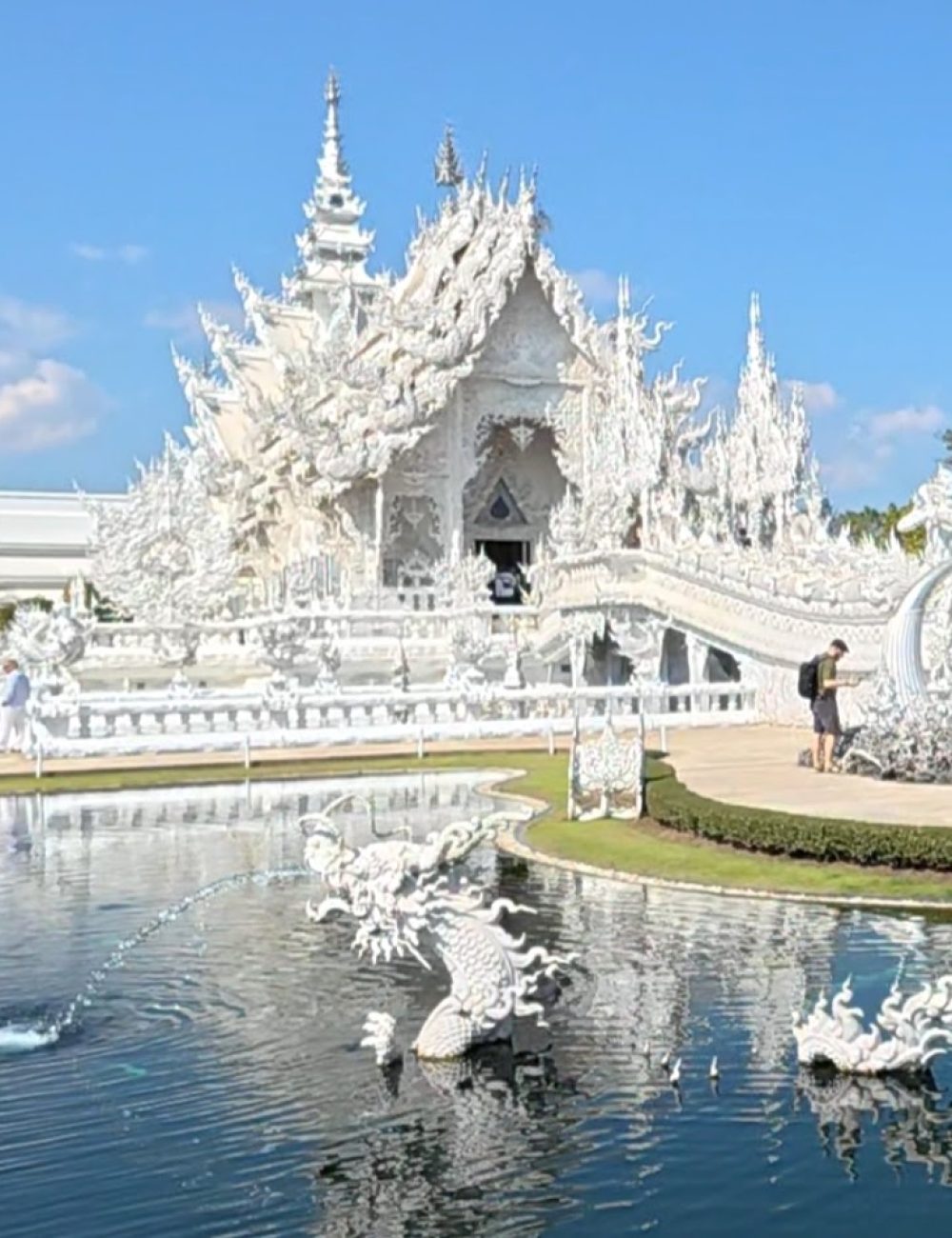
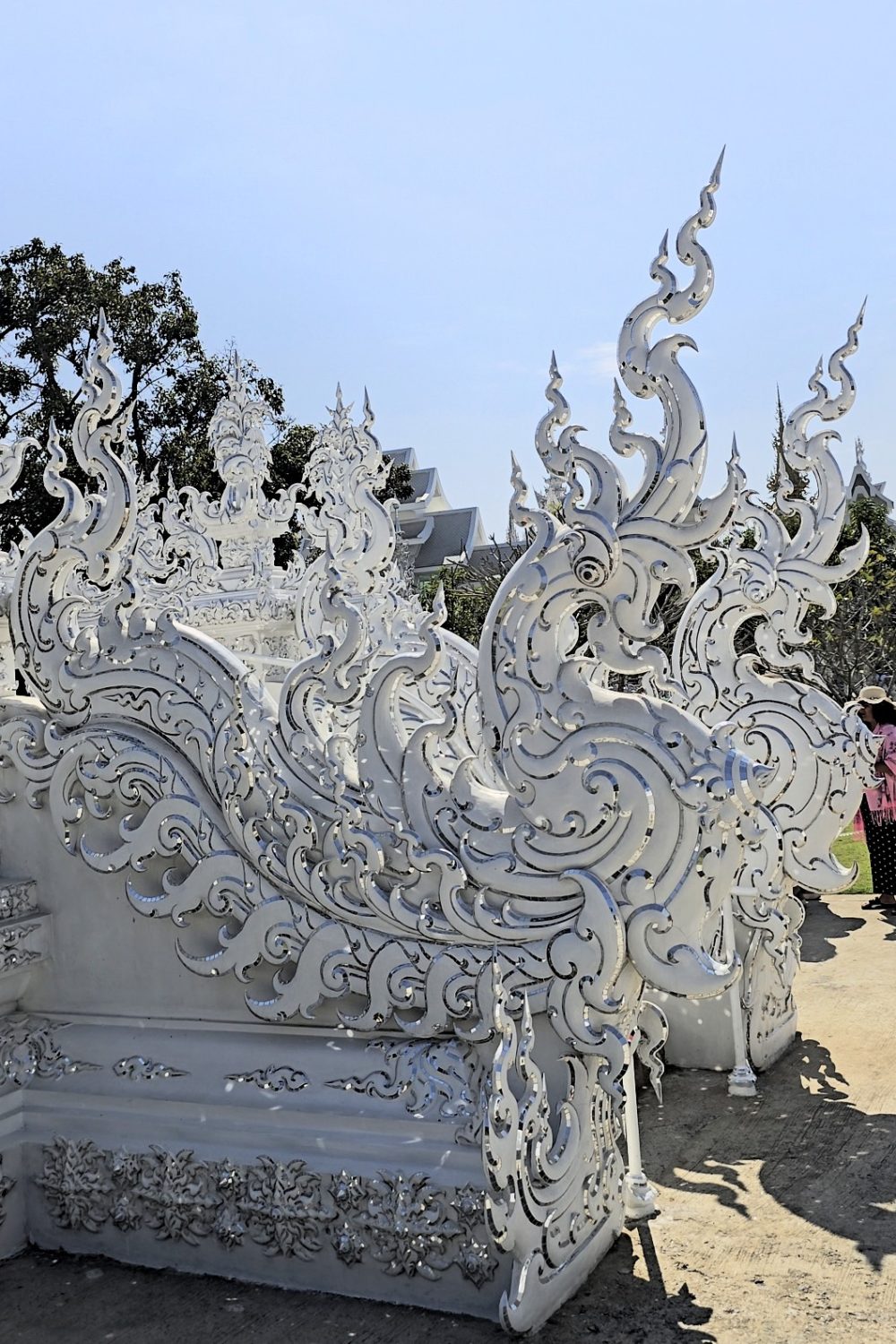
The official name for the white temple is Wat Rong Khun and when you first walk up to it, the brightness is what stands out. It’s an incredibly bright white with small mirrored pieces set all over the surface so it reflects the sun from every angle. Instead of gold or dark stone like many of the temples in Thailand, this one pretty much glitters in the sunlight. It was my favorite and the most stunning of all the temples I visited during my stay in Thailand.
This temple was created by Thai artist Chalermchai Kositpipat. It opened in 1997 and it is still a work in progress. Rather than restoring an old temple, he built something new as a personal offering and a visual interpretation of Buddhist teachings.
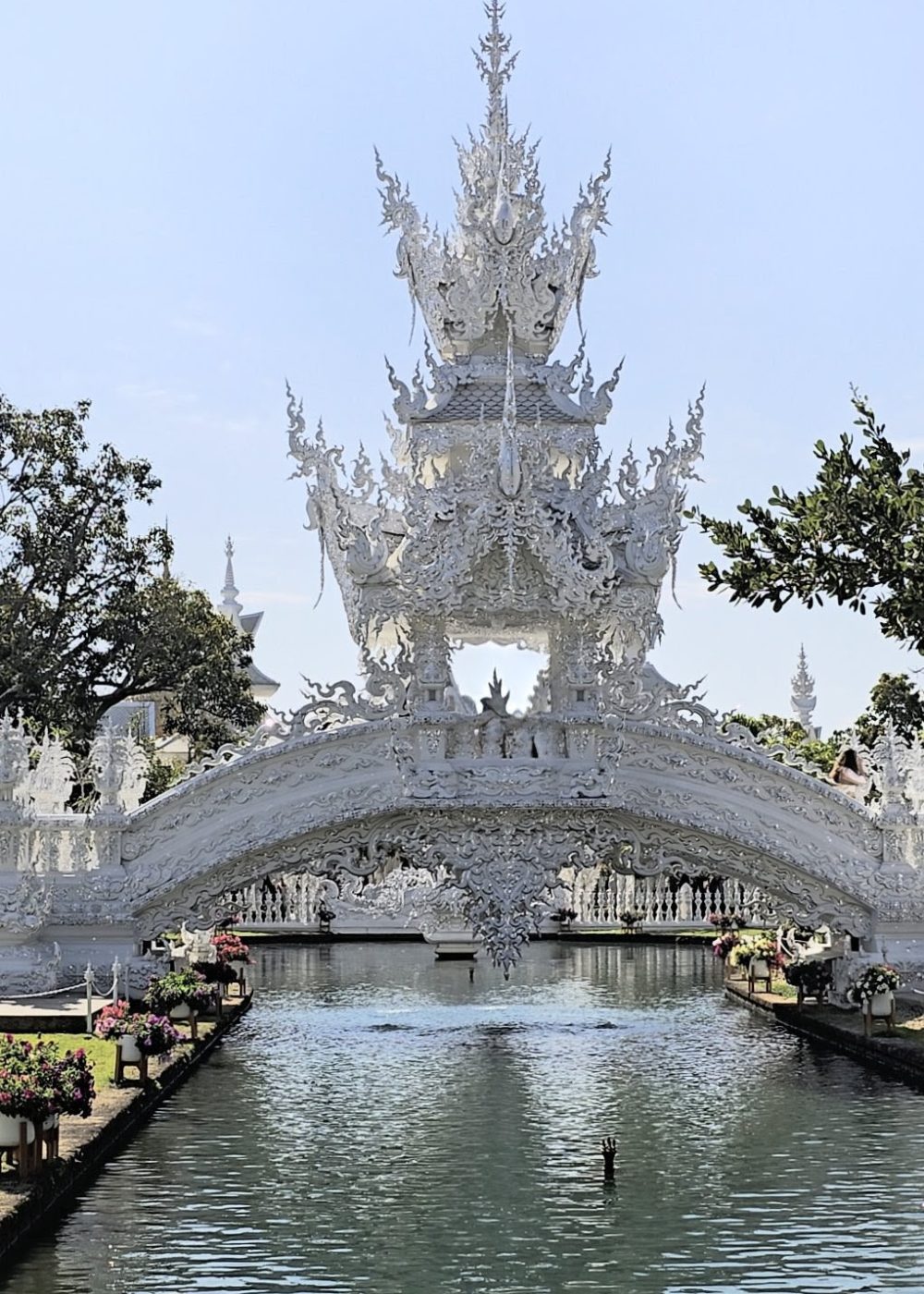
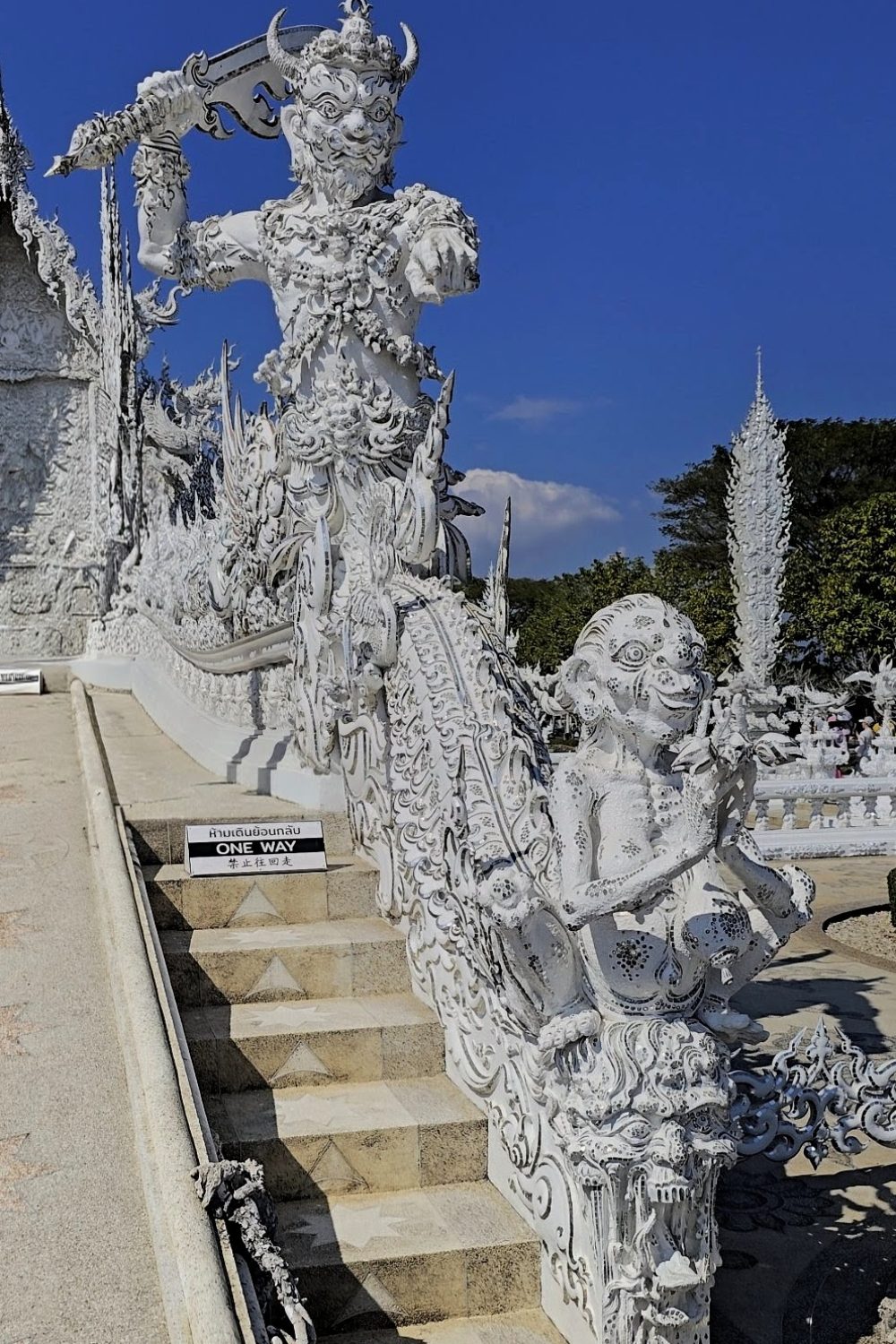
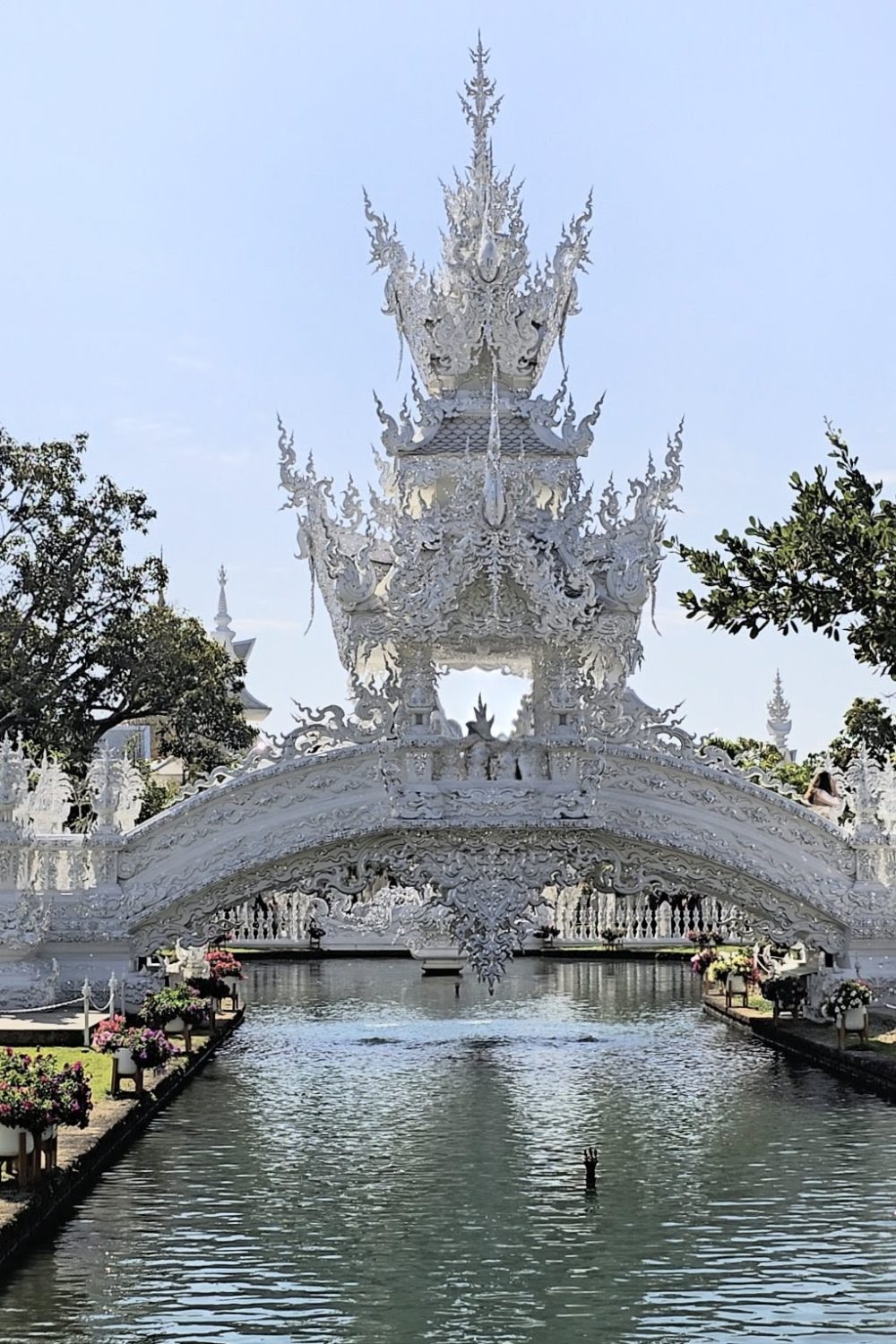
Photos capture the shape, but getting up close you’ll notice the detail of the carvings covering nearly every part of the building.
Walking Toward the Temple
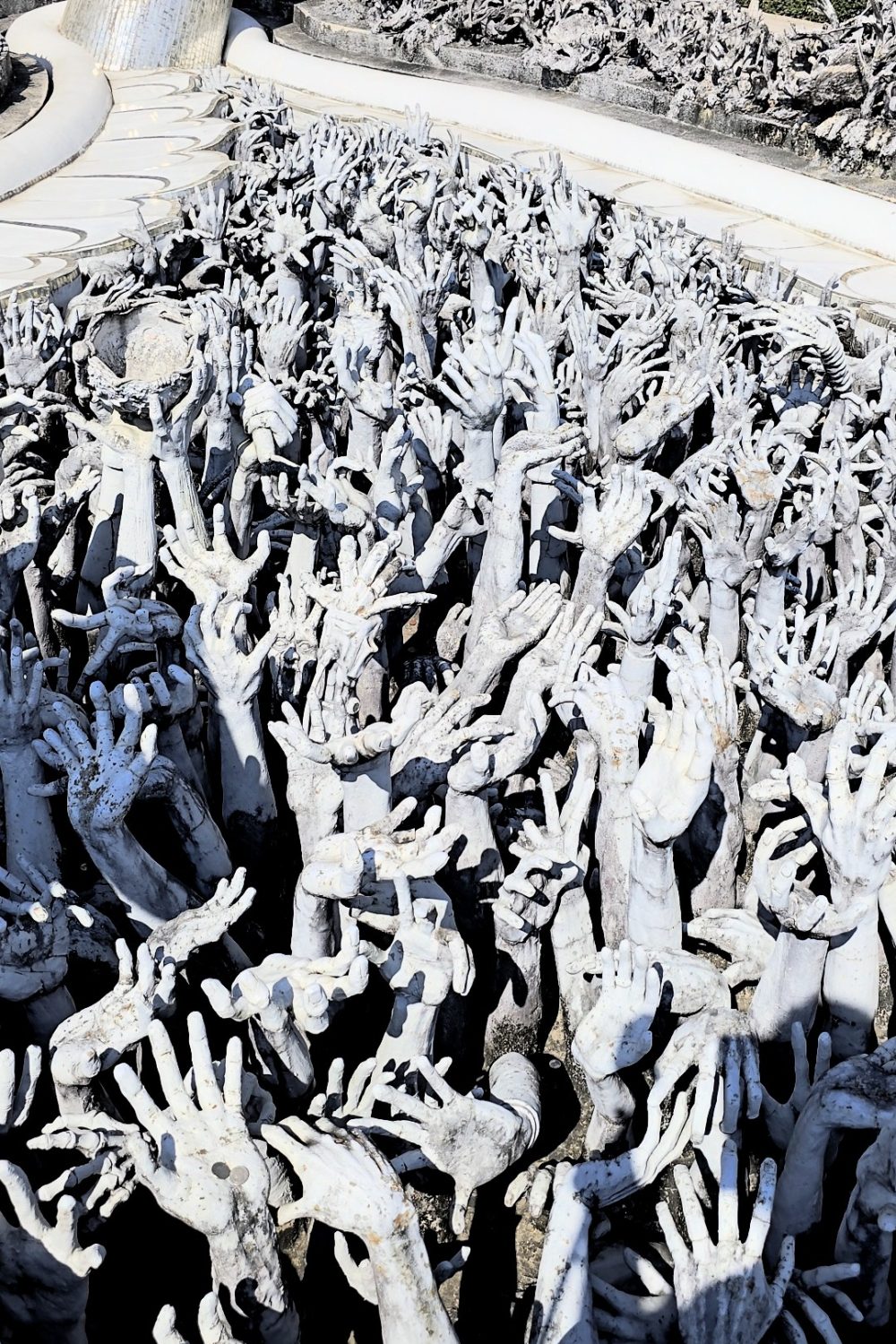
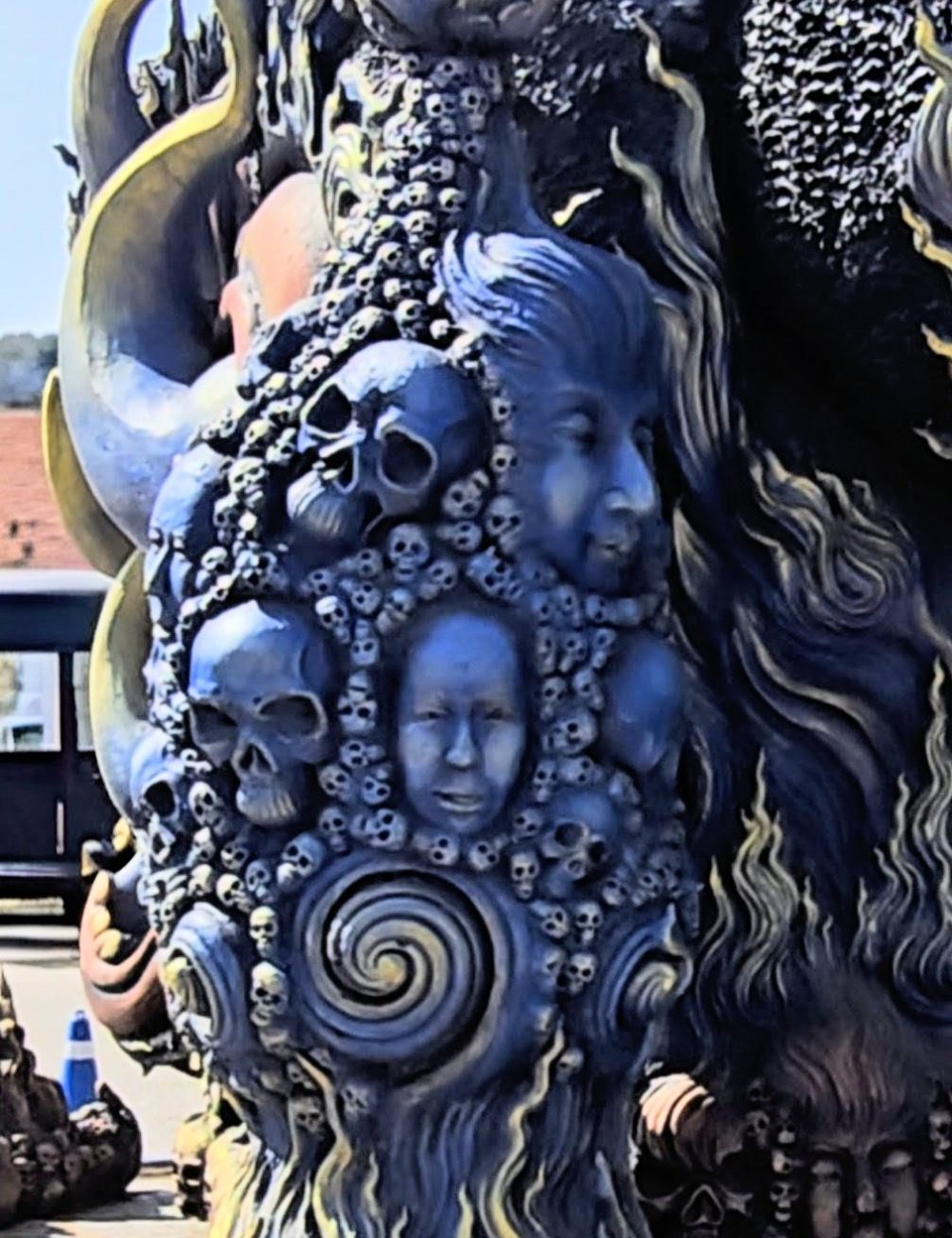
To reach the main building, you walk across a bridge suspended over a pit of sculpted hands reaching upward. These hands are meant to symbolize human desire and attachment — the things you’re meant to leave behind on the path toward enlightenment.
From there, the path continues in only one direction. You don’t circle around or wander freely inside. The layout is intentional: you symbolically move from chaos to clarity, from attachment to understanding. Going backward would break that idea, so once you exit, the journey is considered complete rather than something you repeat.
Entering the Main Hall
At the entrance, you stop and take off your shoes before stepping inside. Since you won’t be returning to the entrance, small plastic bags are provided so you can carry your shoes with you as you walk through this symbolic path to enlightenment.
Photography isn’t allowed in the main hall, but the walls are covered with bright, detailed murals that combine religious imagery with scenes from modern life. Since no one is trying to capture a photo, the pace naturally slows. People linger longer, looking around instead of moving straight through.
It feels calmer than you’d expect from a place that busy.
Practical Details (Accurate for 2026)
Foreign entrance fee: 200 baht (~$6.50 USD)
Shoulders and knees must be covered when entering temple
Remove shoes before entering temple (bags provided to carry them with you)
Photos prohibited inside
Plan for about 1–2 hours visit
Best to go early in the day before crowds
The other stops we made during the tour
Hot Springs
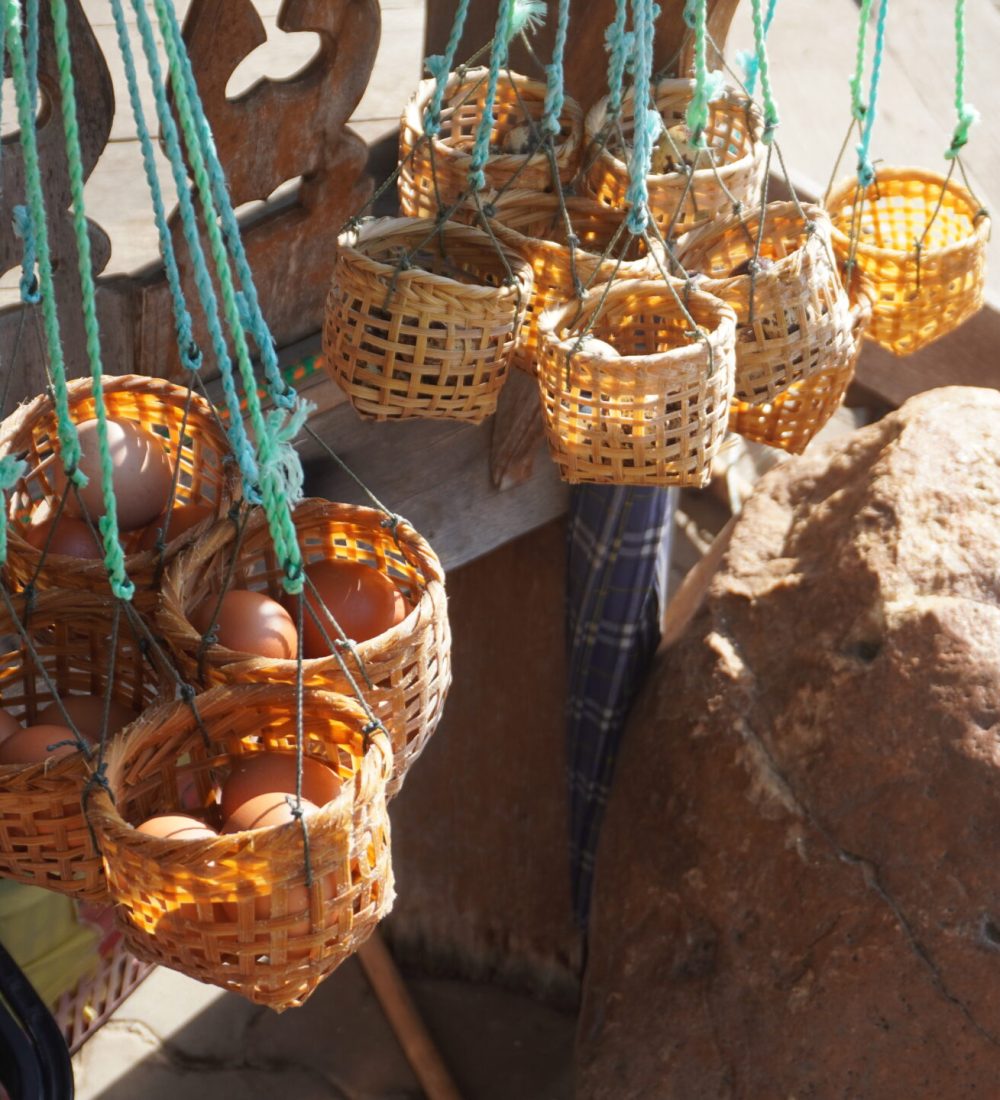
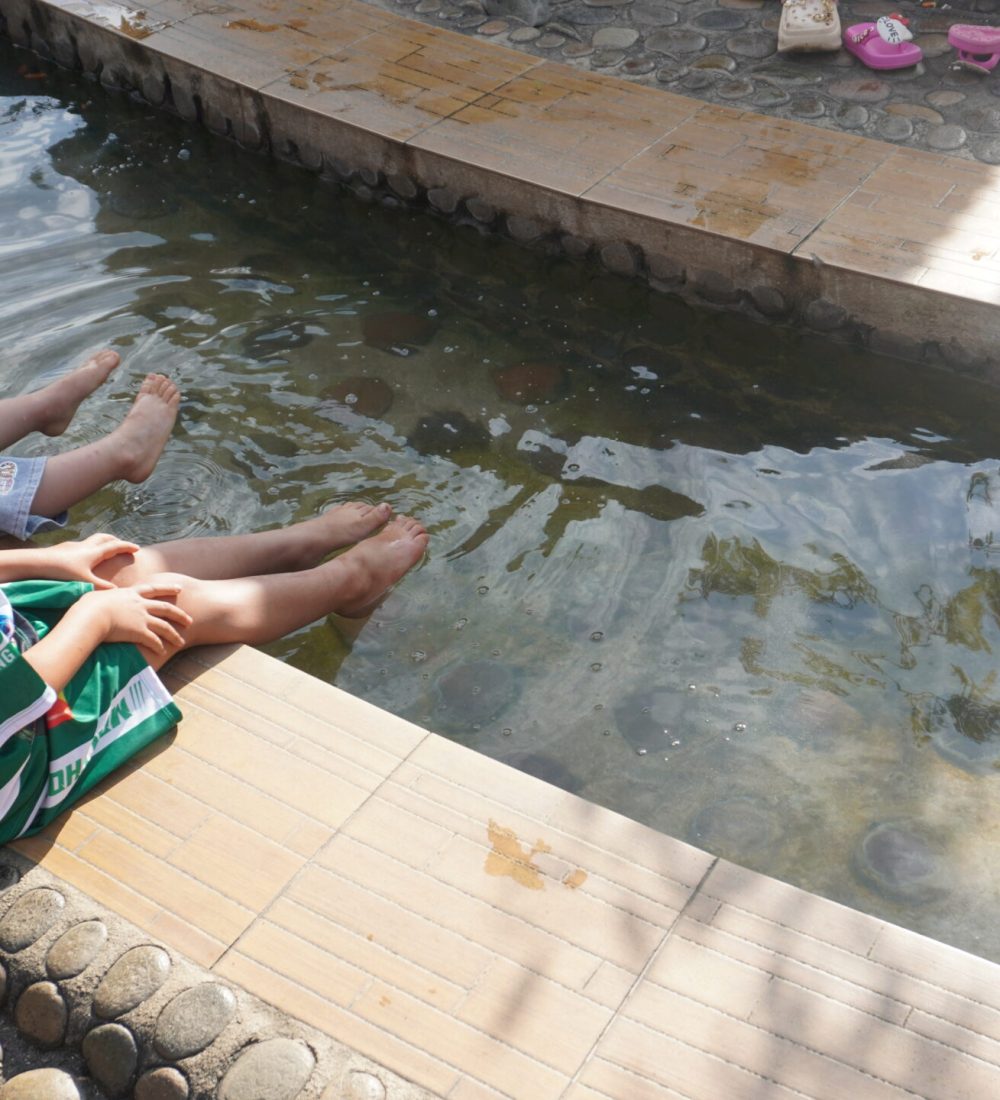
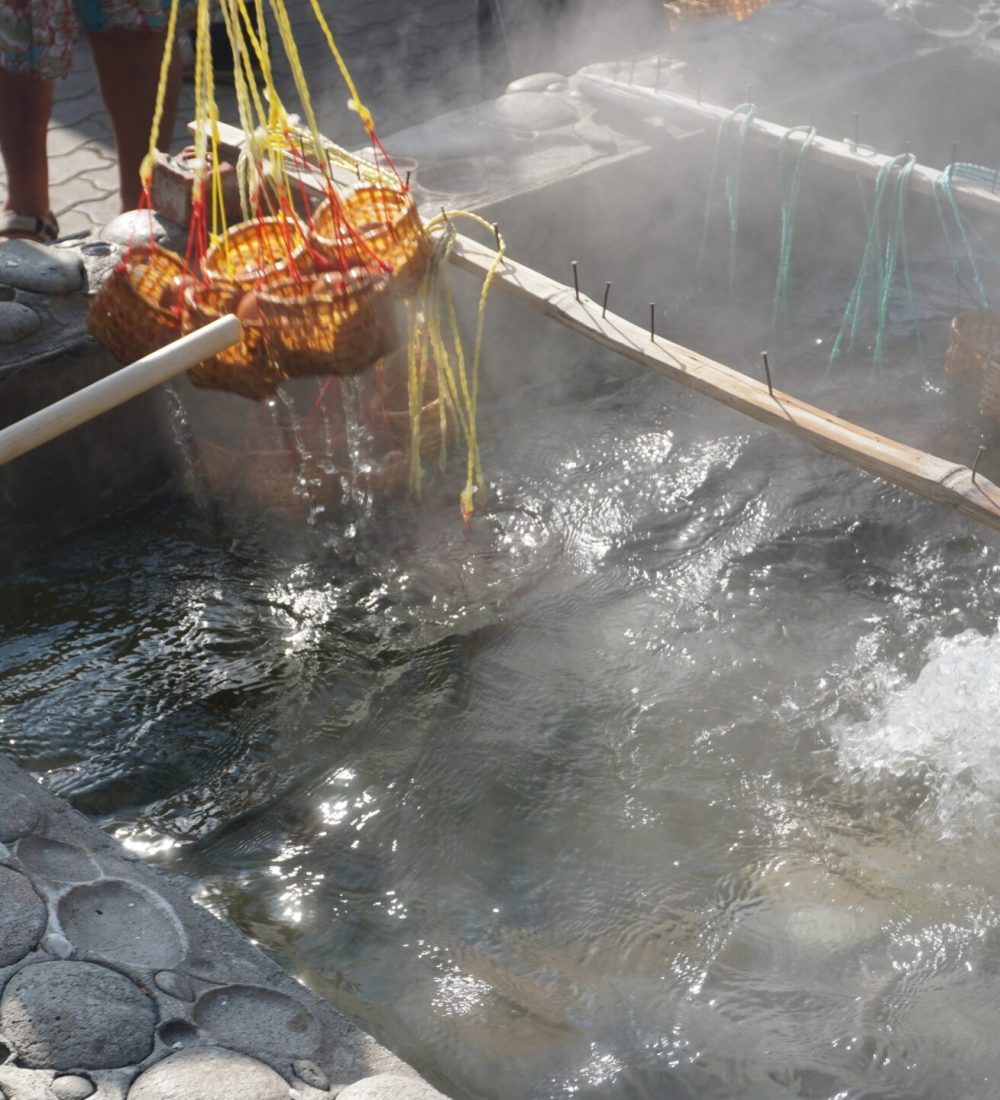
A roadside geothermal stop where mineral pools steam constantly and locals boil eggs in the hot water to sell to visitors. The sulfur smell hits you right away, and there are small basins of different temperatures where you can dip your feet while taking a break from the drive.
Blue Temple
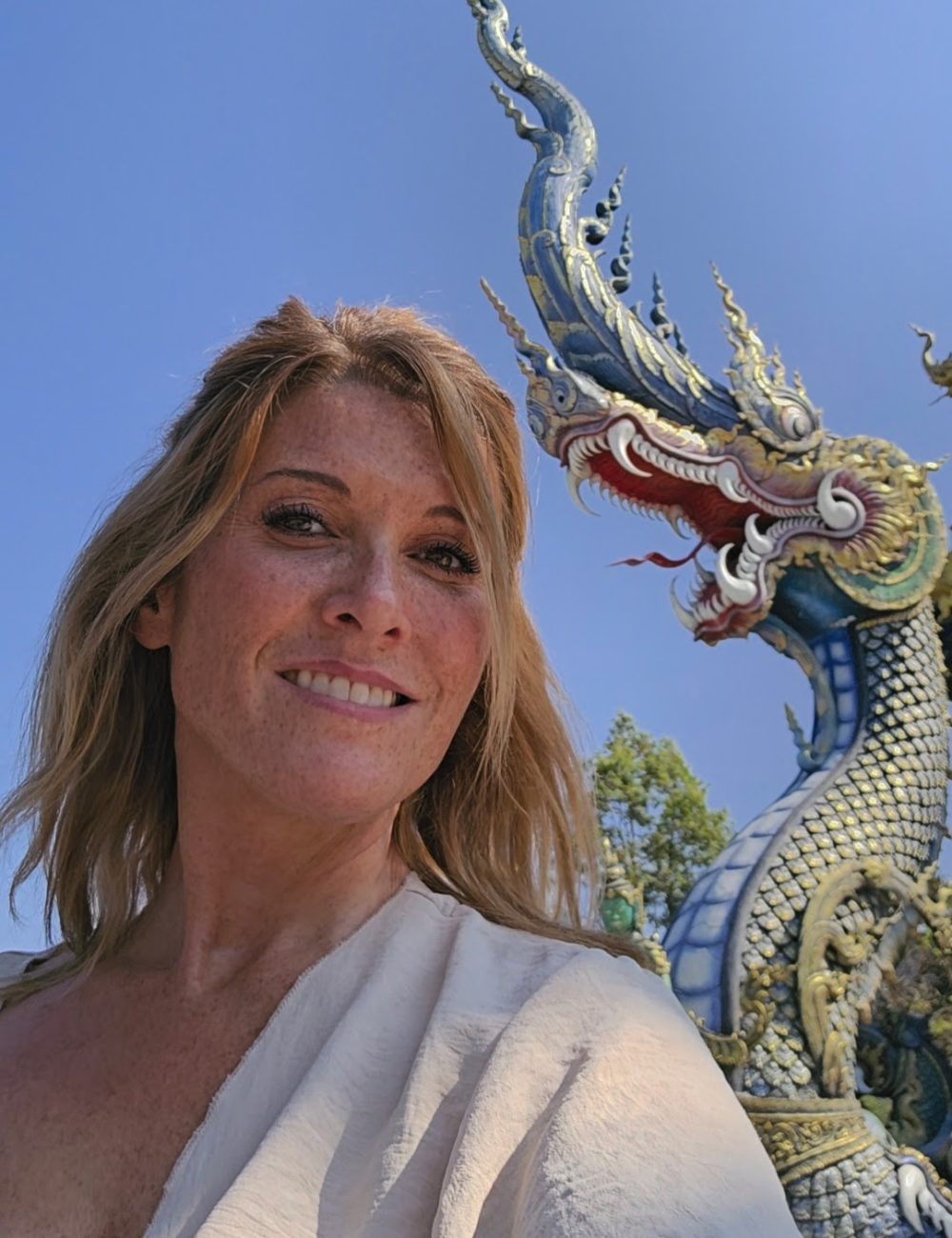
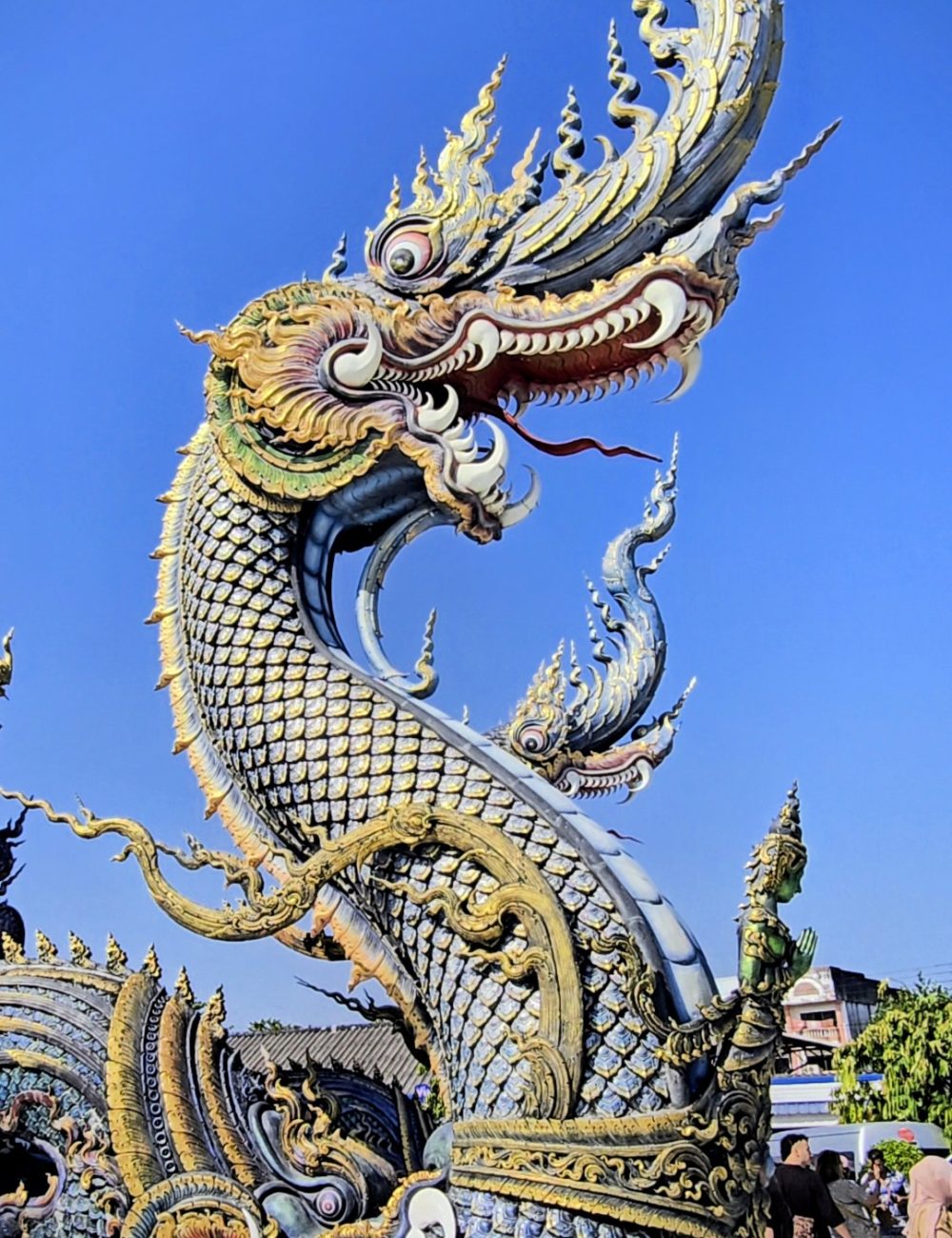
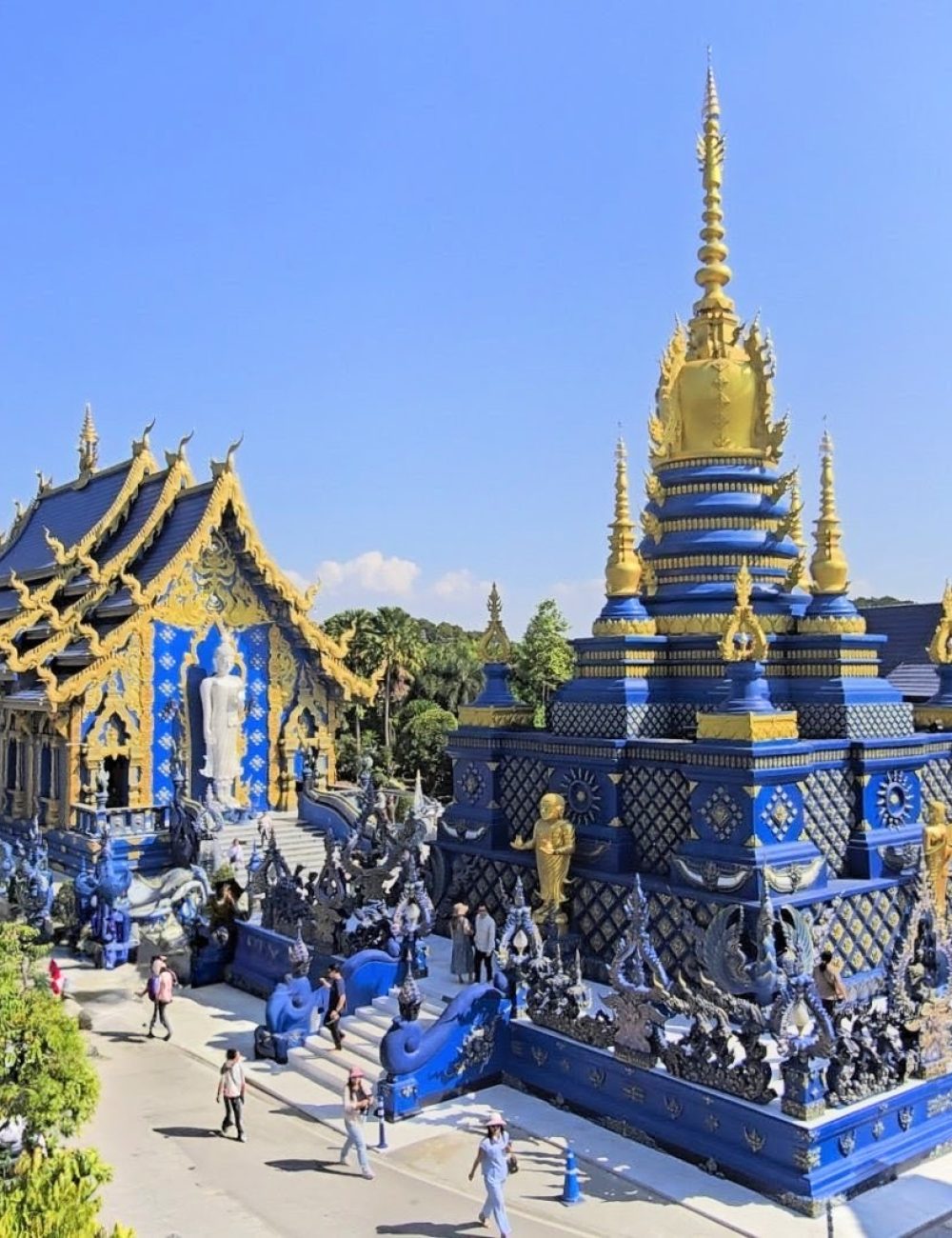
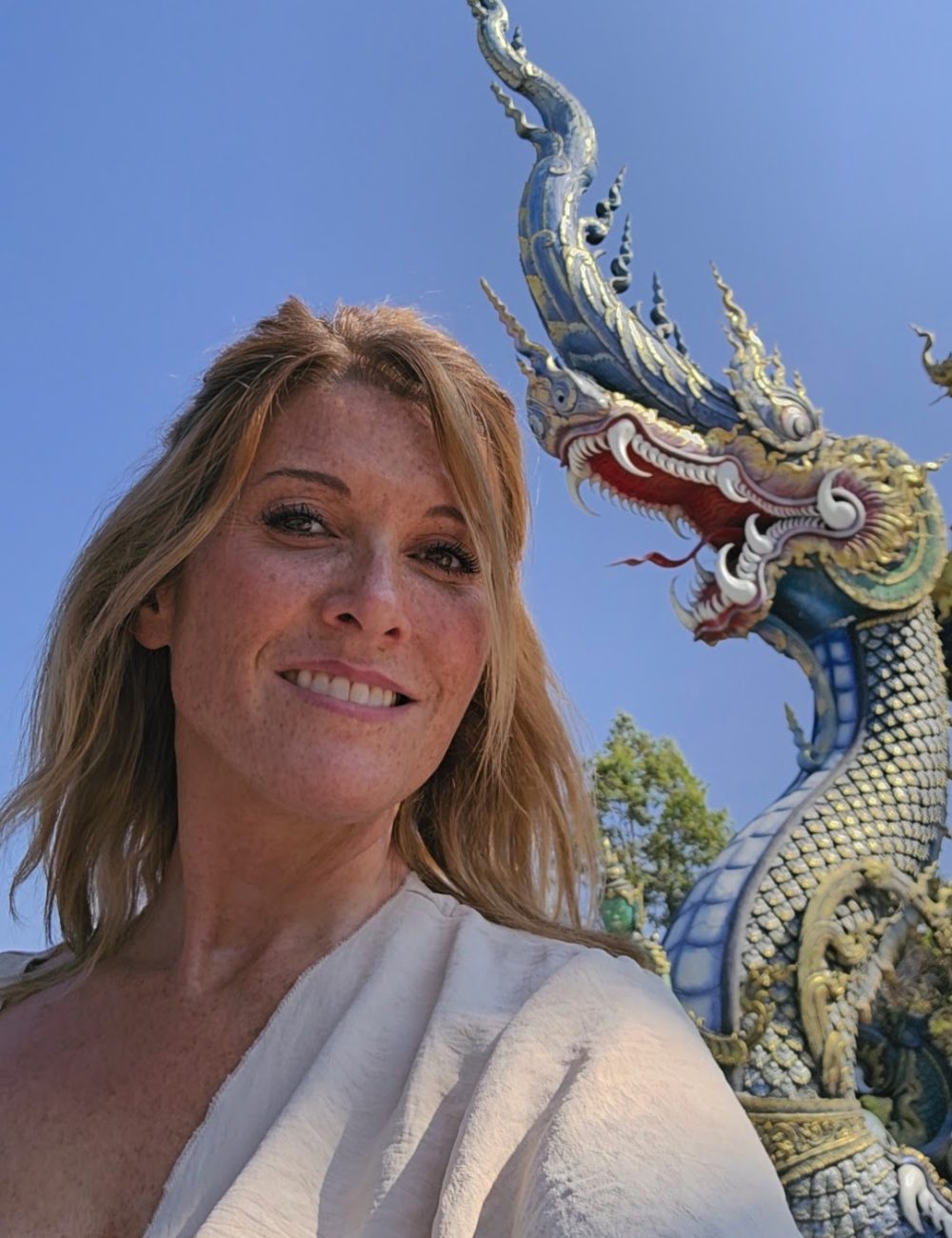
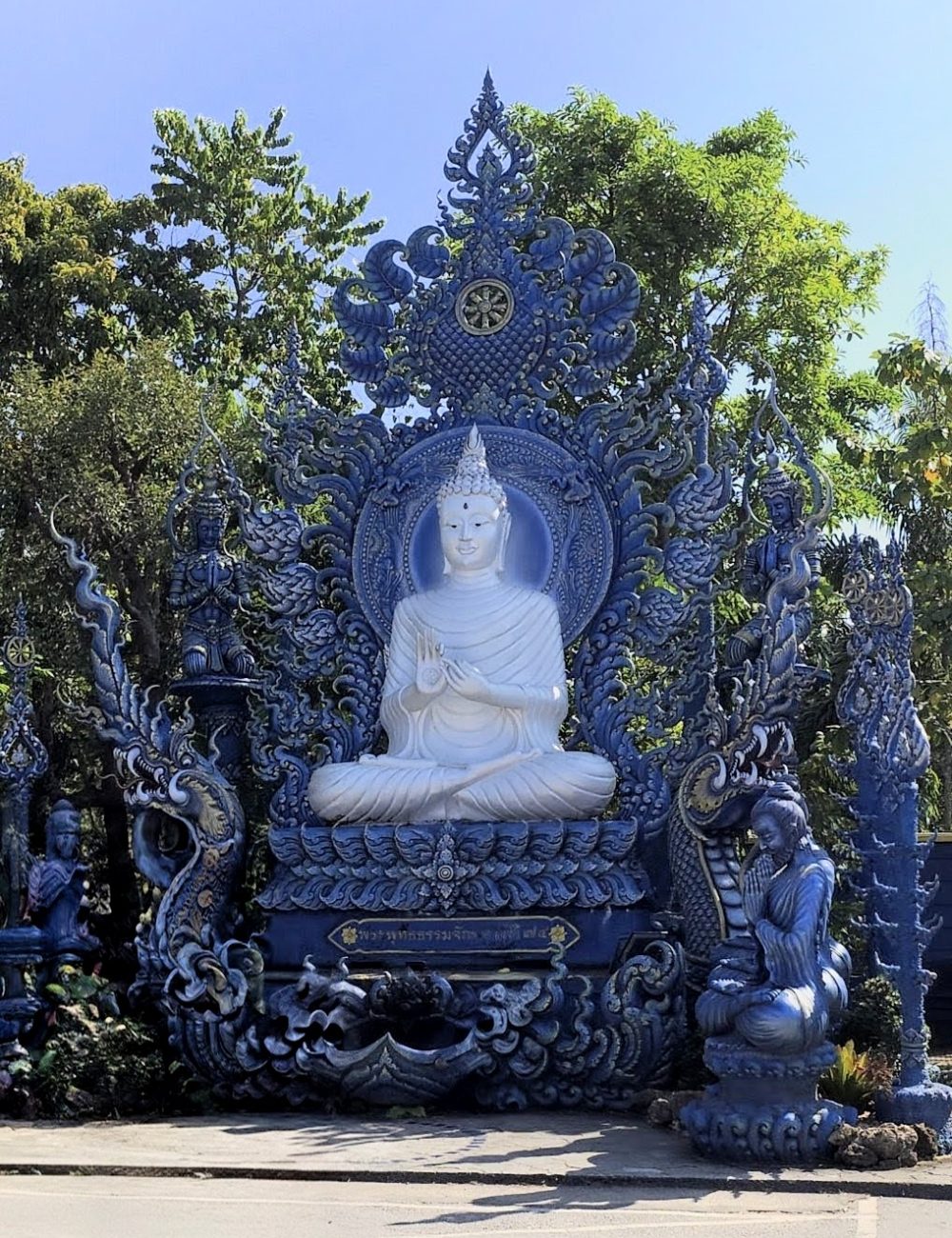
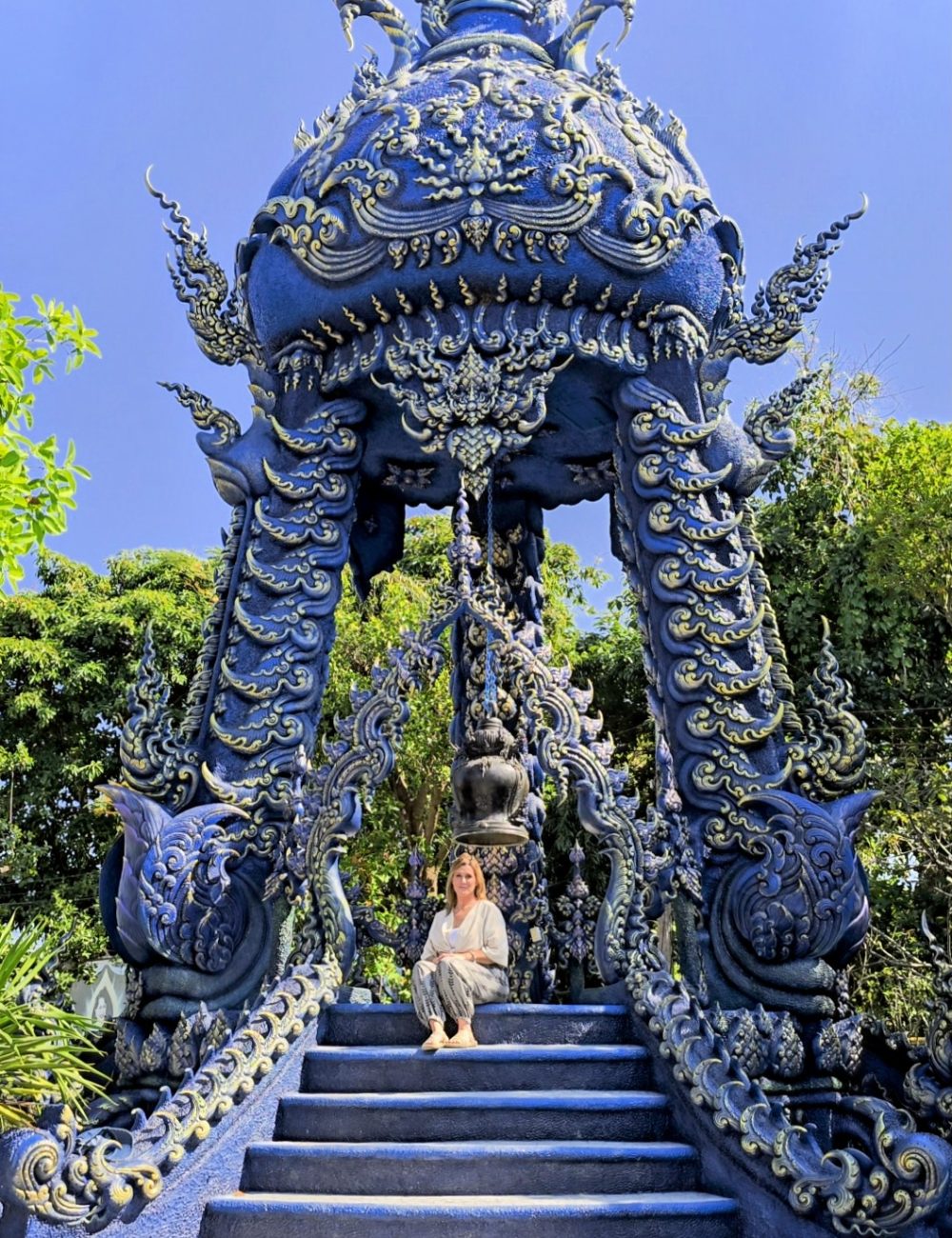
A vivid blue and gold temple nearby with a large interior hall and a striking blue Buddha statue. Quick visit but very photogenic and peaceful.
The Blue Temple’s official name is Wat Rong Suea Ten, which roughly means “Temple of the Dancing Tiger.” The name comes from the history of the area, where tigers once roamed and were known to leap across the nearby Mae Kok River, so the temple kept the local place name rather than referencing its color. The blue itself is a design choice by the artist — a student of the White Temple’s creator — who used deep blue and gold tones to symbolize wisdom and purity in Buddhist imagery.
Black House (Baan Dam)
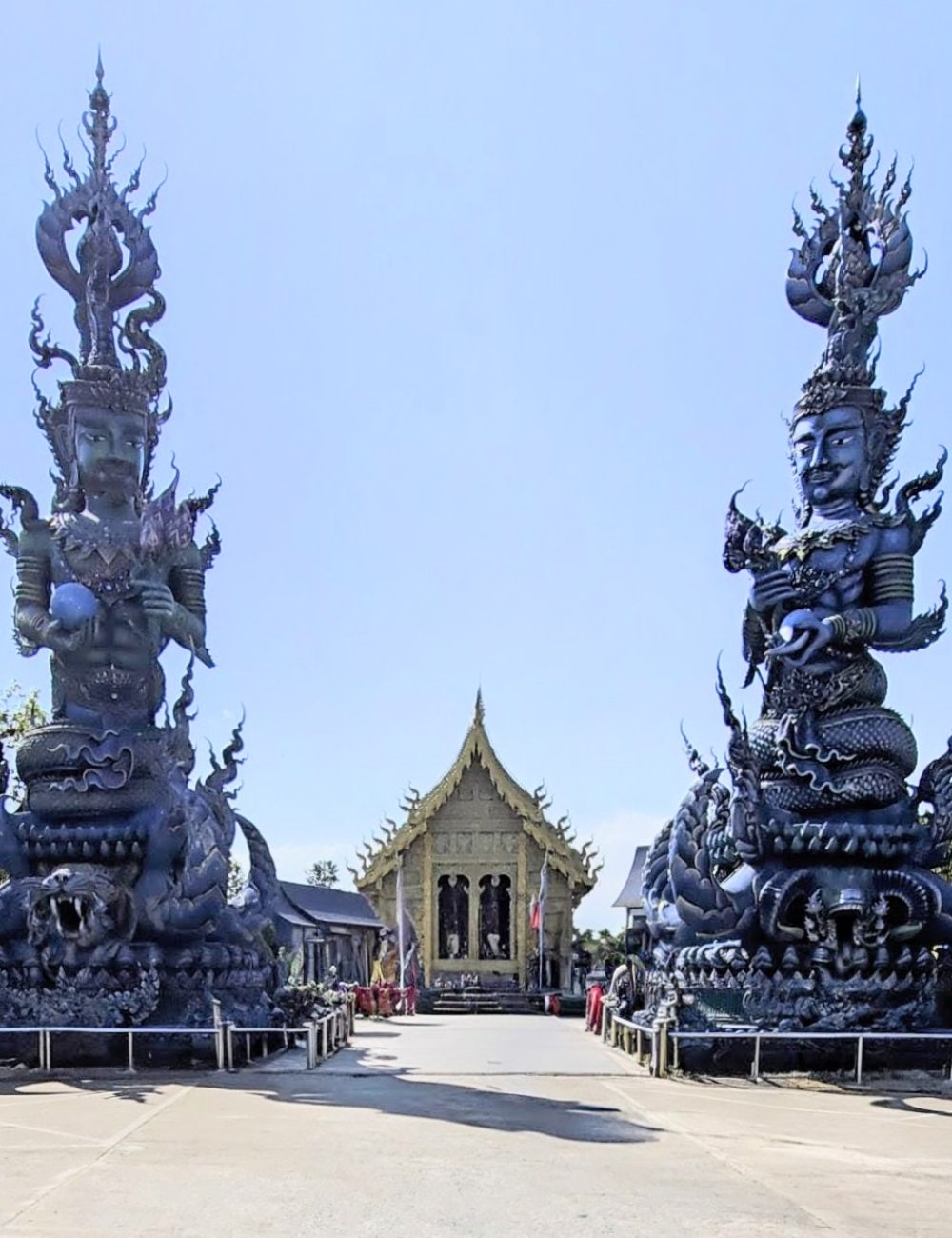
The official name is Baan Dam Museum, which means “Black House.” It’s a collection of dark wooden buildings created by Thai artist Thawan Duchanee, filled with animal bones, skins, and symbolic pieces reflecting themes of life, death, and belief — more like walking through an art installation than visiting a traditional temple.
Golden Triangle
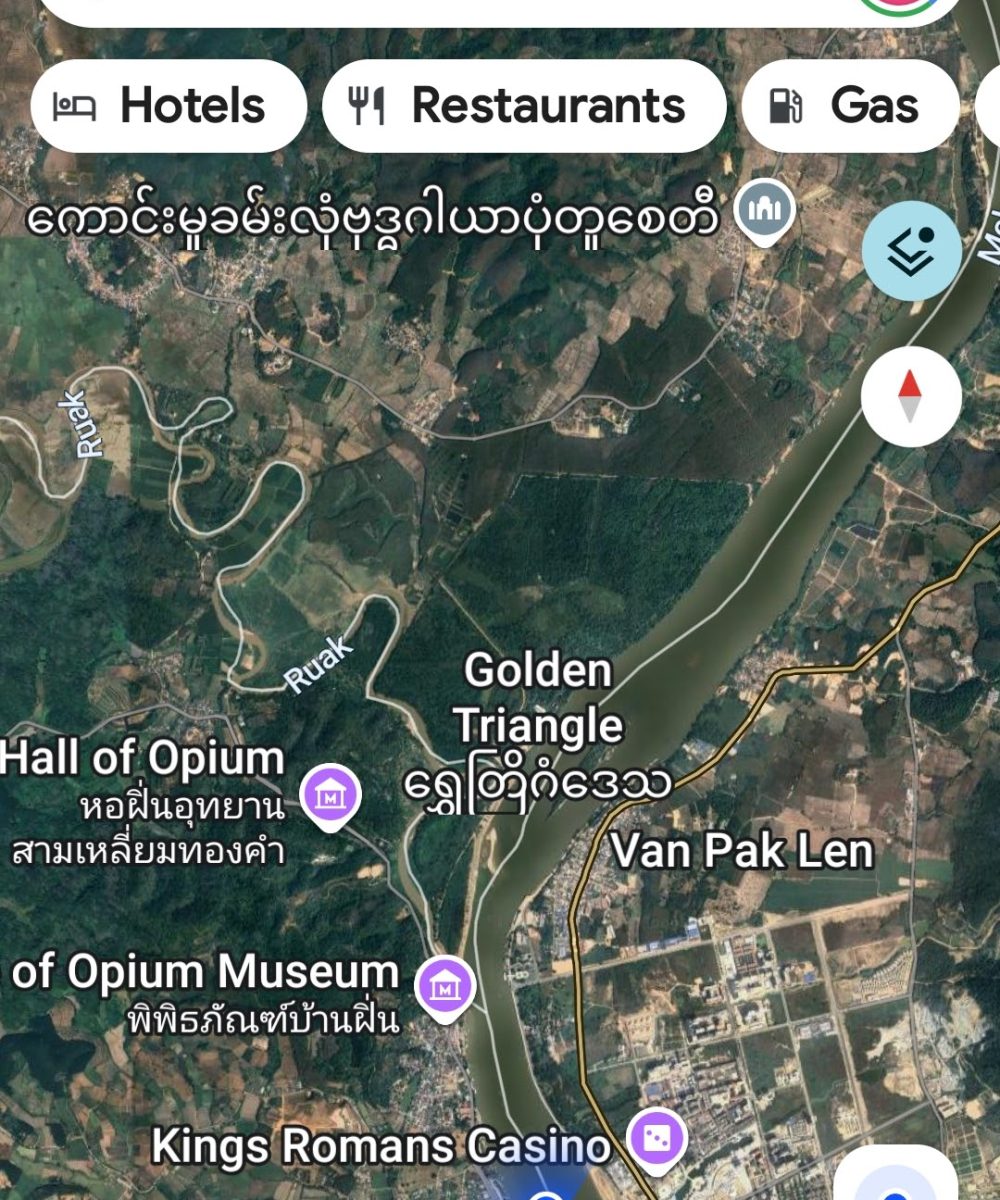
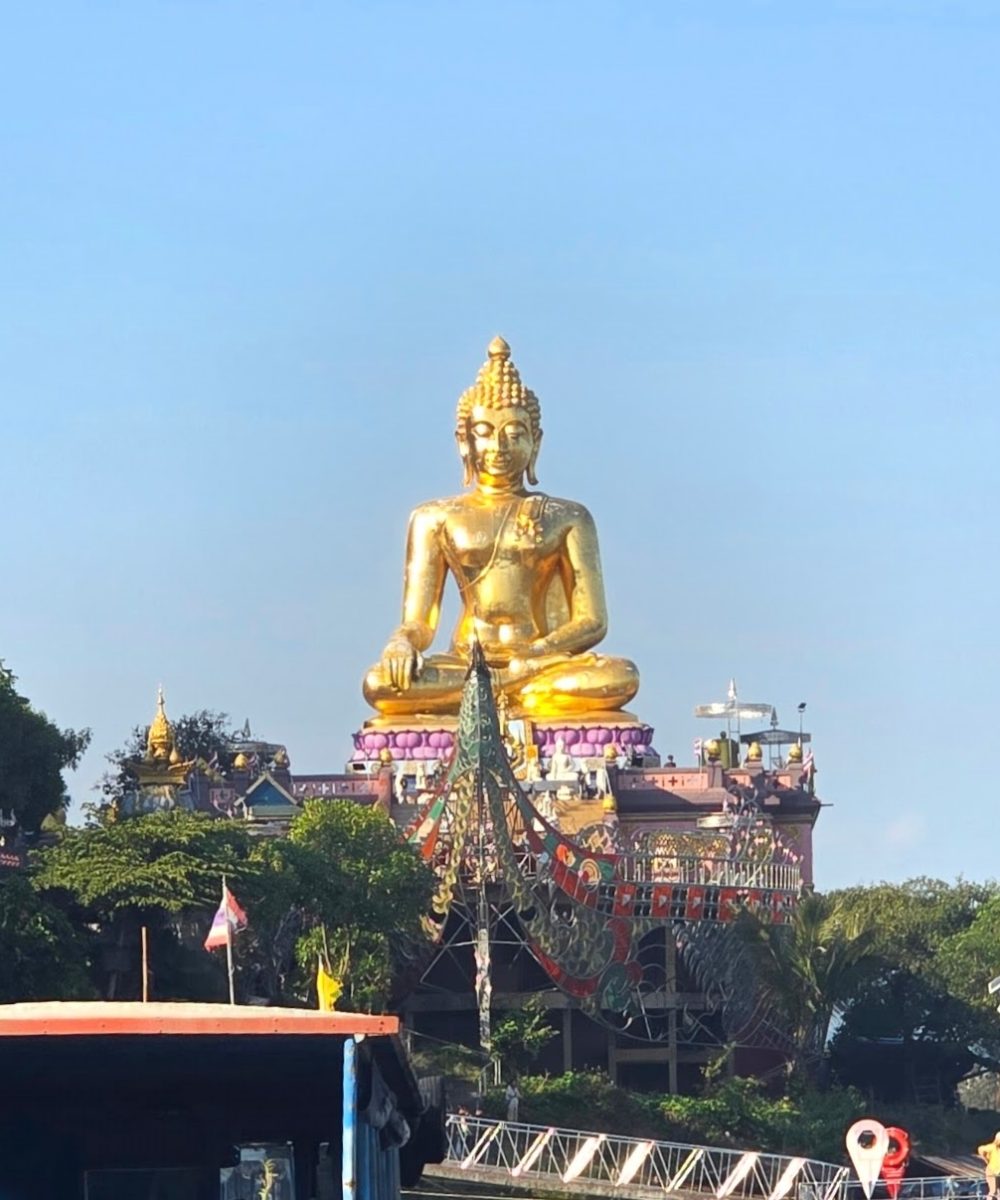
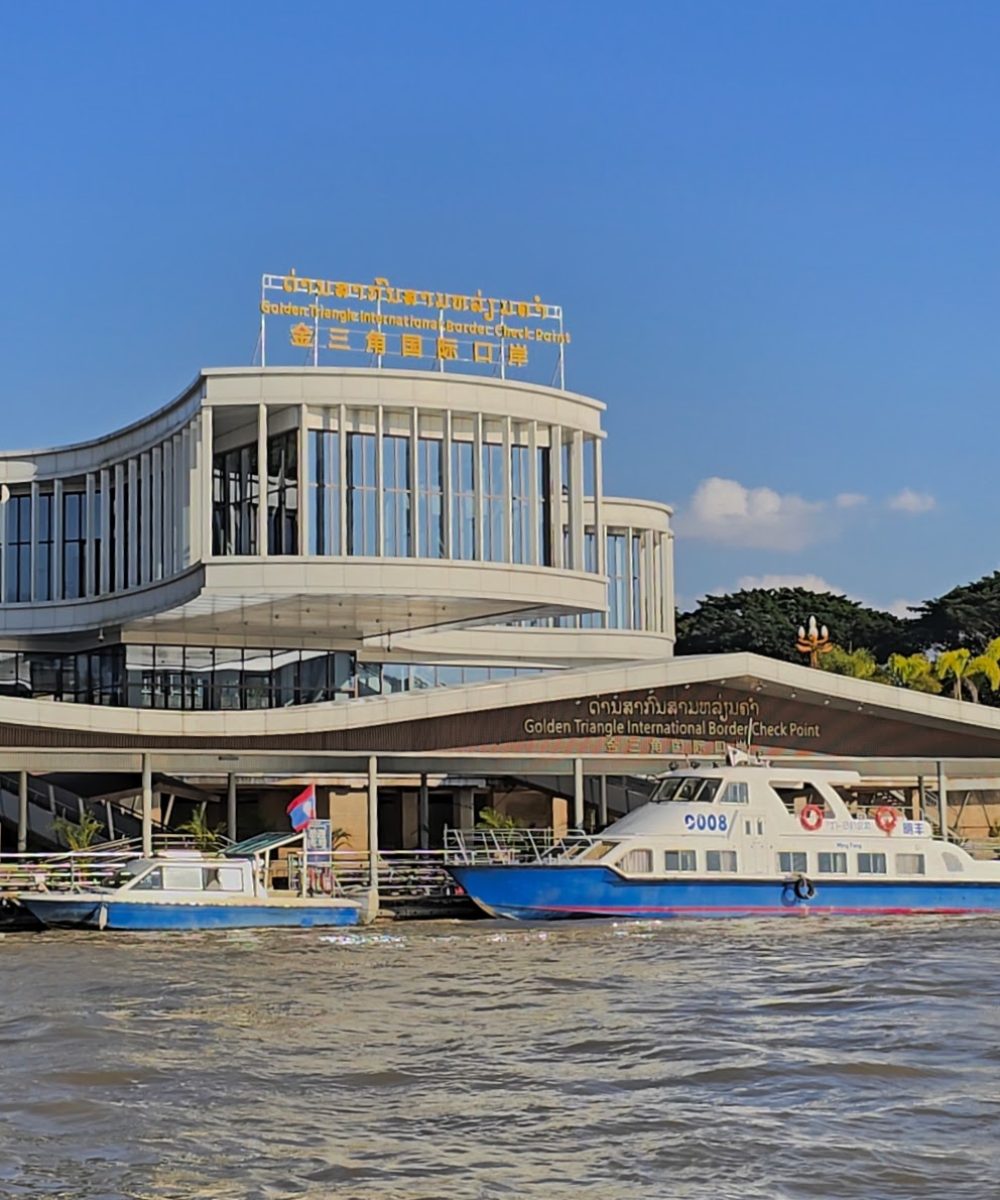
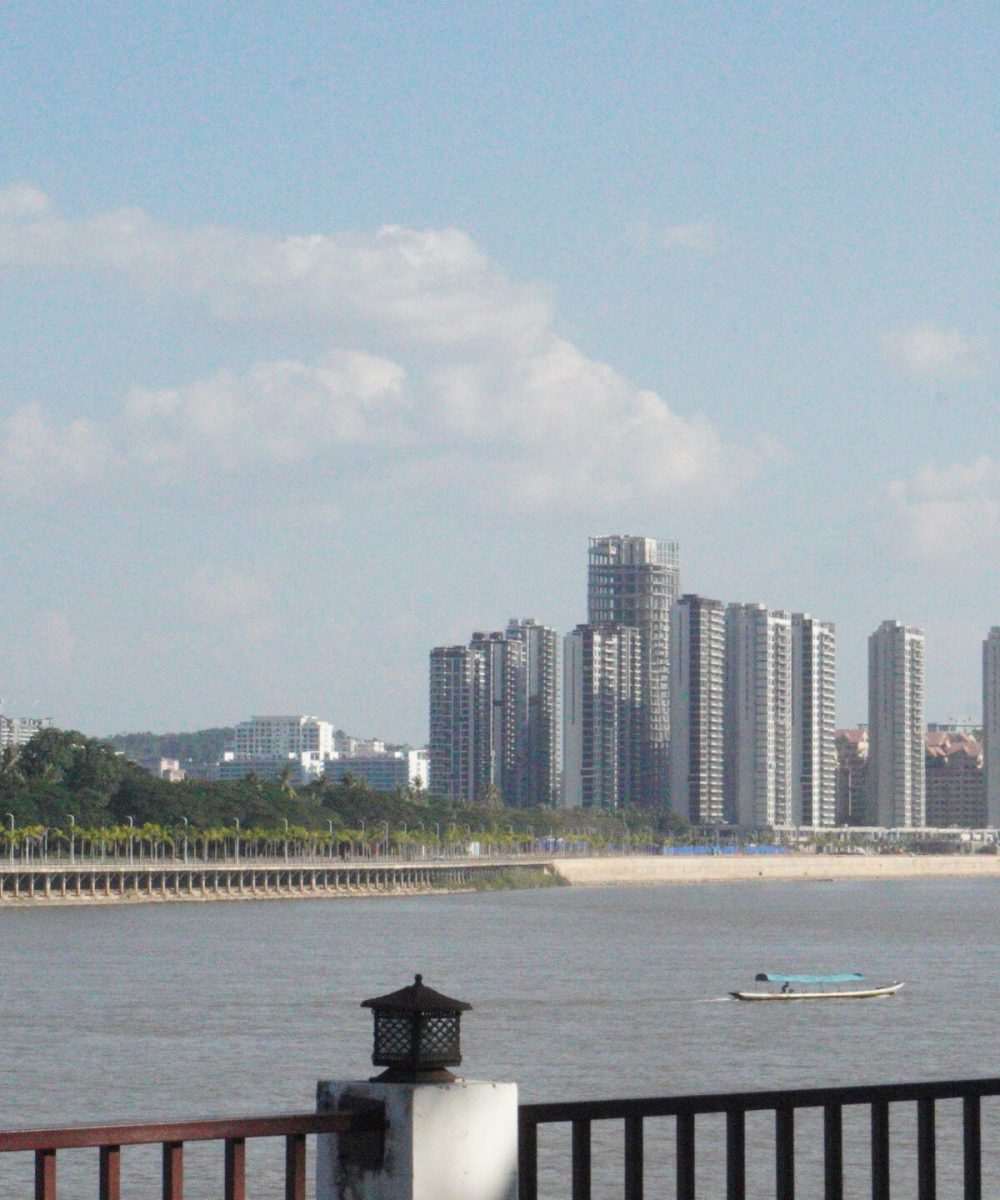
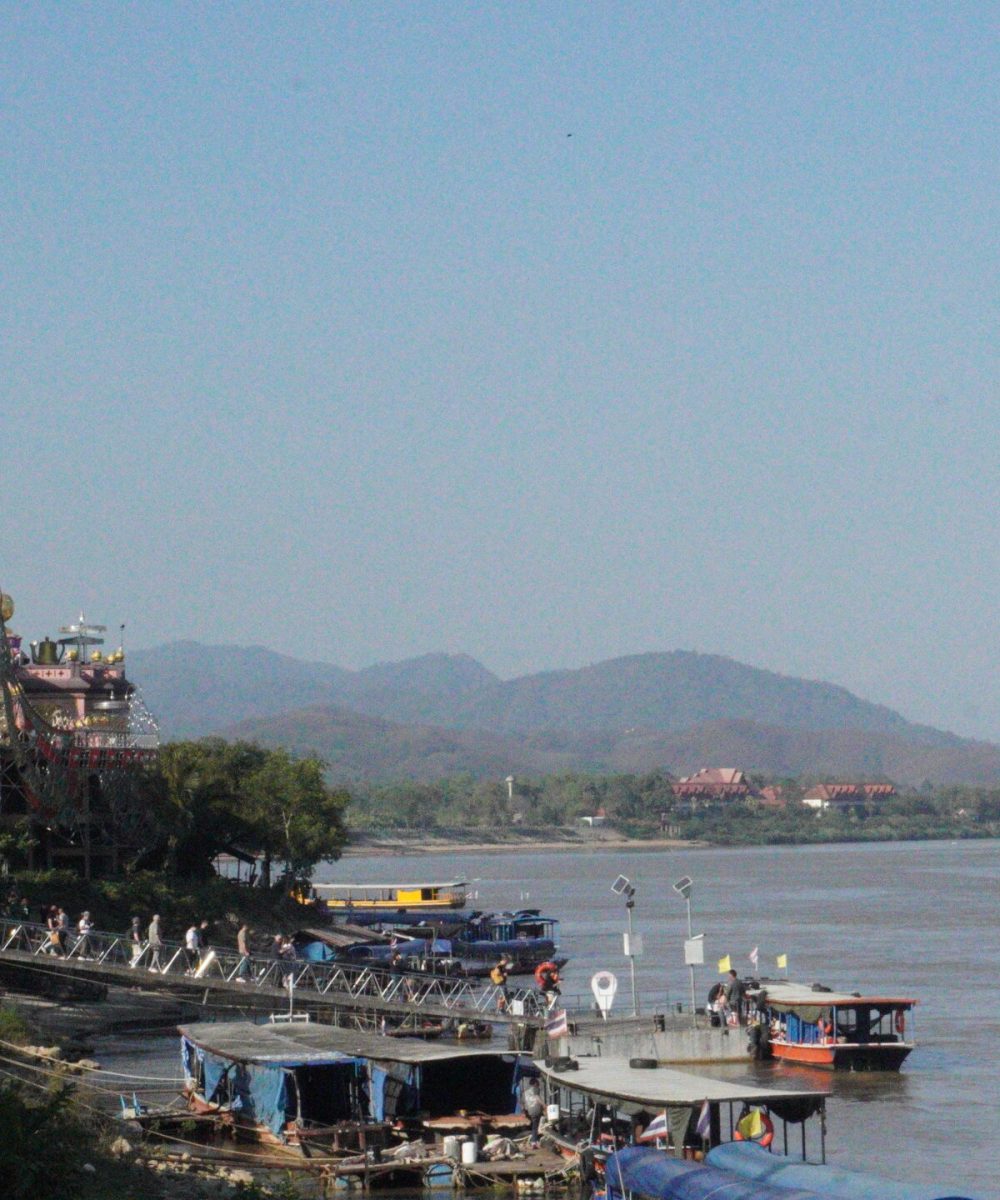
This is where Thailand, Laos, and Myanmar meet along the Mekong River. We took a short boat ride — about 40 minutes — which let us view the borders from the water instead of only from the overlook. It’s a brief stop, but seeing three countries come together in one place gives the area a unique significance.
Long Neck Village
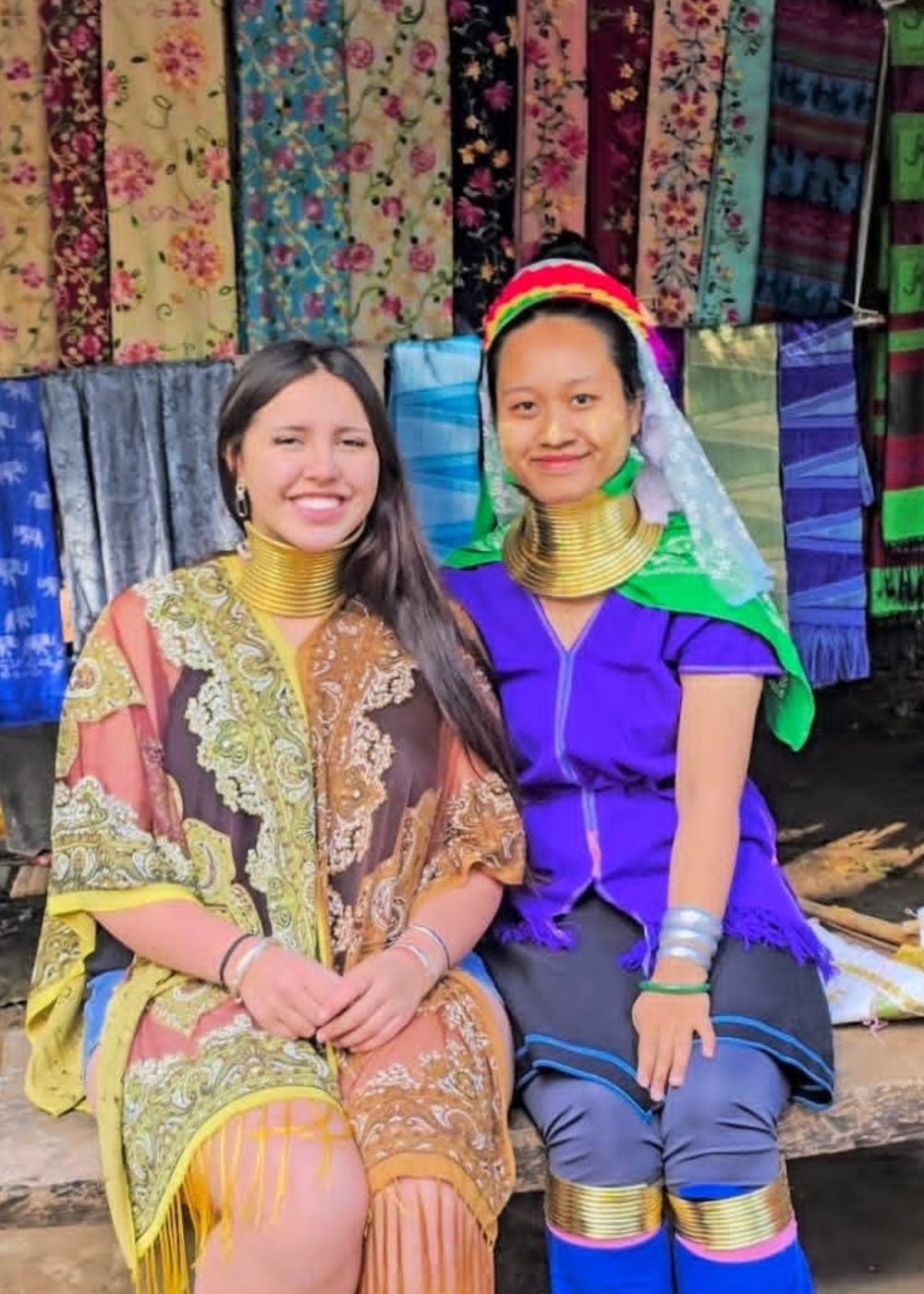
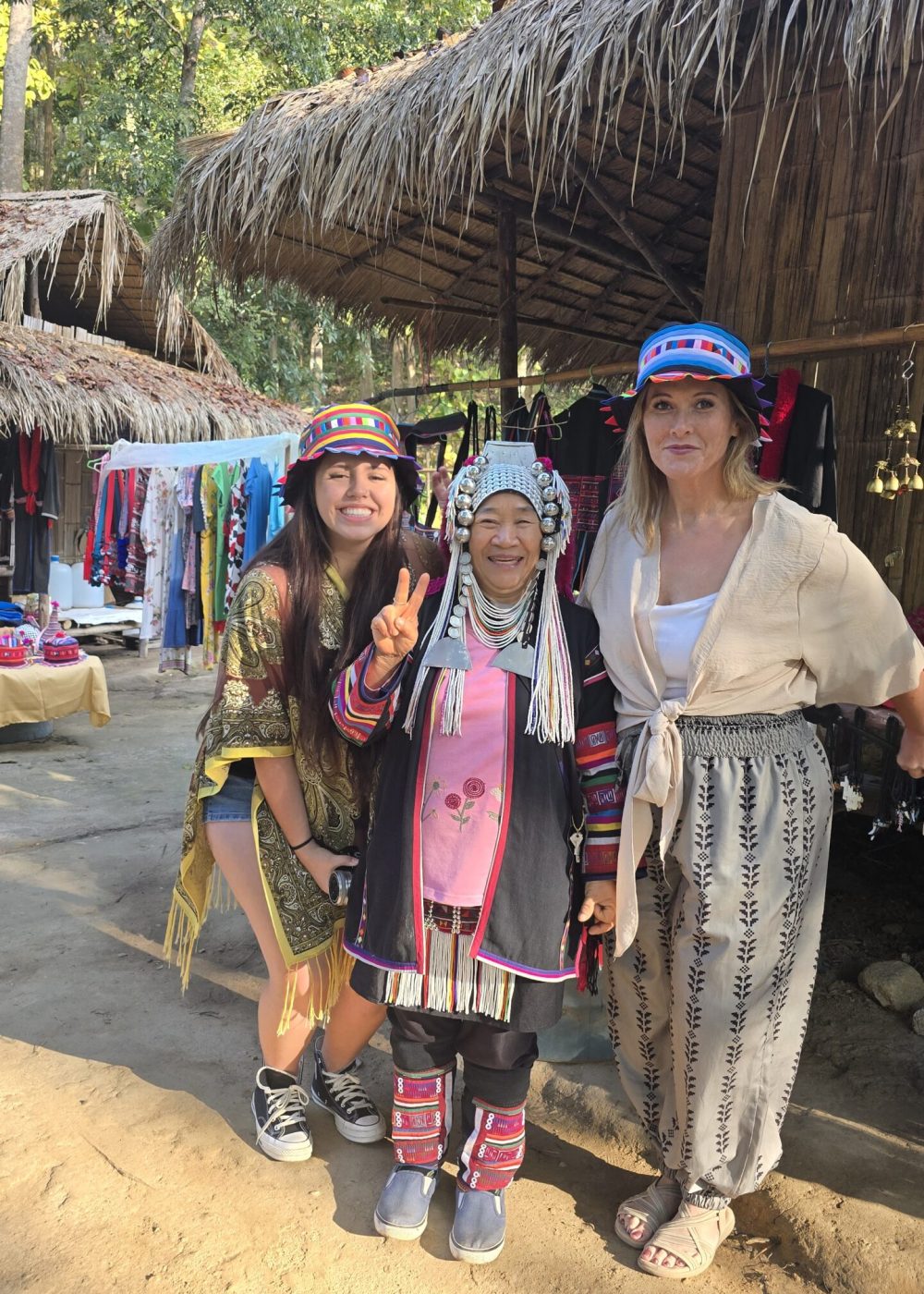
Home to women of the Kayan Lahwi group known for wearing brass neck coils, which gradually press the collarbone and shoulders downward to create the appearance of a longer neck — traditionally considered a sign of beauty and identity within their culture. Visitors can watch weaving and handmade crafts, but the experience can feel complicated since the villages operate partly as tourist attractions, raising questions about whether it’s cultural preservation or performance for visitors.
The Day Overall
It’s a long day — around 13–14 hours — but doing it as a tour makes sense because Chiang Rai is several hours from Chiang Mai. The driving would be exhausting on your own.
For the cost, the amount you see in one day is impressive.
My Final Thoughts
Every stop was interesting in its own way, but the White Temple stood apart.
Not because it’s the oldest. Not because it’s the biggest.
Because it’s unforgettable.
Out of all the temples I visited in Thailand, this was the most beautiful one — the kind you remember clearly long after the trip ends.


 Walking Toward the Temple